
Ivan Grubanov studied at the Belgrade Academy of Fine Arts before furthering his training through prestigious programs and residencies at the Rijksakademie van Beeldende Kunsten in Amsterdam, Delfina Studios in London, Casa de Velázquez in Madrid, and Katholieke Universiteit Leuven. In 2015, he represented Serbia at the 56th Venice Biennale with his project United Dead Nations.
Grubanov continuously seeks to push the boundaries of painting as a medium. His work engages deeply with the articulation of historical memory within contemporary contexts, questioning the significance of his heritage today and, more broadly, how past cultural values persist in an increasingly globalized society. His process-driven approach transforms painting into a platform for knowledge production, persistently challenging social and political realities while extending the medium beyond the canvas.
He has established a prominent international career through numerous solo, group, and biennial exhibitions worldwide, as well as receiving various artistic and scholarly awards. His solo exhibitions include Laboratorio 987 at MUSAC in León, Le Grand Café – Centre d’Art Contemporain in Saint-Nazaire, the Gallery of the Belgrade Cultural Center, and the Salon of the Museum of Contemporary Art in Belgrade, as well as exhibitions at Stroom in The Hague and Nogueras Blanchard in Barcelona.
Grubanov has also participated in significant group exhibitions at institutions such as the Museum of Contemporary Art in Krakow, Witte de With in Rotterdam, and Kiasma in Helsinki. His work has been featured in the 3rd International Festival of Contemporary Art of Algiers, the 10th Istanbul Biennial, and the 1st Thessaloniki Biennial, among others. Additional exhibitions include those at Stedelijk Museum CS, SMART Project Space, and De Appel in Amsterdam, as well as The Drawing Center and Apex Art in New York. Other notable appearances include the 50th Belgrade October Salon, the Spa Port Biennial in Banja Luka, the 3rd Bucharest Biennial of Young Artists, Moderna Galerija in Ljubljana, the 3rd Tirana Biennial, the 3rd Biennial of Quebec, Kunsthalle Bern, Office Baroque and Extra City Kunsthal in Antwerp, Aeroplastics in Brussels, South London Gallery, ARCOS Museum in Benevento, Museum De Beyerd in Breda, Henie Onstad Art Center in Oslo, the National Museum of Contemporary Art in Athens, Museu Colecção Berardo in Lisbon, and Iaspis in Stockholm.

Whiteness

Ivan Grubanov, Whiteness, 2024, Oil on canvas, 230 x 160cm

Ivan Grubanov, Whiteness, 2024, Oil on canvas, 230 x 160cm

Ivan Grubanov, Whiteness, 2024, Oil on canvas, 230 x 160cm
Skin Nation Class
Skin Nation Class is a series of polyptychs that Ivan Grubanov started developing in 2022. Each of the six square pieces is composed with a black mirror in the center, a stretched canvas, and a stained flag that was used to paint the canvas: The mirror at the center of each of the six pieces reflects the viewer, including her/him in the work; the stretched canvas emphasises exploitation through the process of imprinting using the stained flag, which at the same time alludes to the conventional and often forced nature of what are called «nation-states»; as Grubanov puts it, «The flag remains altered in the process but its national/ ideological connotation cannot be removed, it is forensically traceable and even more violent as we witness its ability to adapt its color but never abandon its signifying role». The series is in continuity with the Unnation polyptychs, but the mirror is a completely new element in the artist’s oeuvre. Remarkably enough, Grubanov’s methodological avoidance of representation is clearly broken by the inclusion of the mirror which creates a perspectival virtual duplication of the space of the viewer. This represents a further rupture with painting as the modernist medium par excellence, in particular abstract painting, because it is yet a further step in linking the painting to context by expanding it; or, as has been written regarding United Dead Nations, it is a way of creating a «plane of immanence» in which the here and now and the alive- ness of artistic praxis intersect with the past and death, set against the «transcendence» of the aesthetic value and autonomy of the modernist artwork. Therefore, Grubanov introduces history and time, a recursive time that goes back to dead nations to make them resonate in the present—sadly enough today with a tragic new sense—not only, as Greimas would put it, through practice, but through his very use and expansion of the medium that repositions painting in a historical and political context, both literally and performatively.(Excertp from the text “Skin Nation Class” by Gabriela Galati)
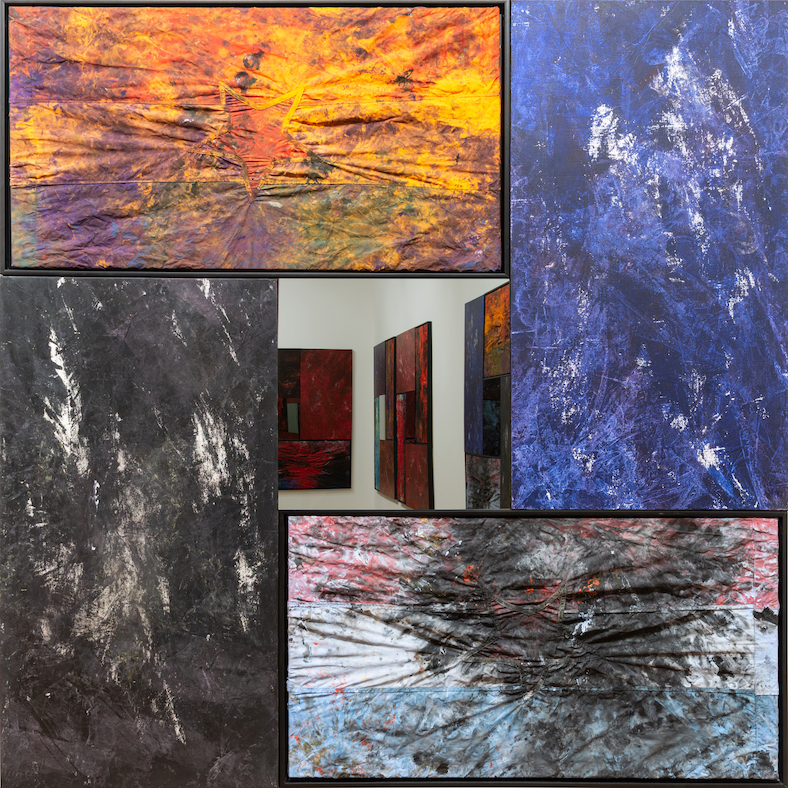
Ivan Grubanov, Skin Nation Class, 2022. Acrylic on canvas and flags, mirrors; 170 x 170 cm.
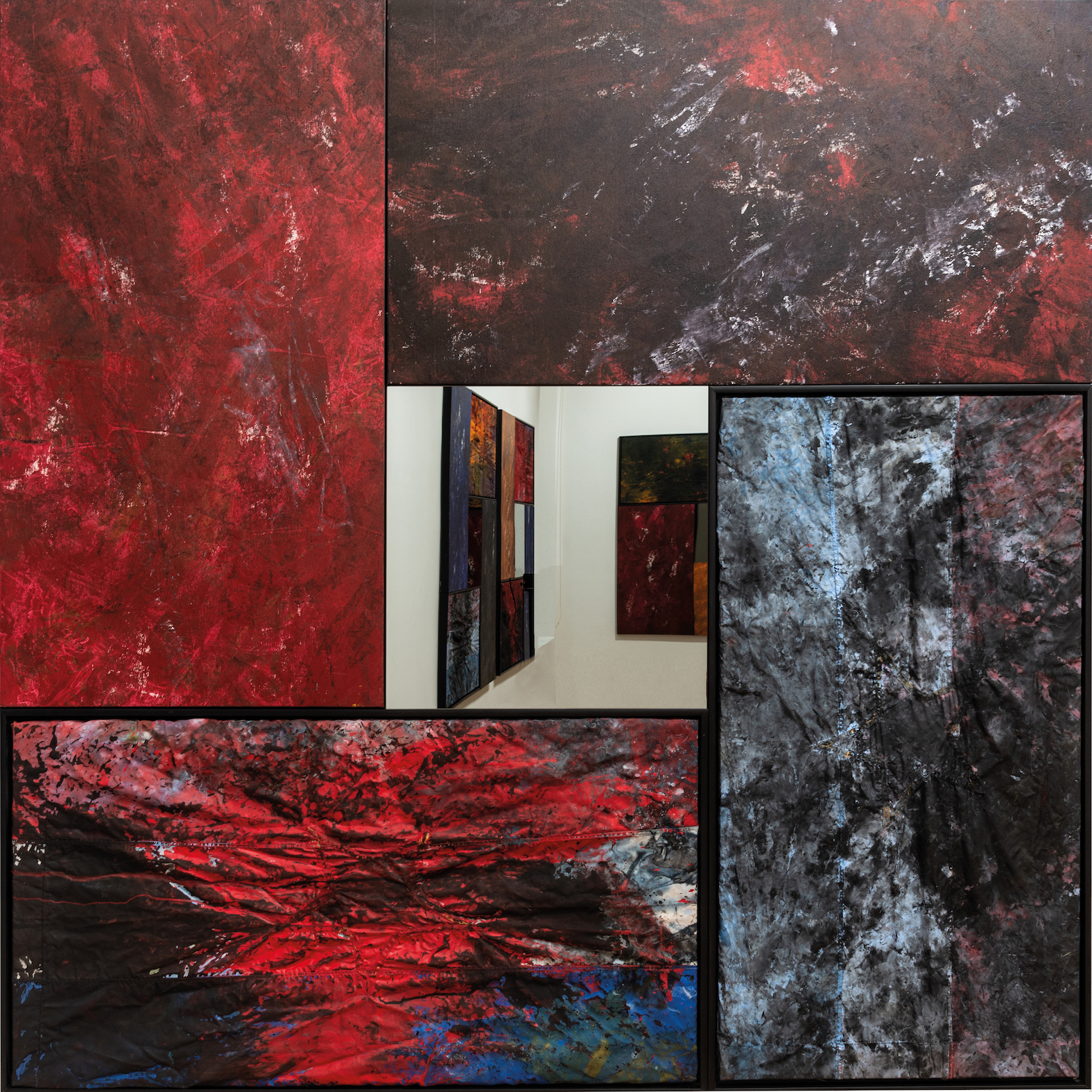
Ivan Grubanov, Skin Nation Class, 2022. Acrylic on canvas and flags, mirrors; 170 x 170 cm.
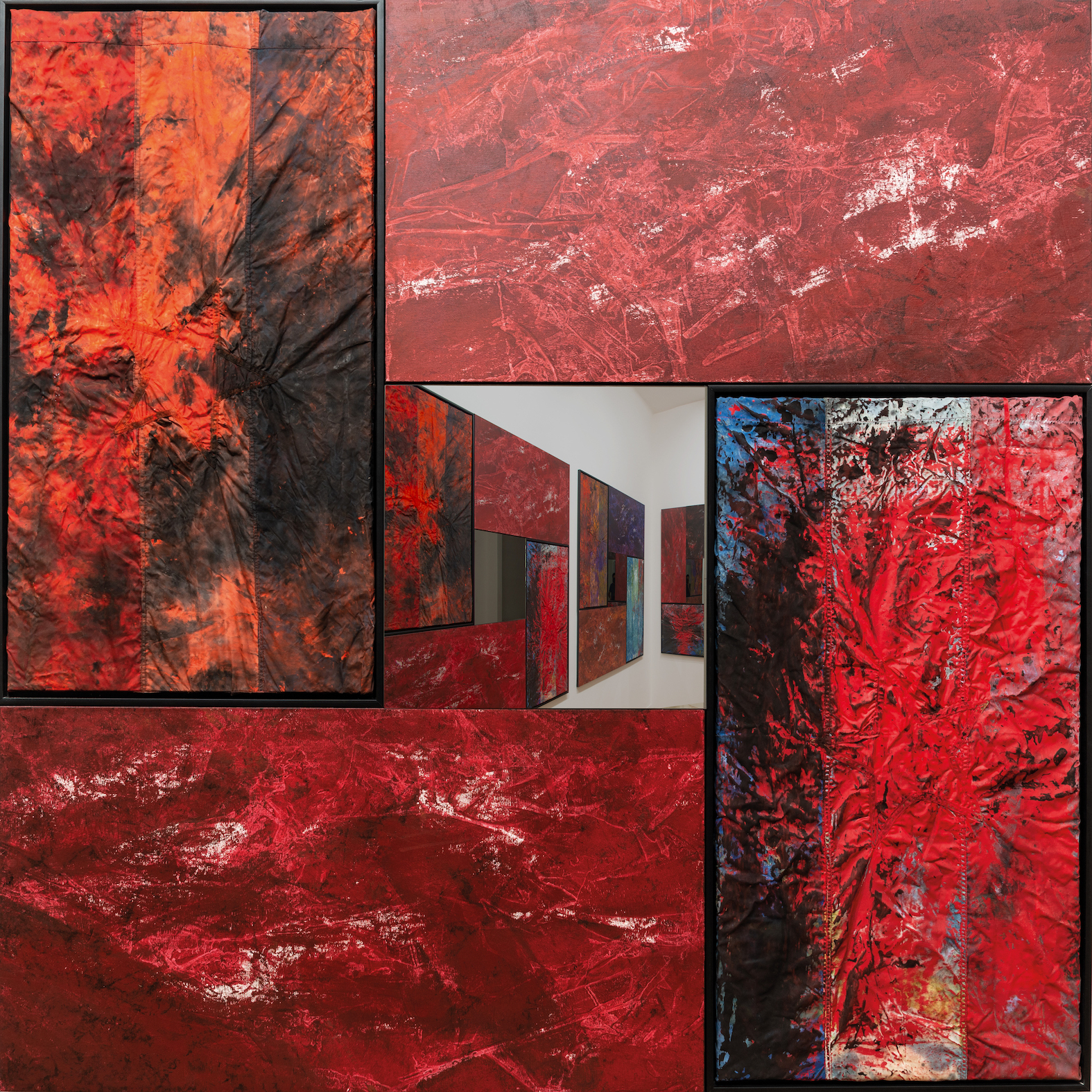
Ivan Grubanov, Skin Nation Class, 2022. Acrylic on canvas and flags, mirrors; 170 x 170 cm.
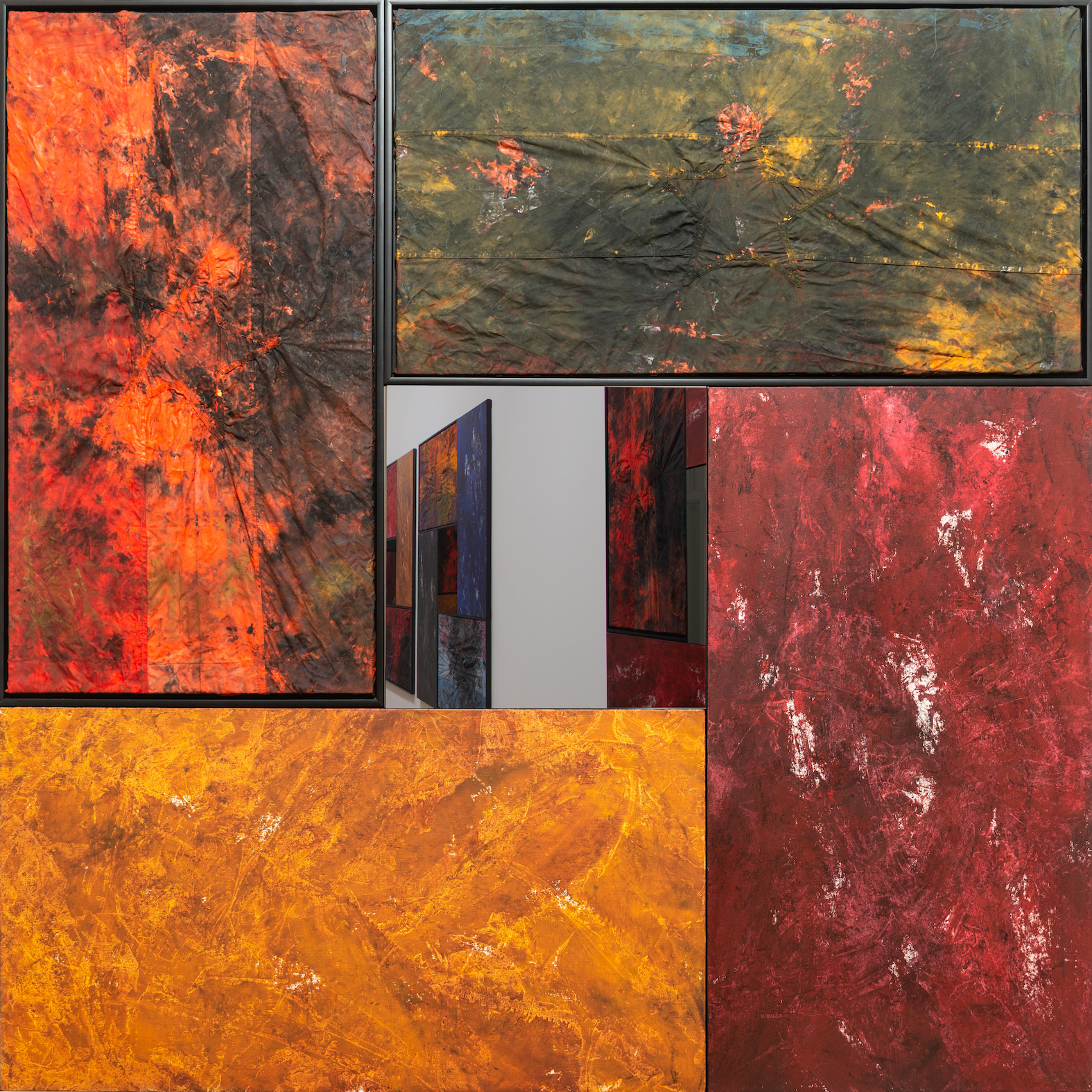
Ivan Grubanov, Skin Nation Class, 2022. Acrylic on canvas and flags, mirrors; 170 x 170 cm.
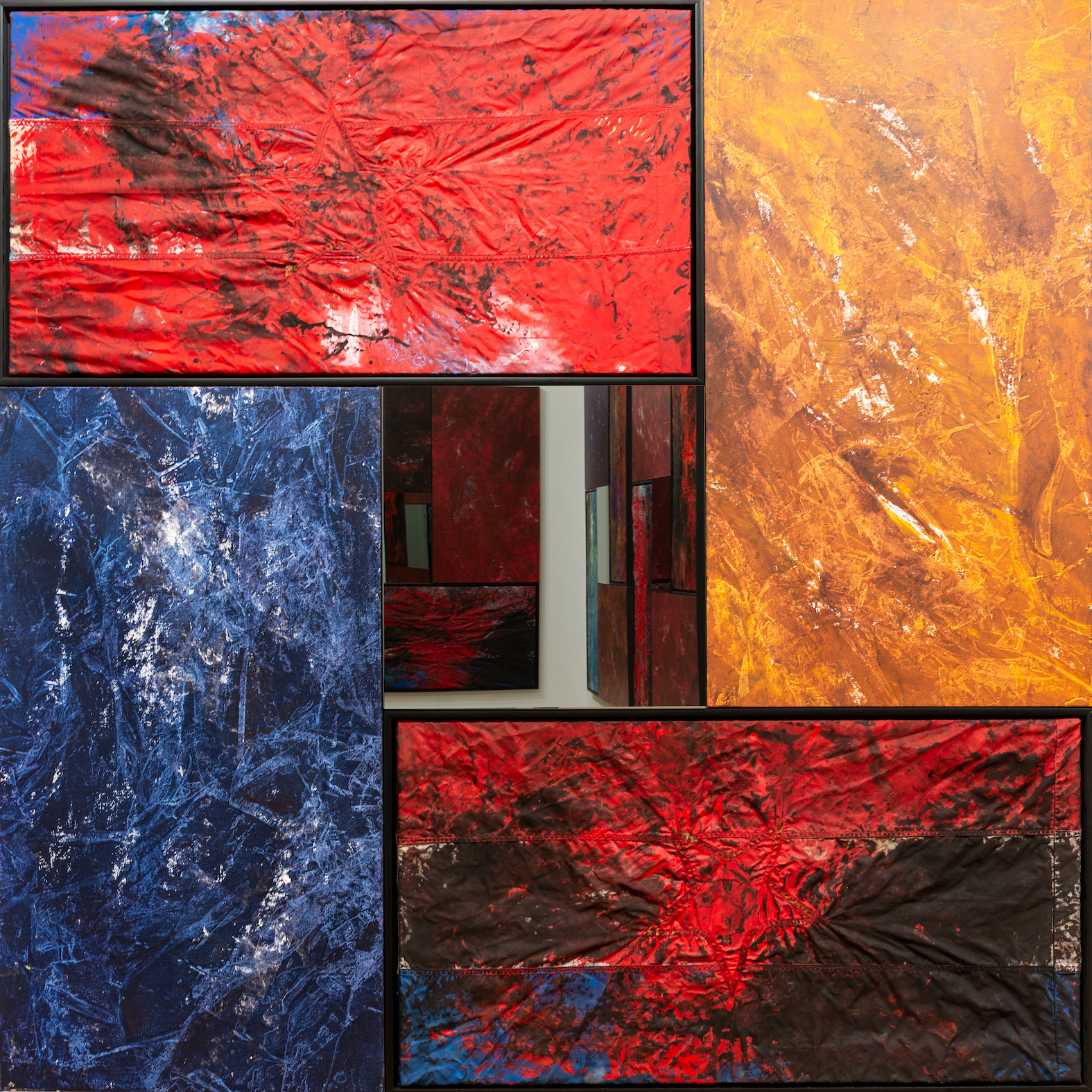
Ivan Grubanov, Skin Nation Class, 2022. Acrylic on canvas and flags, mirrors; 170 x 170 cm.
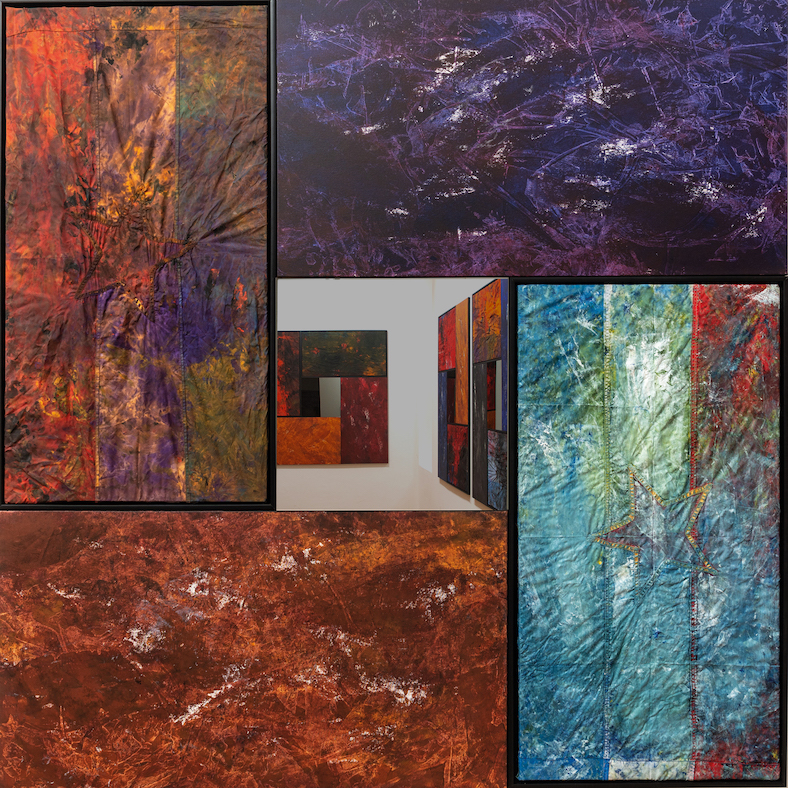
Ivan Grubanov, Skin Nation Class, 2022. Acrylic on canvas and flags, mirrors; 170 x 170 cm.