
Axel Straschnoy is a visual artist from Buenos Aires, currently based in Helsinki. For Straschnoy, any object can be viewed as a work of art or a subject of scientific study, depending on personal interpretation, with a particular interest in expeditions of all kinds—both literal and metaphorical, scientific and artistic. His research emerges from these interpretative rituals and the opportunity to “dance” around objects, aiming to explore social practices within science and art through various media.
Straschnoy’s works, always part of larger research projects, span a wide range: from films for planetariums and performances to cinematic installations, editions, travelling exhibitions, museum collections, and VR films. Collaboration frequently plays a key role in his practice, as he is interested in alternative spaces and innovative ways to frame interactions between artworks and audiences. He founded the production company Kolme Perunaa to support his work.
Straschnoy has participated in Le Pavillon residency at Palais de Tokyo (2008-09) and studied Art History at the University of Buenos Aires.
Recent exhibitions include (Upcoming) Turku Art Museum, 2025; 18 Minutes from the Sun, Museo de Arte Moderno, Buenos Aires, 2023; Subterranean, Amos Rex, Helsinki, 2022; Nanocosmic Investigations, Inter Arts Center, Malmö, 2022; The Devils of Paasselkä, Forumbox, Helsinki, 2022; The Permian Extinction, the Turku Museum in Turku, 2021; Lights in the Landscape, the Pippulhalli Museum in Savonranta, 2021; Float, Andrée Polarcenter Grenna Museum, Gränna, 2019; Hoy, / ¡gran mañana!, / en los pinos soplan vientos / del pasado, Del Infinito Arte, Buenos Aires, 2016; Le rappel à l’ordre, Forum Box, Helsinki, 2016; Neomylodon Listai Ameghino, Inter Arts Center, Malmö, 2016; Neomylodon Listai Ameghino, Augusta Gallery, Helsinki, 2015; Neomylodon Listai Ameghino, Evolutionsmuseet, Uppsala, 2015; La Figure de la Terre, Museo del Cine, Buenos Aires, 2014; La Figure de la Terre, Del Infinito Arte, Buenos Aires, 2014; Kilpisjärvellä, Mirta Demare Gallery, Rotterdam, 2013; Opening Archive, Ateneum Museum Library, Helsinki, 2013.
Straschnoy was recently awarded the 2025 Fine Arts Academy of Finland Foundation Prize. As part of the award, he will present a solo exhibition at EMMA – Espoo Museum of Modern Art in 2026.
SELECTED WORKS
The Devils of Paasselkä
Axel Straschnoy’s film The Devils of Paasselkä (2020) investigates the mysterious and unknown aspects associated with the Paasselkä Lake in Eastern Finland. Formed by a meteorite collision that occurred at some moment in the last 1,900 million years, the lake renders compasses ineffective. Accounts of peculiar luminous phenomena hovering above it, exhibiting independent and rapid movements across different locations, have been recorded as early as the 1700s. Straschnoy’s film combines compelling images from the artist’s trip to the lake with interviews with local people to investigate these phenomena.

Axel Straschnoy, The Devils of Paasselkä (2020). One channel video, 20’, film still.

Axel Straschnoy, The Devils of Paasselkä (2020). One channel video, 20’, film still.

Axel Straschnoy, The Devils of Paasselkä (2020). One channel video, 20’, film still.

Axel Straschnoy, The Devils of Paasselkä (2020). One channel video, 20’, film still.

Axel Straschnoy, The Devils of Paasselkä (2020). One channel video, 20’, film still.

Axel Straschnoy, The Devils of Paasselkä (2020). One channel video, 20’, film still.
We Believe and Accept These Beings Exist
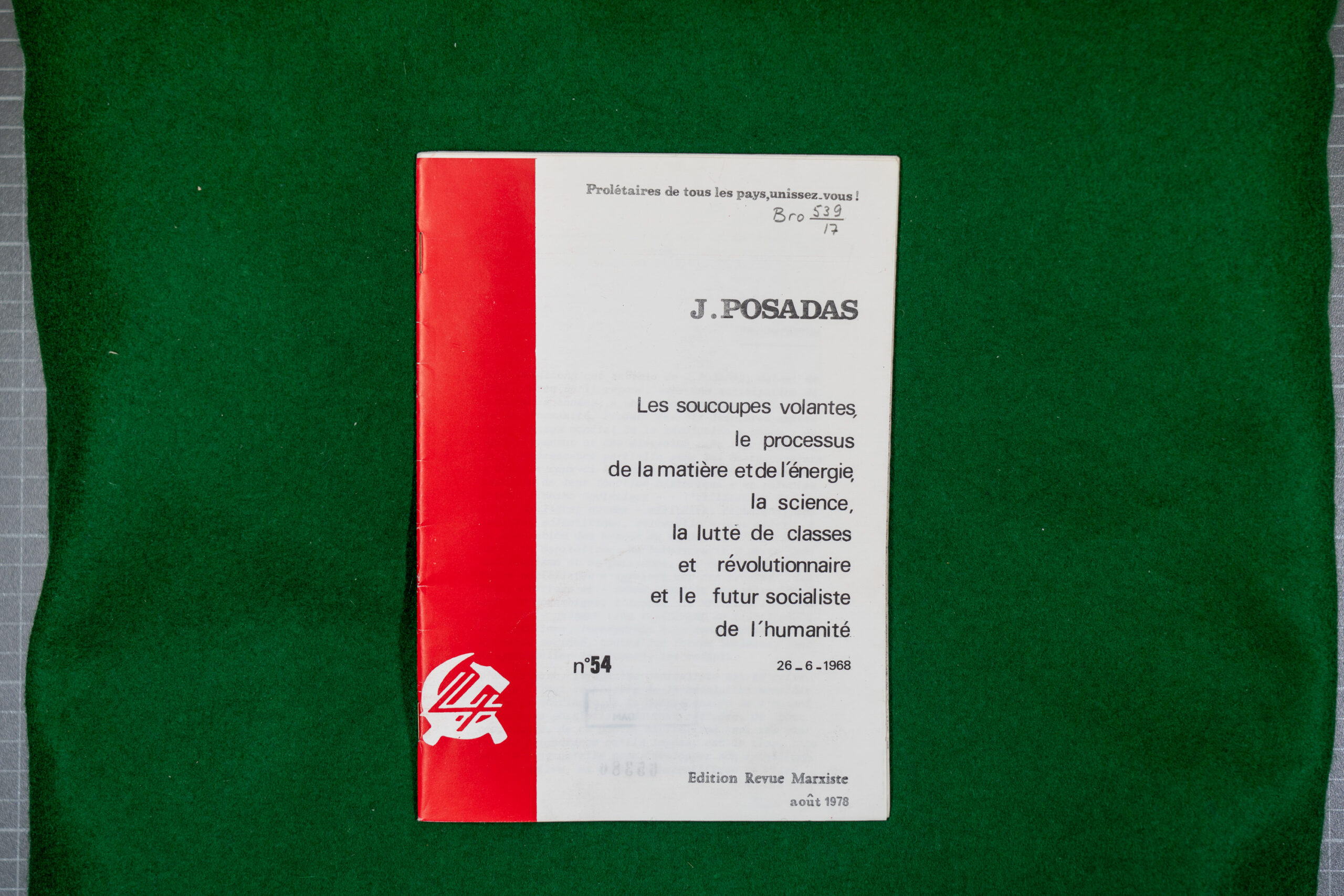
We Believe and Accept These Beings Exist is an artistic inquiry into the strange and fertile space where revolutionary politics, science fiction, and cosmic imagination meet. The project begins with the provocative ideas of J. Posadas, the Latin American Trotskyist leader who, in 1968, famously argued that UFOs were real and that extraterrestrial civilisations must, by necessity, be communist. His leap of thought—absurd, visionary, and deeply political—provides a lens to consider how utopian desire extends beyond Earth.
The project does not seek to retell history in a straightforward documentary mode, but instead to explore how belief and imagination shape our capacity to envision radically different futures. At its core, the work asks what it means to believe: to believe in aliens, in utopia, and in the possibility of a post-capitalist society. It examines how the radical hopes of one political movement might resonate again in today’s climate of ecological collapse, authoritarian resurgence, and a pervasive sense of crisis.
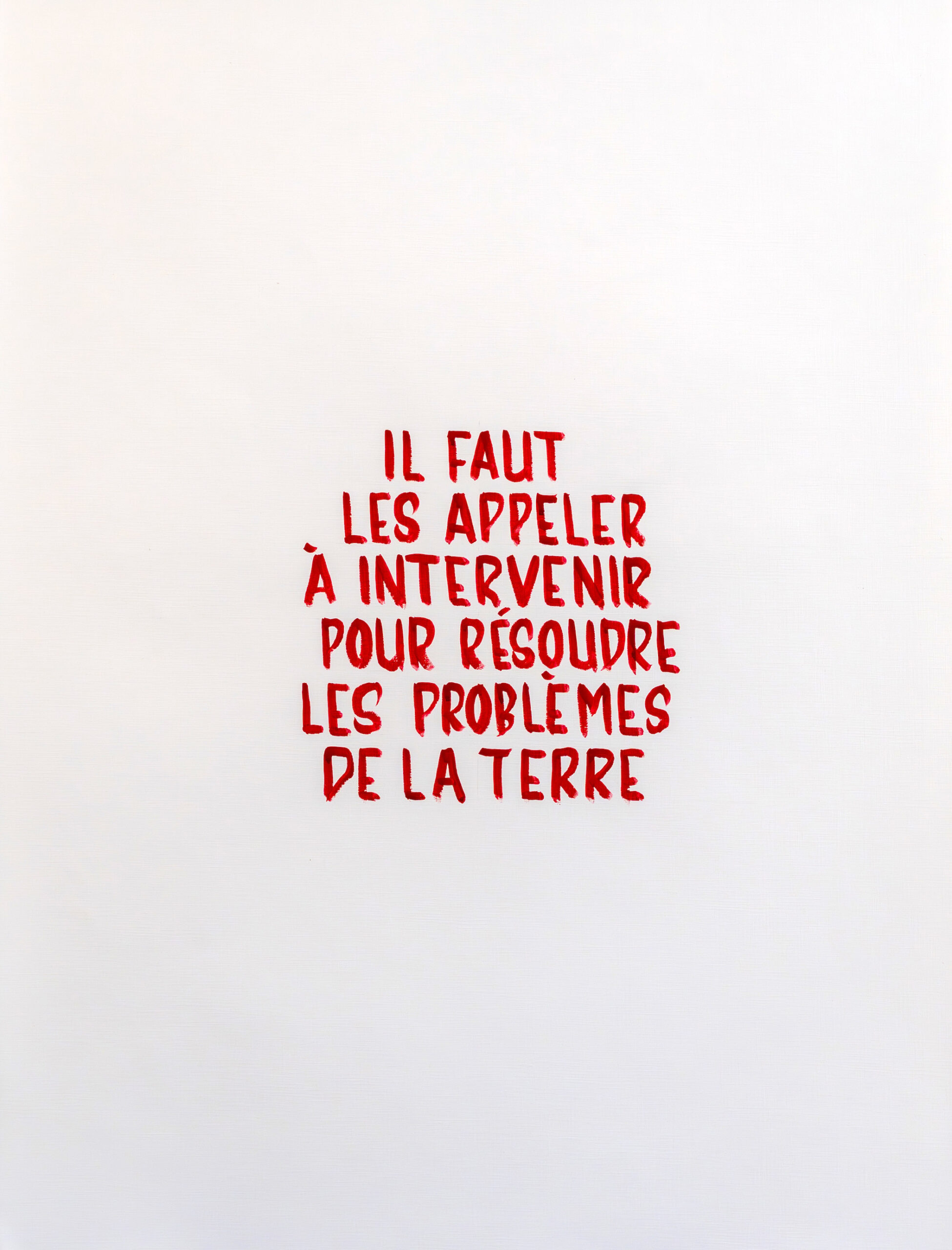
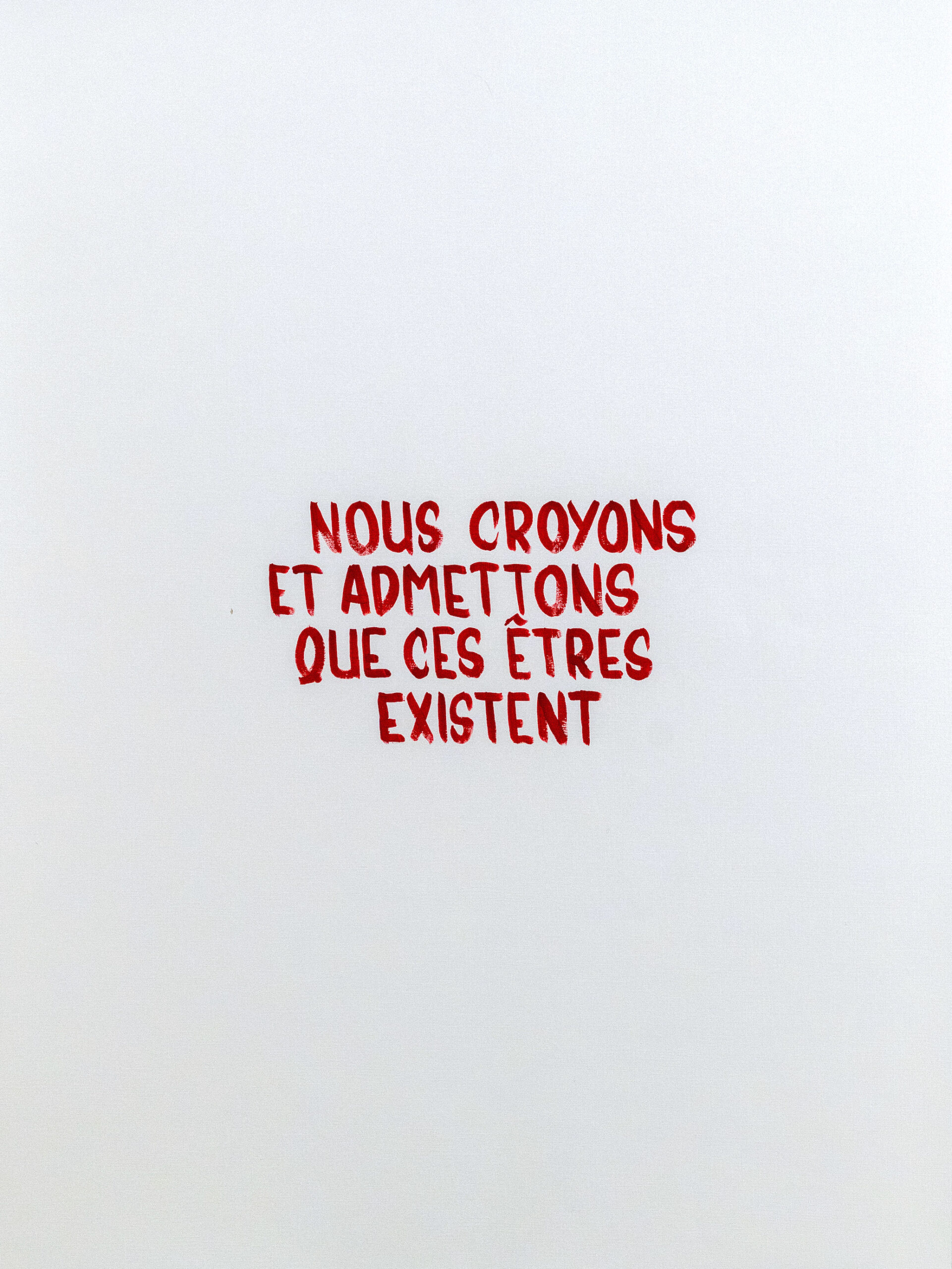
Formally, the installation at EMMA (opening in April 2026) combines two elements: large, hand-lettered linen banners quoting Posadas’ speech, and a constellation of suspended video screens showing interviews with Trotskyist activists, historians, SETI scientists, and UFO contactees. Visitors will move through a darkened space like navigators in a lost ideological galaxy, encountering fragments of political oratory, speculation, and testimony. The design draws inspiration from traditions of political murals, Trotskyist iconography, and the visual language of speculative science fiction.
This project is not about nostalgia but about continuity: how forgotten radical dreams might still spark imagination in our present. It invites us to look back at a moment when politics reached for the stars, not to escape Earth, but to demand another way of living upon it. The text by J. Posadas that anchors this project is a speech delivered in 1968, later published in French by his own press. In it, Posadas affirmed that UFOs were not only real, but that the civilisations behind them must be communist. His argument rested on a speculative syllogism: if these beings had developed the extraordinary technical capacities required for interstellar travel, they must also have solved the social contradictions that on Earth produced inequality, violence, and exploitation.
What might seem like an eccentric digression was, in fact, a continuation of Trotskyist reasoning: a belief in the historical inevitability of socialism, projected beyond the Earth. Posadas mobilised the figure of the extraterrestrial not as a fantasy, but as a political proof, a demonstration that communism was both possible and necessary. In this sense, the speech condenses the utopian and apocalyptic energies of the late 1960s: the threat of nuclear war, the hope of world revolution, and the persistence of imagining futures that break radically from the present. Analytically, the text functions as both symptom and proposition. It reveals the extent to which political imagination was stretched during the Cold War, when even the possibility of alien life was incorporated into ideological struggle. At the same time, it proposes an audacious extension of Marxist thought, one that links the horizon of communism not only to earthly struggles but also to the cosmos itself.
WIZARD LAB presented a selection of the text works on paper and two photos in Amsterdam in February 2026, anticipating the artist’s forthcoming exhibition at EMMA in April.
La internacional platillista
Axel Straschnoy, Revue Marxiste, 2025.
Il faut les appeler à intervenir
Axel Straschnoy, Il faut les appeler , 2025. Acrylic on paper, 76 x 56 cm, framed.
Nous croyons et ademttons que ces êtres existen copy
Axel Straschnoy, Nous Croyons et aceptons, 2025. Acrylic on paper, 76 x 56 cm, framed.
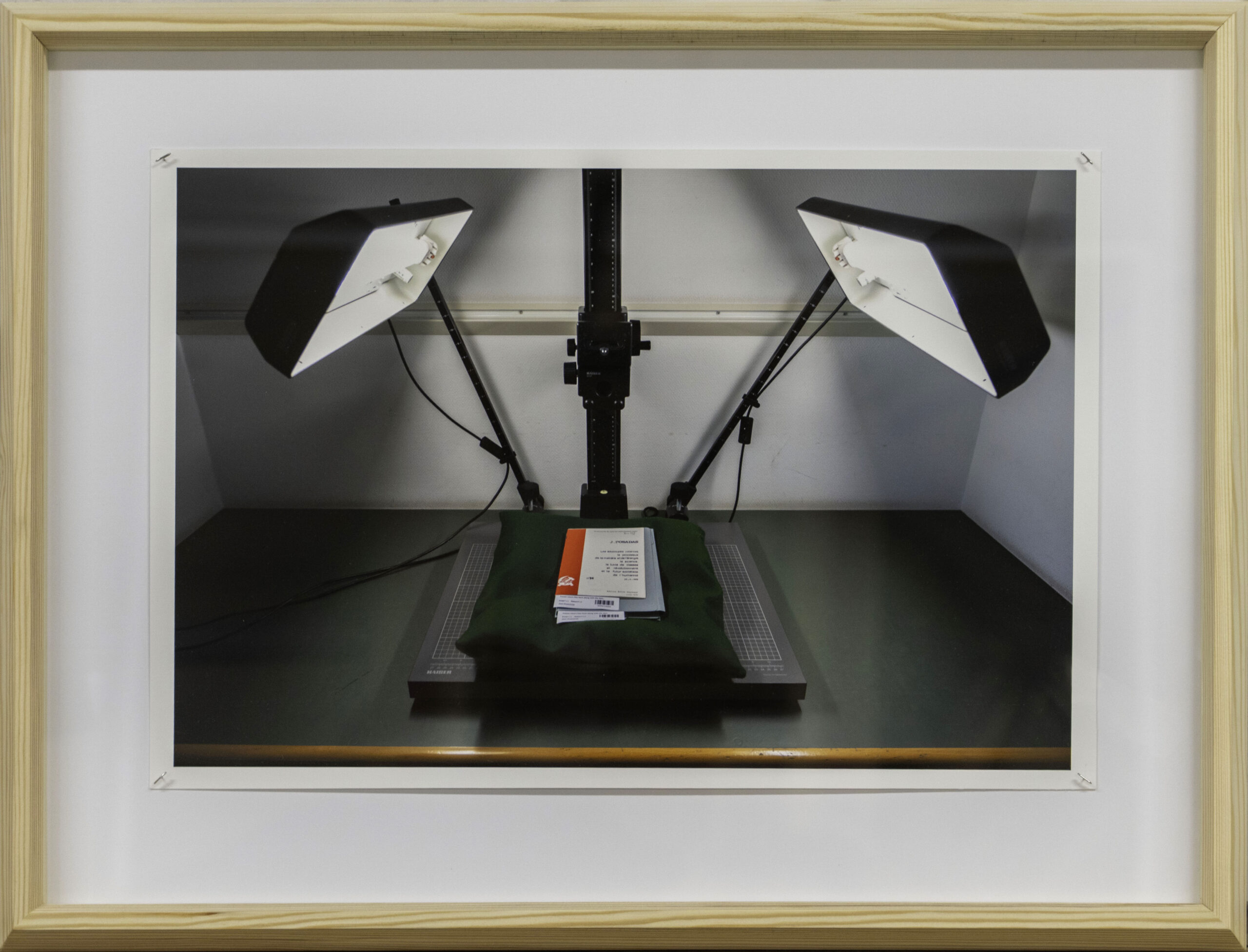
Revue Marxiste – framed
Axel Straschnoy, Revue Marxiste, 2025. Fine art print, 33 x 49 cm, framed. Ed. 1/3+1a.p
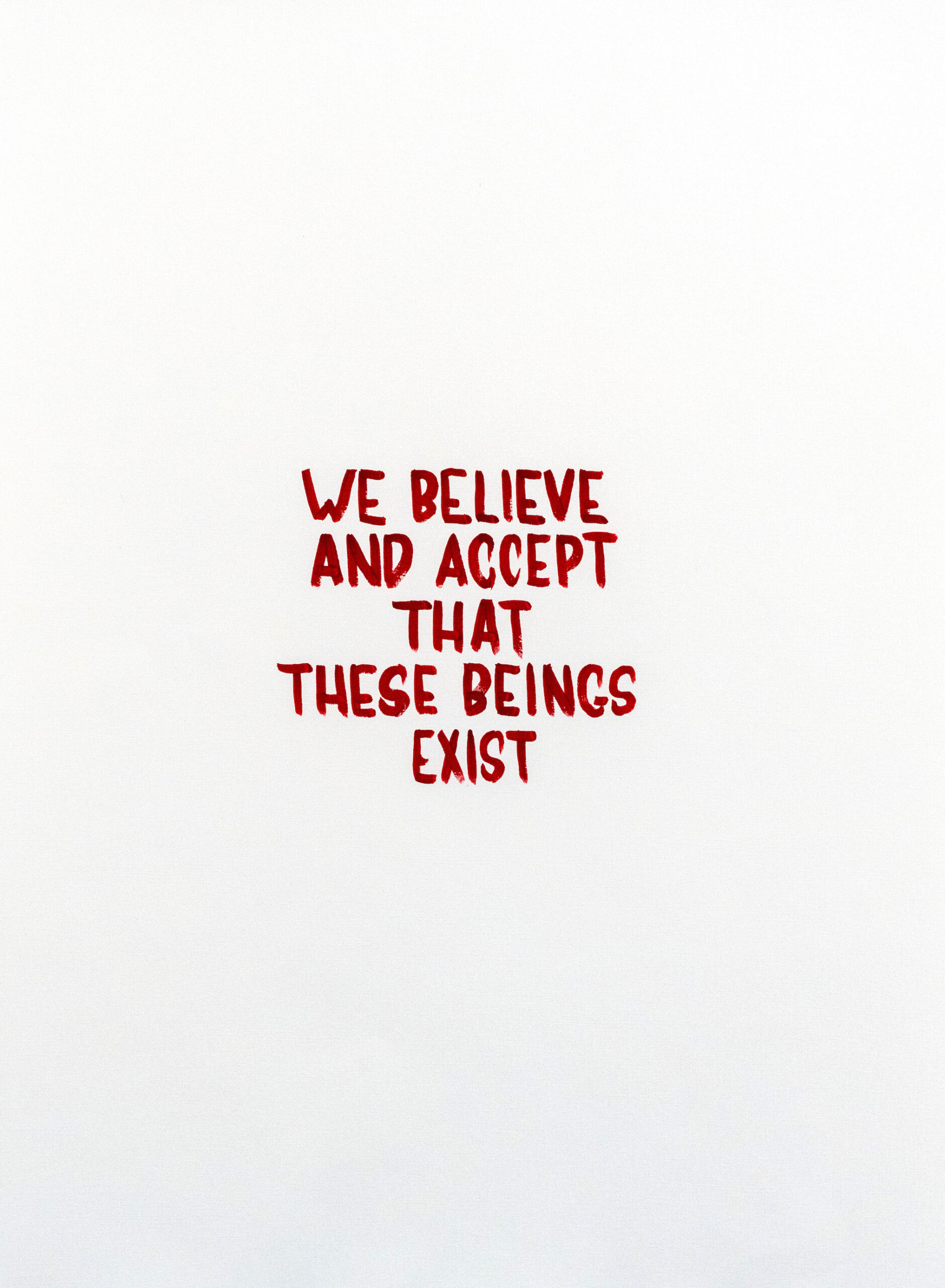
We Believe and Accept that these beings exist. copy
Axel Straschnoy, We Believe and Accept this Beings Exist, 2025. Acrylic on paper, 76 x 56 cm, framed.
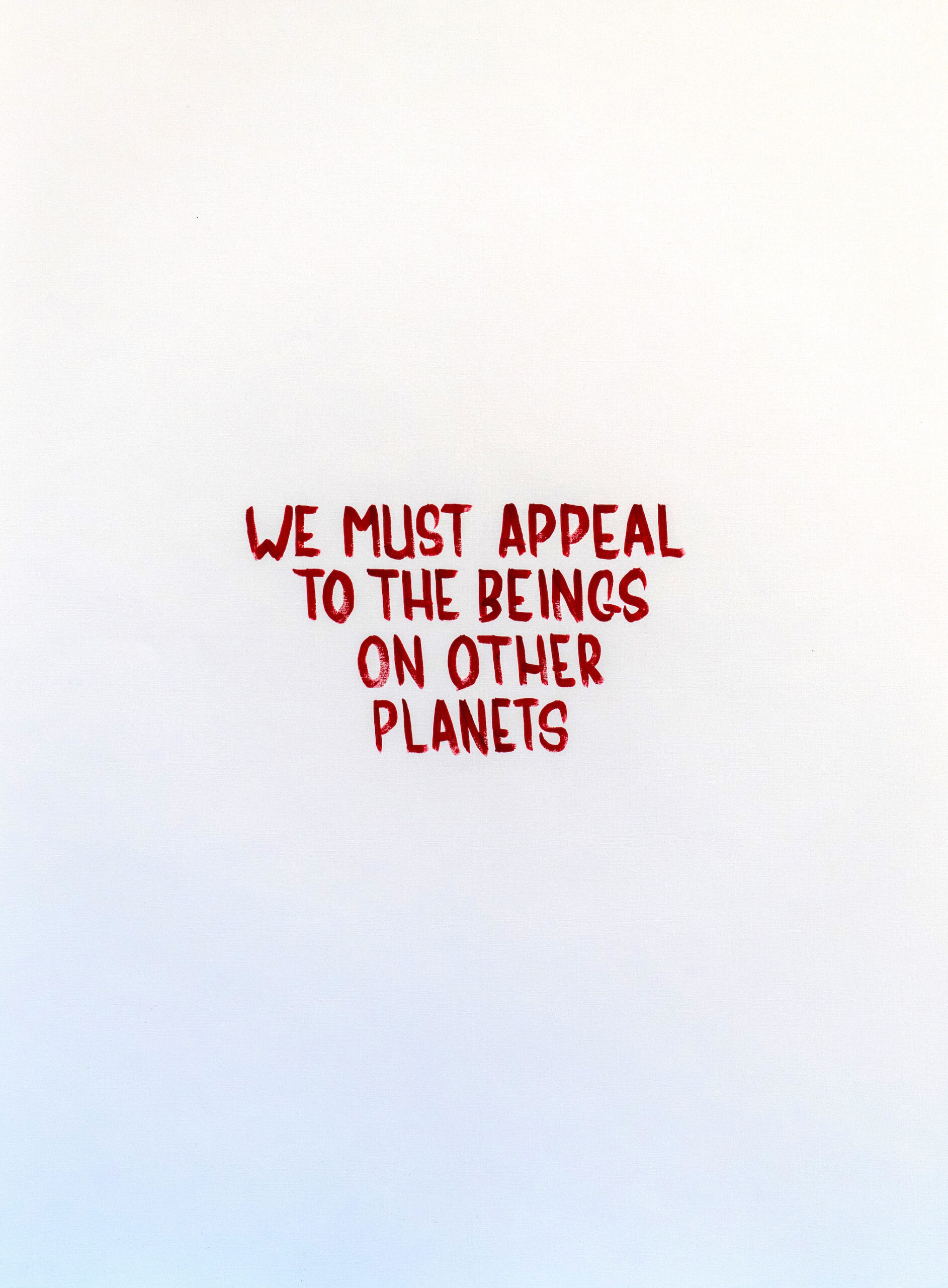
We must appeal to the beings on other planets copy
Axel Straschnoy, We Must Appeal to the Beings on Other Planets, 2025. Acrylic on paper, 76 x 56 cm, framed.
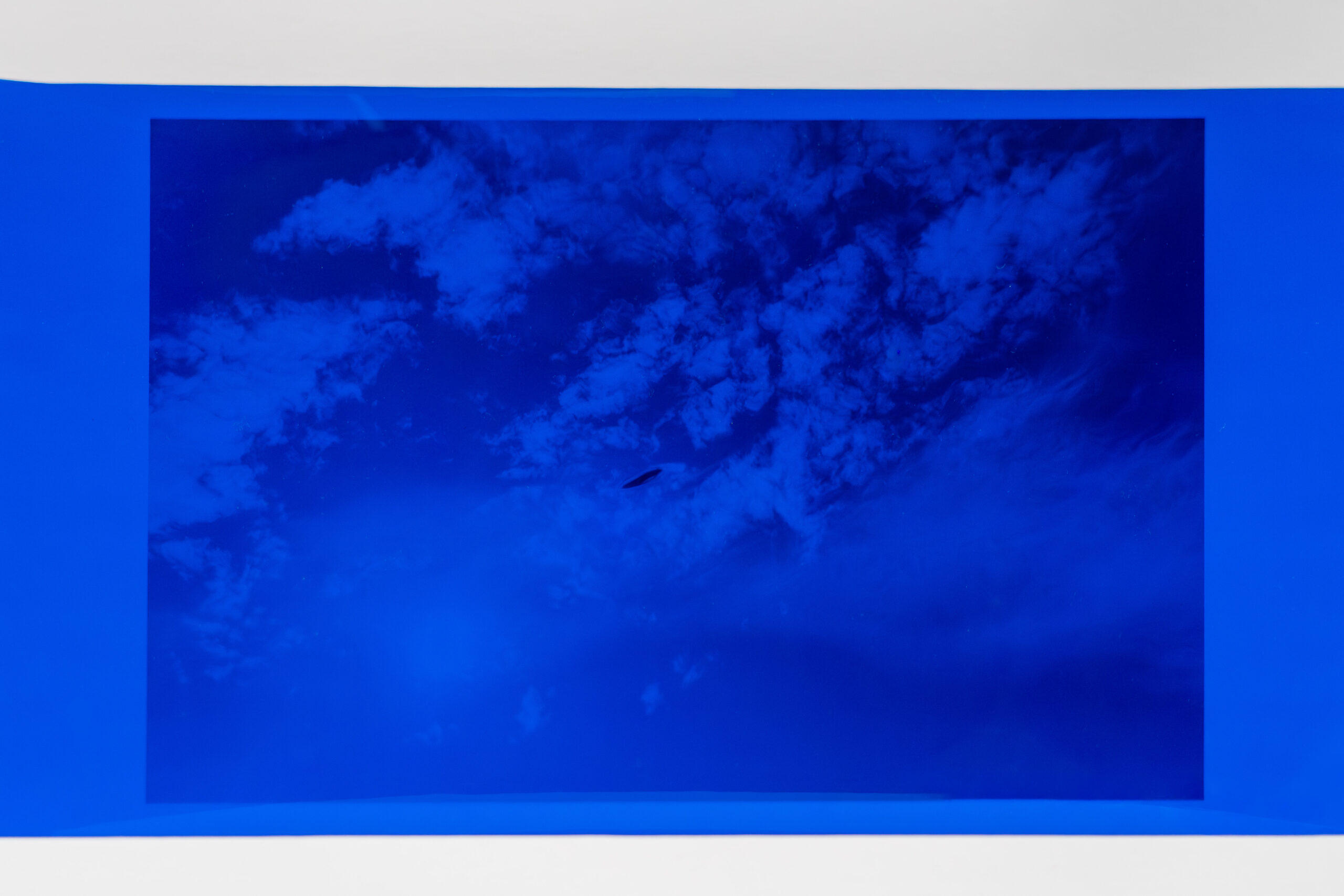
Axel Straschnoy_This Beings Must Exist_2025_Courtesy WIZARD LAB copy
Axel Straschnoy, OVNI, 2025. Fine art print with blue filter, 33 x 49 cm, framed. Ed. 1/3+1a.p.
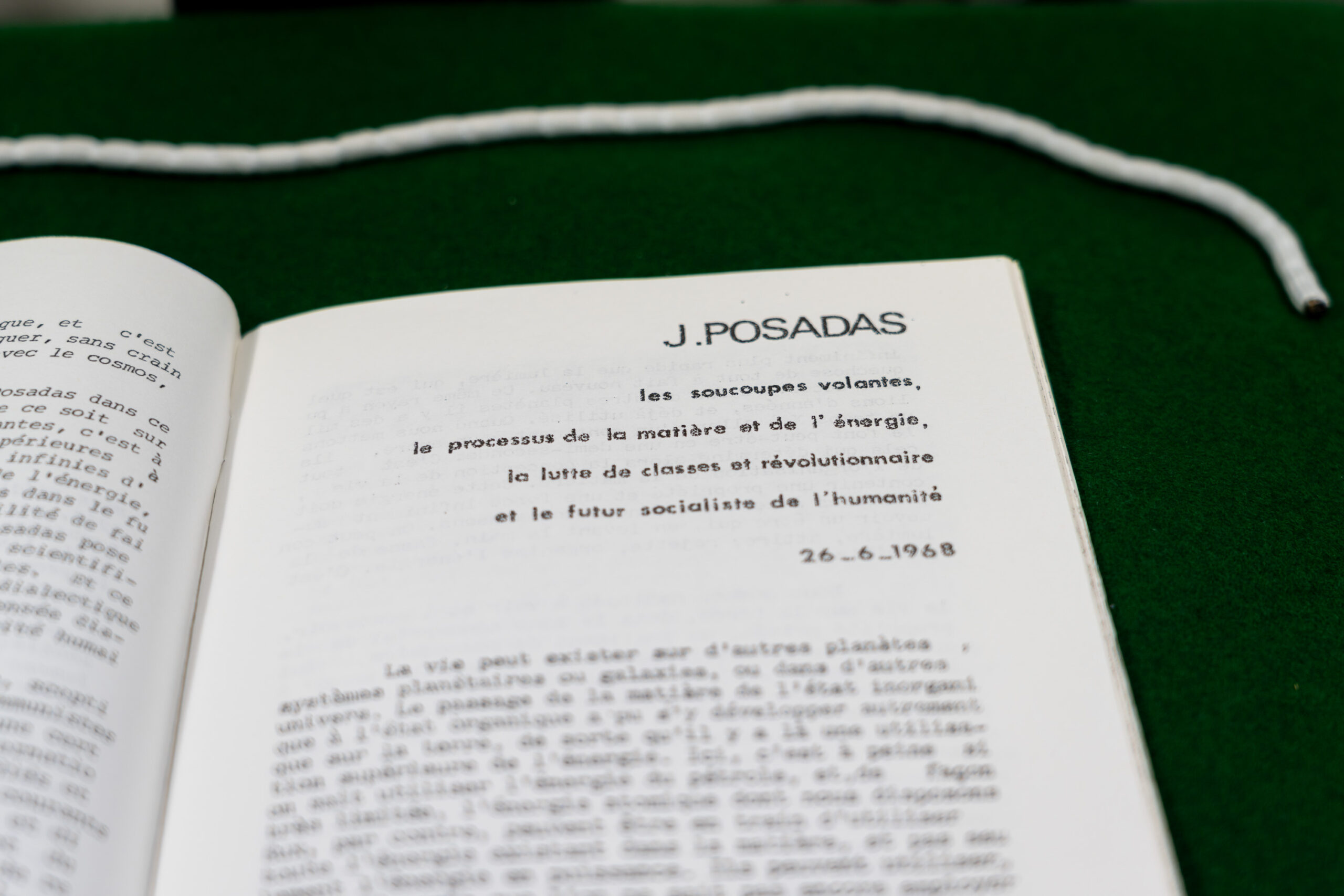
La internacional platillista
Axel Straschnoy, La internacional platillista, 2025.
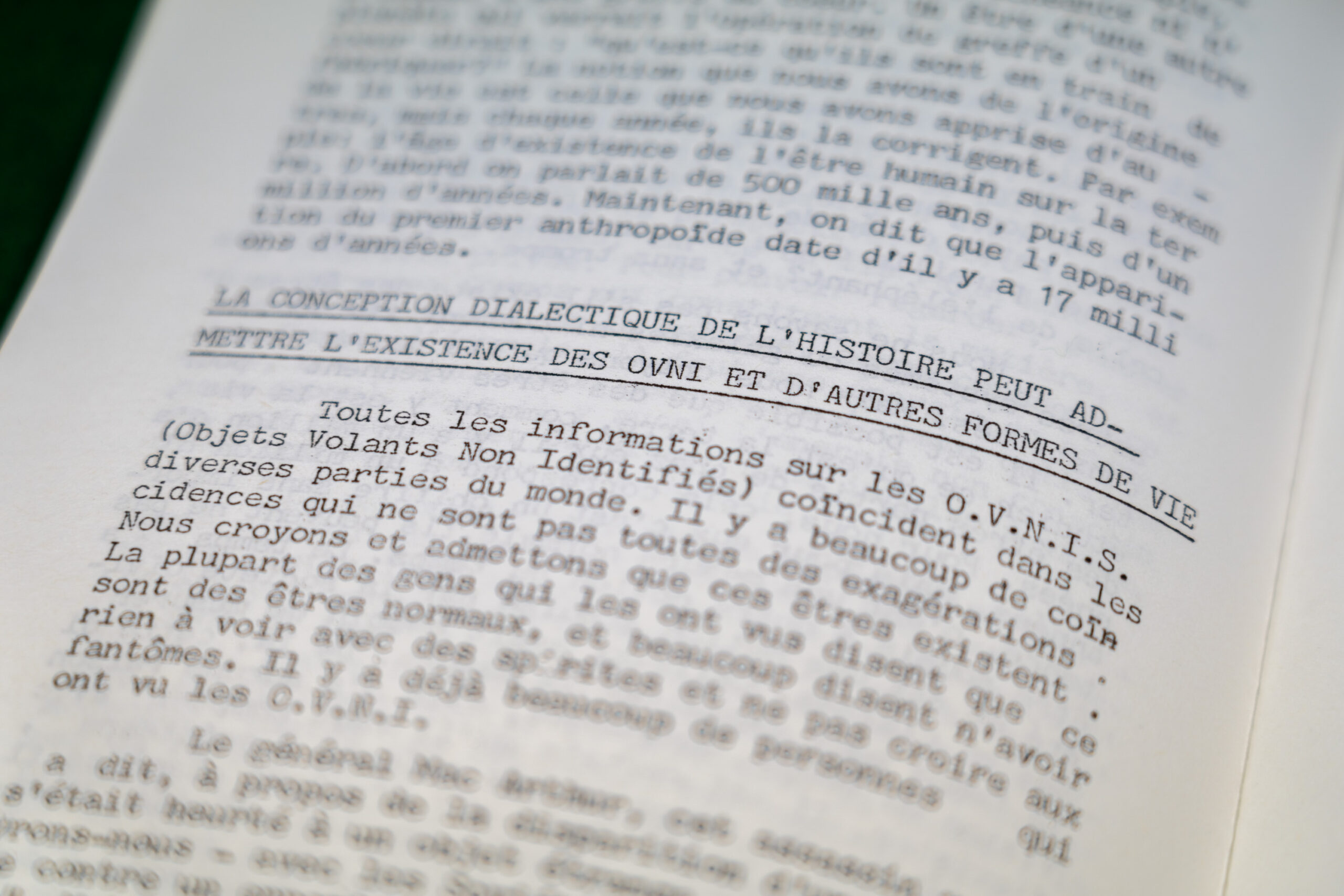
La internacional platillista
Axel Straschnoy, La internacional platillista, 2025.
The Source
The Source is a collaborative art and science project by Axel Straschnoy and Iain Sutton, being developed at the European Spallation Source (ESS) between 2021 and 2026. Blending drawing, photography, neutron activation, public presentations, residencies, and guest visits to nuclear research facilities, the project aims to create a portrait of the world’s most powerful neutron source.
Straschnoy and Sutton set out to pioneer a new form of photography—one that replaces photons with neutrons and silver halides with gold atoms—to reveal the invisible processes that shape our understanding of the world.
The ESS is poised to become the most powerful accelerator-driven neutron source ever built. It will generate revolutionary images and data, yet much of this work takes place deep underground, beyond the reach of sight. This creates a paradox: a setting that appears still, yet contains the concentrated energy to drive profound scientific transformations.
What does it mean to see in such conditions? What hidden structures support and frame these experiments? Could a facility like this be pushed to its conceptual limits—to create a self-portrait, capturing its essence in a plate of gold?
The final piece of The Source will be a gold-foiled plate irradiated on the ESS beamline. This plate will contain a portrait of the ESS rendered in radiation, invisible to the eye. When exposed to photographic paper, the irradiated gold will produce a visible imprint—an image encoded in radiation, translated into light.
Driven by research, the project evolves continuously. Its final work is accompanied by an expanding constellation of outcomes, which take shape in various forms and contexts over time.
The Source was initiated during Nanocosmic Investigations, an EU-funded residency organised by Malmö Museer, Inter Arts Center, and ESS in 2021–2022.

Axel Straschnoy, Exposure chart 2024.

Axel Straschnoy, HP5 400 Gamma.

Axel Straschnoy, Sensitive plate sketch.

Axel Straschnoy, TENIS Photo Paper Gamma.

Axel Straschnoy, THALES Gafchromic 24h.
THE FINNISH ASTRONAUTICAL SOCIETY
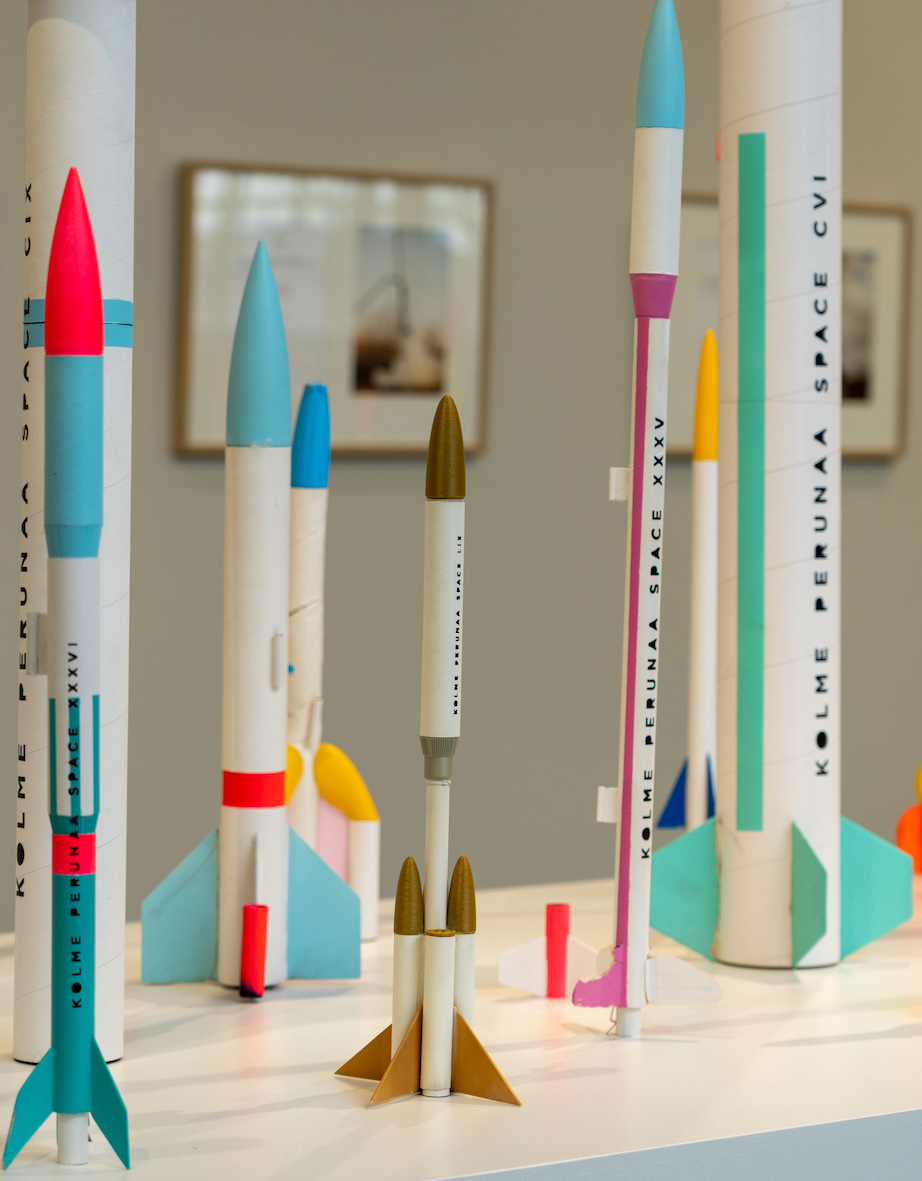
The Finnish Astronautical Society is a project exploring the history and ongoing evolution of Finland’s Space Programme. It highlights the country’s leading astronautics organization, established in 1959 by a group of schoolboys inspired by the space race. Driven by passion, technical ingenuity, and minimal resources, they pursued their dream of building Finland’s first rocket. Though their envisioned rocket was never completed, the society remains a hub for aspiring rocketeers to experiment and tackle the complexities of space flight.
Each piece in the series comprises a rocket designed and launched by the artist, a photograph capturing the moment of liftoff, and a certificate of authenticity.

Axel Straschnoy, Kolme Perunaa Space CVII, launch

Axel Straschnoy, Kolme Perunaa Space CVII

Axel Straschnoy, Kolme Perunaa Space CVIII

Axel Straschnoy, Kolme Perunaa Space CVIII, launch

109. Kolme Perunaa Space CIX – Launch 10 copy
Axel Straschnoy, Kolme Perunaa Space CIX, launch

Axel Straschnoy, Kolme Perunaa Space CIX