
Luciana Levinton is an Argentine artist and architect whose practice unfolds at the intersection of painting, architecture, and archival research. Her work begins with a question concerning the persistence of modernity: what remains of its forms, ideals, and systems of representation once the modern project has ceased to be a promise of the future and has become instead a matter of memory, interpretation, and revision.
Architecture constitutes for Levinton both a field of study and a visual archive. Buildings, plans, façades, interiors, furniture, photographs, and publications are selected, researched, and subsequently displaced into the pictorial field. Rather than representing existing architecture, she extracts specific elements—a structure, a proportion, a void, a relationship between solids and voids—and subjects them to a different logic. Through this displacement, what once belonged to a building ceases to fulfil a function and begins to exist as form.
Her mode of construction begins, paradoxically, with deconstruction. Levinton fragments and dismantles previously constructed structures in order to recompose them within another space and through different relationships. Painting introduces an alteration of scale, function, and temporality: the plan ceases to be solely a projective instrument, the façade becomes a fragment, and the structural element acquires an autonomy that architecture, in its built condition, does not allow.
One of the central lines of her research concerns modern architecture in Latin America and the distance between its universal aspirations of European modernism and the historical, cultural, and geographical conditions through which those ideas were received and transformed. In this sense, her work does not approach modernity as a closed style, but as a cultural project shaped by displacement, translation, and contradiction. She is interested not only in the architecture produced, but also in the means through which architectural knowledge was circulated, legitimised, and transmitted: journals, photographs, plans, exhibitions, archives, and specialised publications.
Within this research, Levinton has established sustained dialogues with figures such as Lina Bo Bardi, Charlotte Perriand, Eileen Gray, and Lygia Clark. Her engagement with these architects, designers, and artists forms part of a broader reconsideration of the modernist canon and, in particular, of the ways in which women’s contributions have been incorporated into—or excluded from—its history. The artist does not approach these figures through homage in a merely commemorative sense: She studies, appropriates, fragments, and repositions their forms, establishing a relationship that is at once affective, critical, and productive. Homage thus becomes a form of reading.
Levinton’s work does not seek to reconstruct a history of architecture or to illustrate its episodes. Rather, it operates upon its visual and conceptual remnants, asking what a historical form can continue to produce when it is displaced into another time and another language.
From this perspective, painting becomes an instrument of research: a space in which architecture and history can be dismantled, reordered, and interrogated anew. In her practice, modernity does not appear as a concluded chapter, but as an open archive—a territory of forms, ideas, and promises that remains available to new readings.
SELECTED WORKS
WORKS ON PAPER
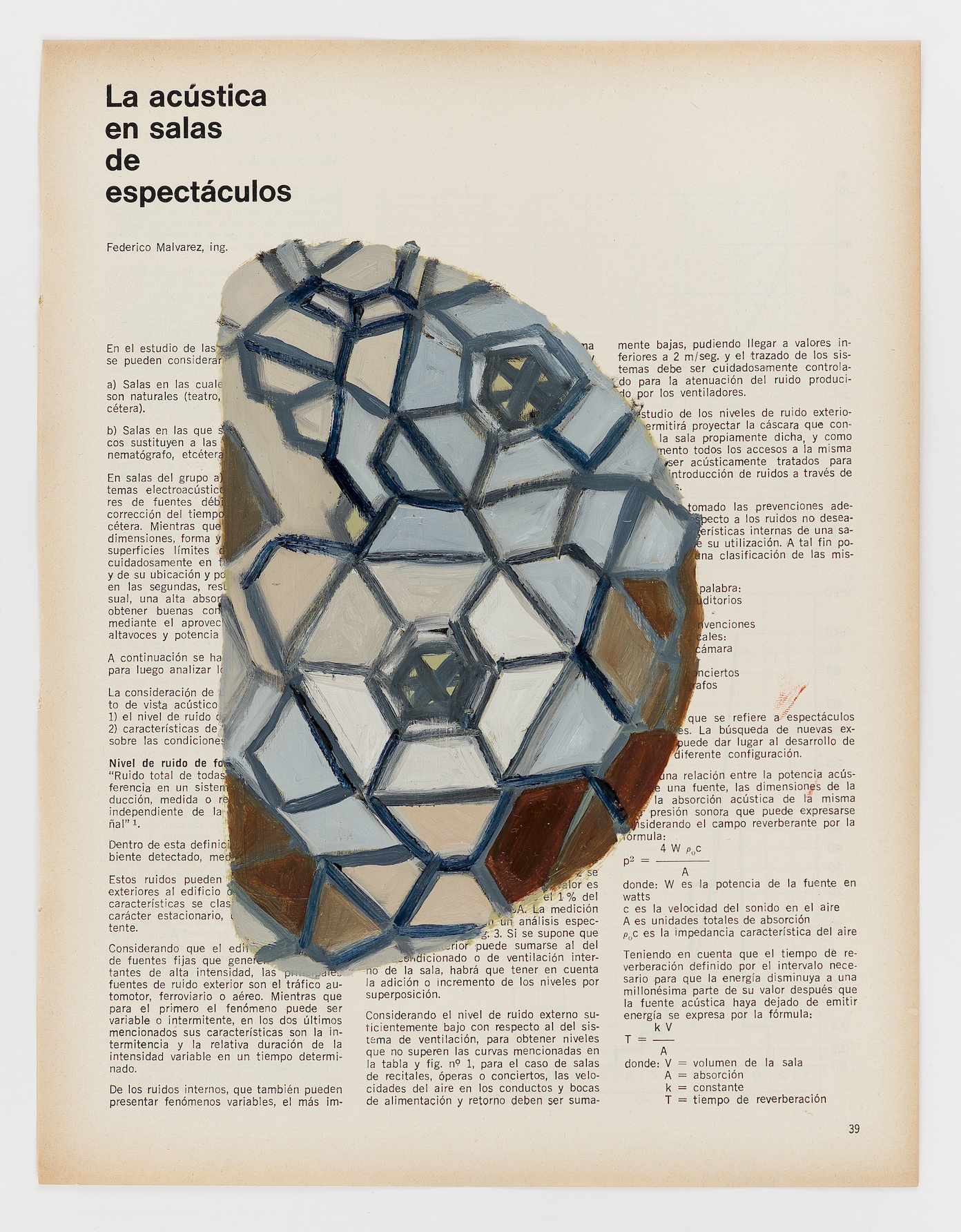
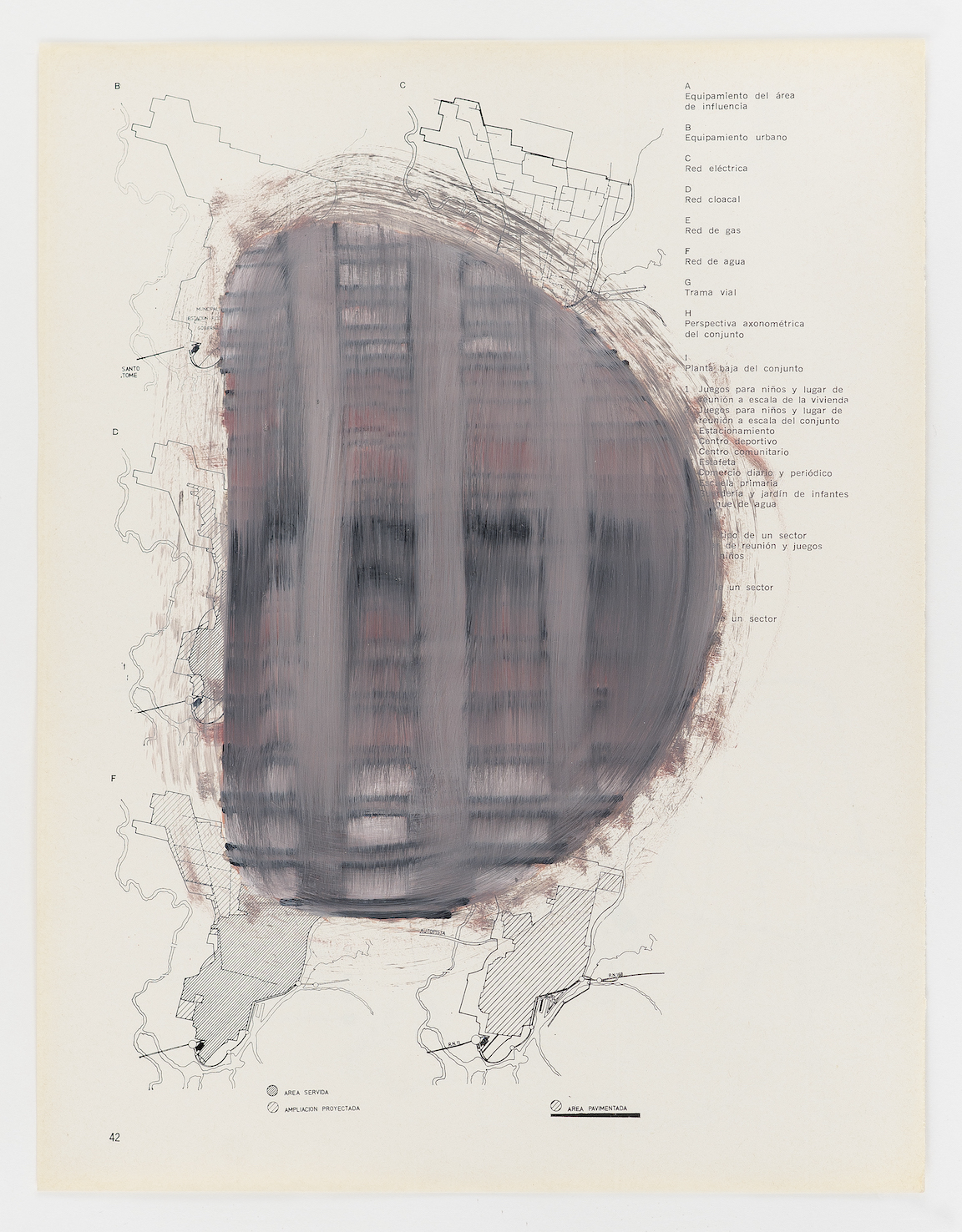
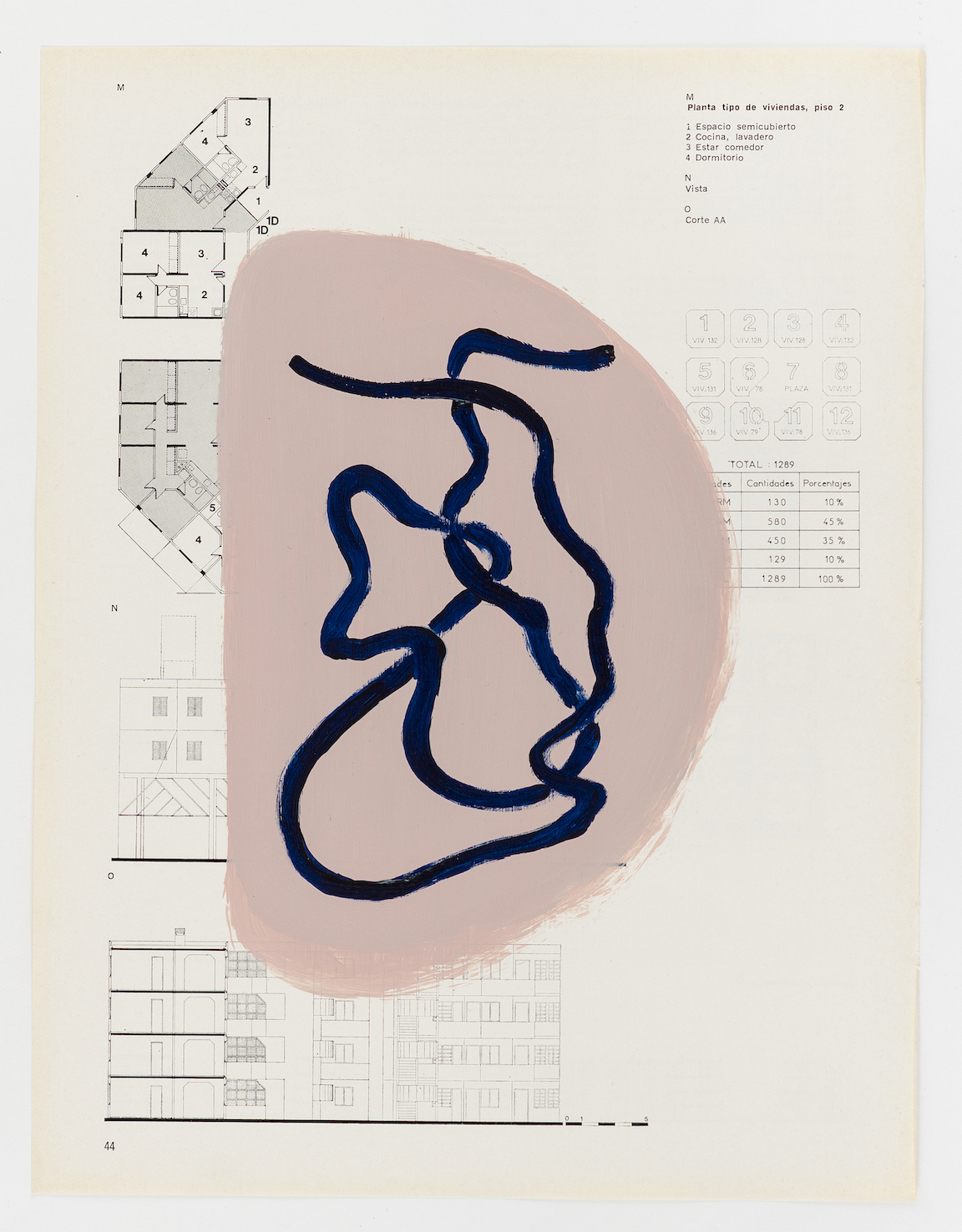
The relationship between memory and appropriation in Levinton’s oeuvre takes on a particular dimension in her works incorporating pages from Summa, the influential Argentine architecture magazine founded in 1963 and published until 1992. The pages of the magazine function simultaneously as historical documents and pictorial surfaces. By intervening in texts, photographs, diagrams, and plans, Levinton alters the authority of the document. Information ceases to function solely as information and becomes material for transformation. The archive consequently shifts from being a repository of the past to becoming an active space of interpretation.
Luciana Levinton, Sin título (Design for wallhanging, Annie Albers, 1926). Oil on vintage architecture magazine page, 30 x 23 cm. 2025.
Luciana Levinton, Sin título (Drawing for a knot. Annie Albers, 1948). Oil on vintage architecture magazine page, 30 x 23 cm. 2025.
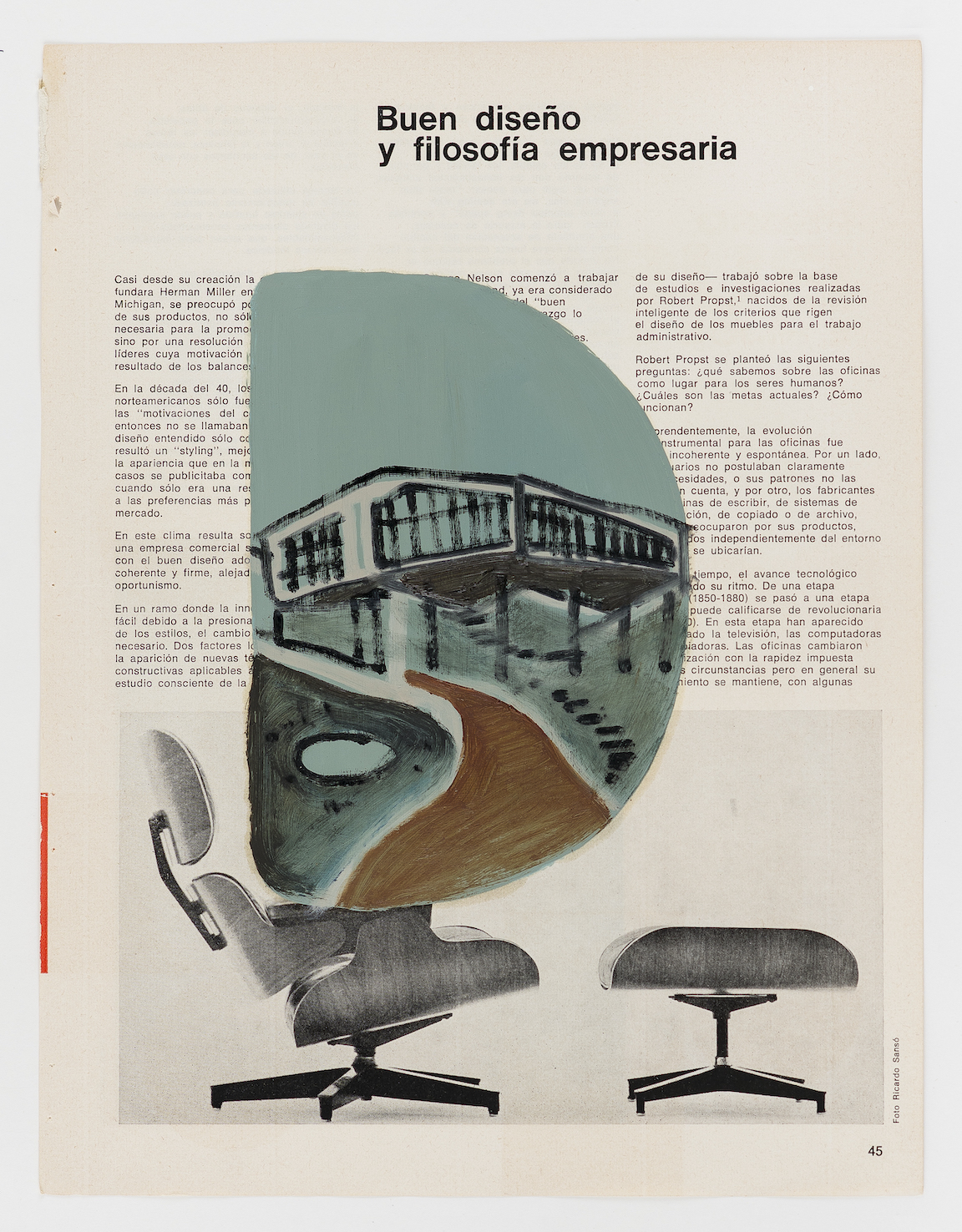
Luciana Levinton, Sin título (Casa de Vidrio, Lina Bo Bardi, Morumbi, Sao Paulo, 1951). Oil on vintage architecture magazine page, 30 x 23 cm. 2025.
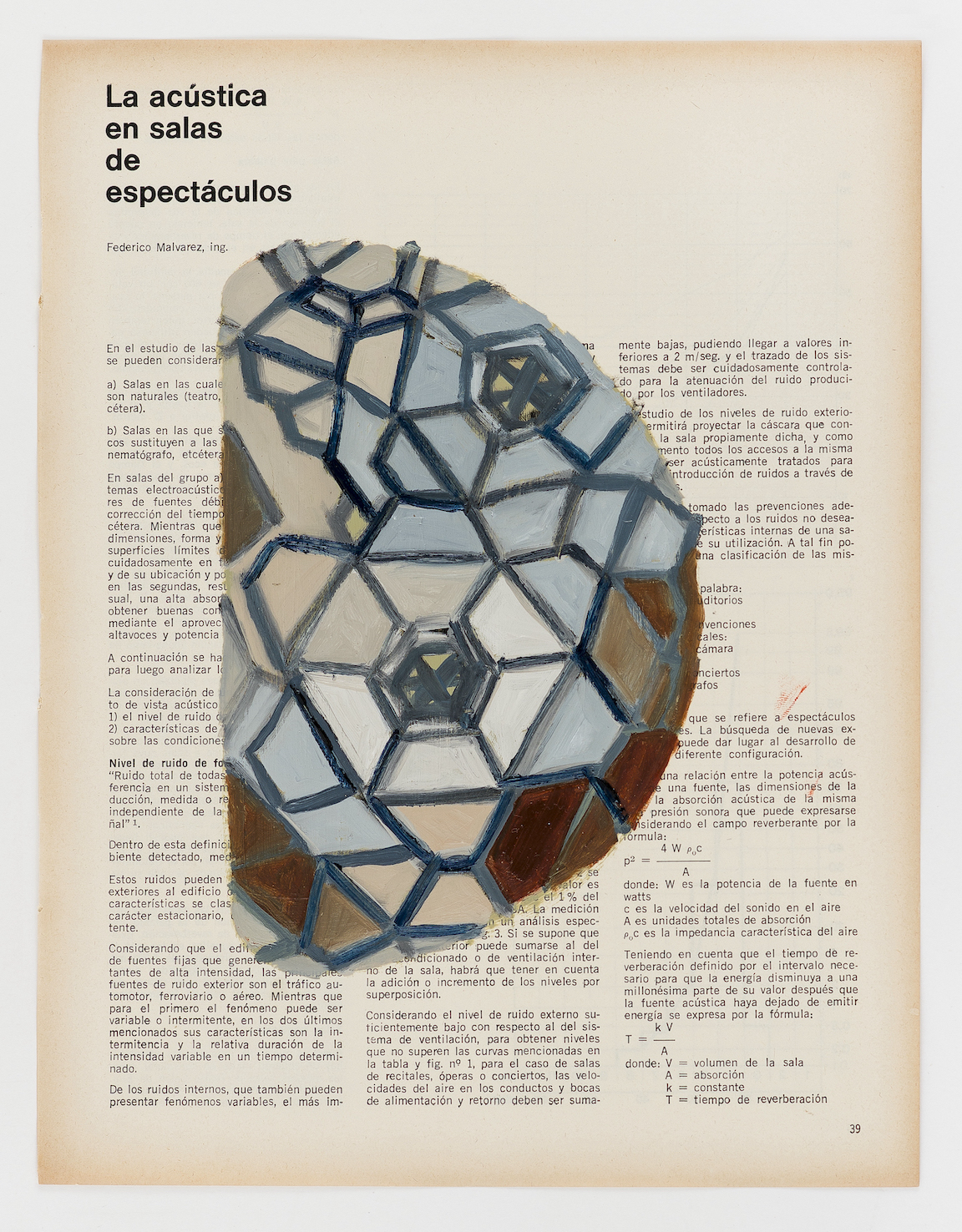
Luciana Levinton, Sin tÍtulo (Orquideorama, Jardín Botánico de Medellín, Plan:B Arquitectos Jprcr, 2006). Oil on vintage architecture magazine page, 30 x 23 cm. 2025.
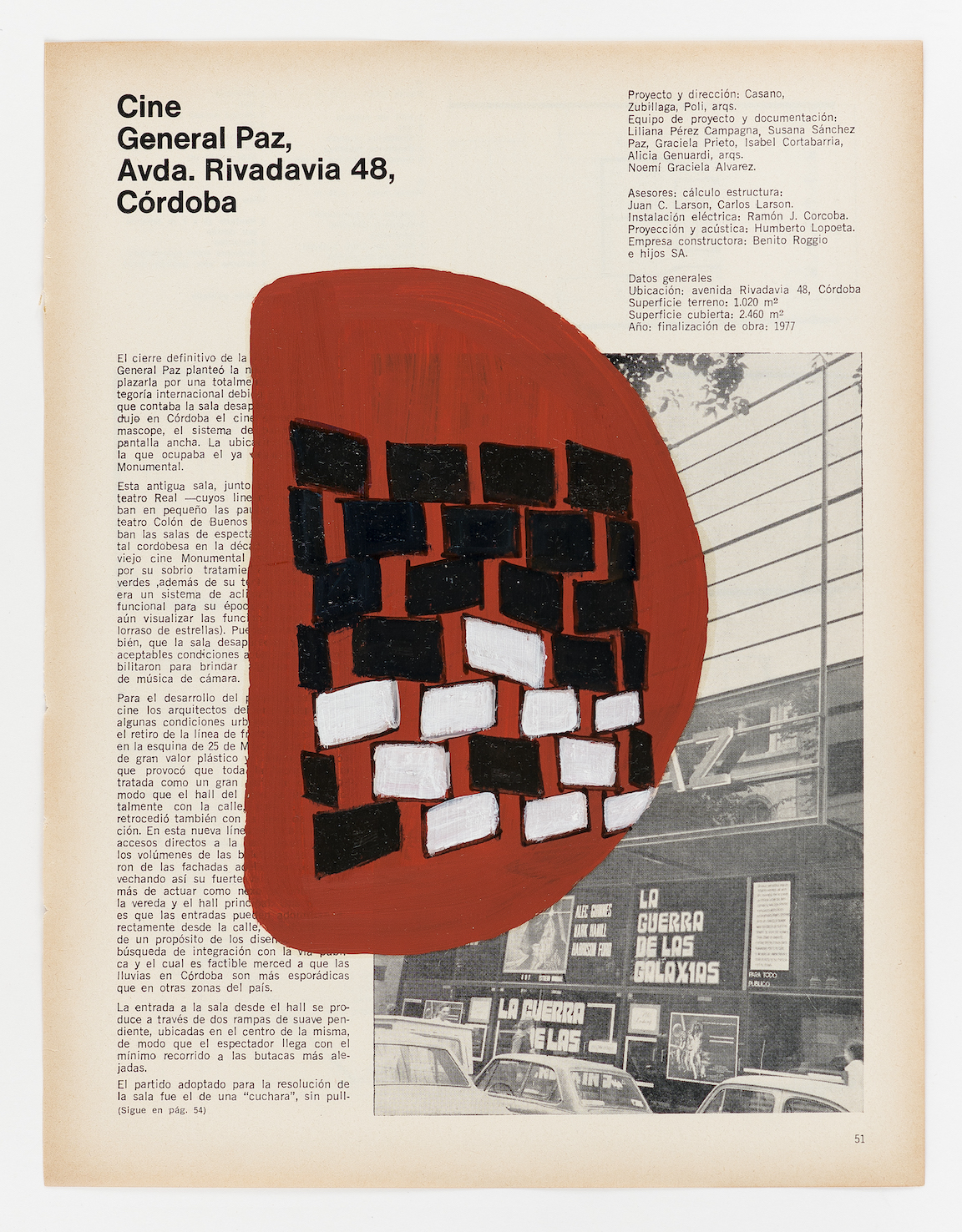
Luciana Levinton, Sin título (Paravent en blocs, Paris. Eileen Gray, 1927). Oil on vintage architecture magazine page, 30 x 23 cm. 2025.
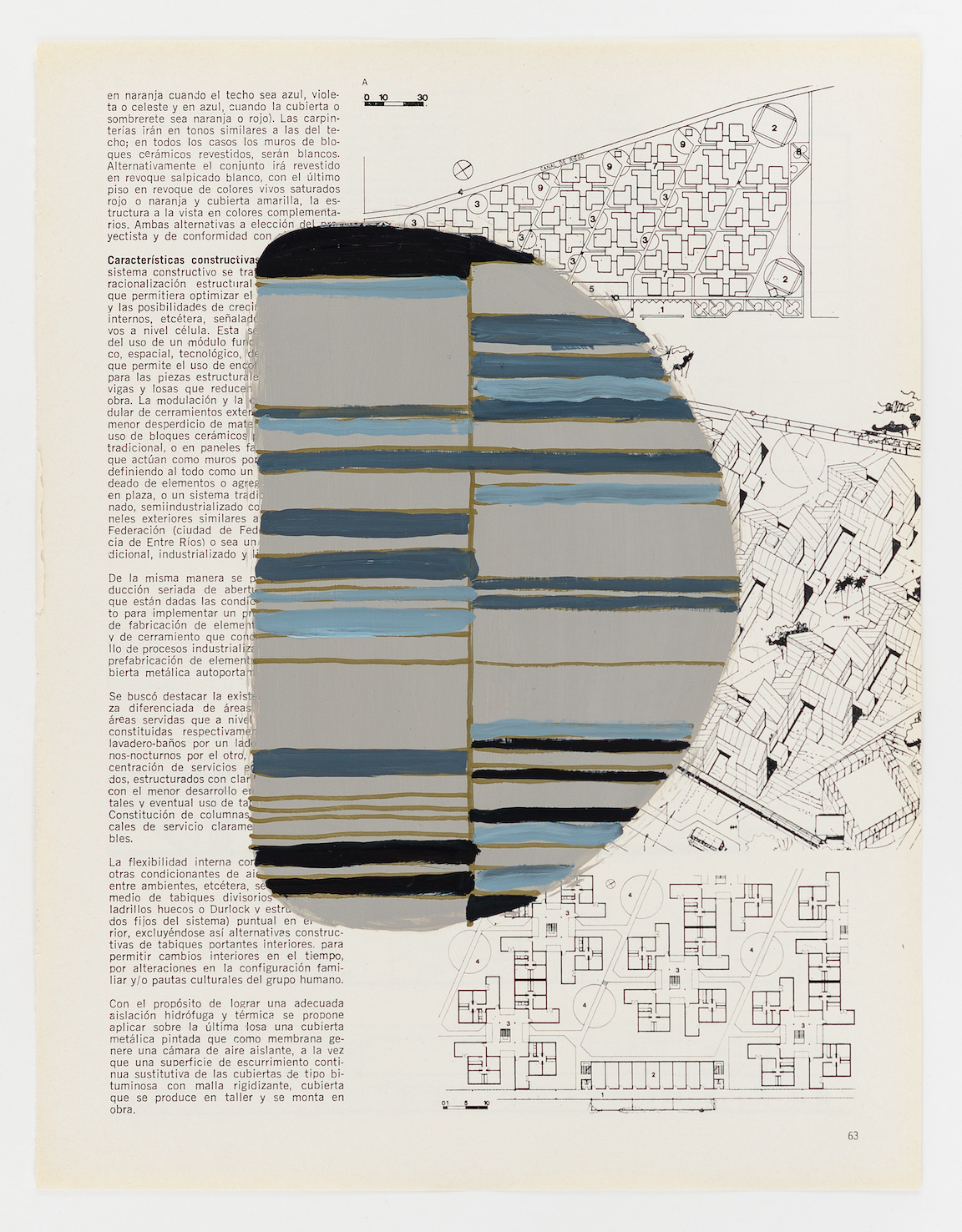
Luciana Levinton, Sin título (Design for wallhanging, Annie Albers, 1926). Oil on vintage architecture magazine page, 30 x 23 cm. 2025.
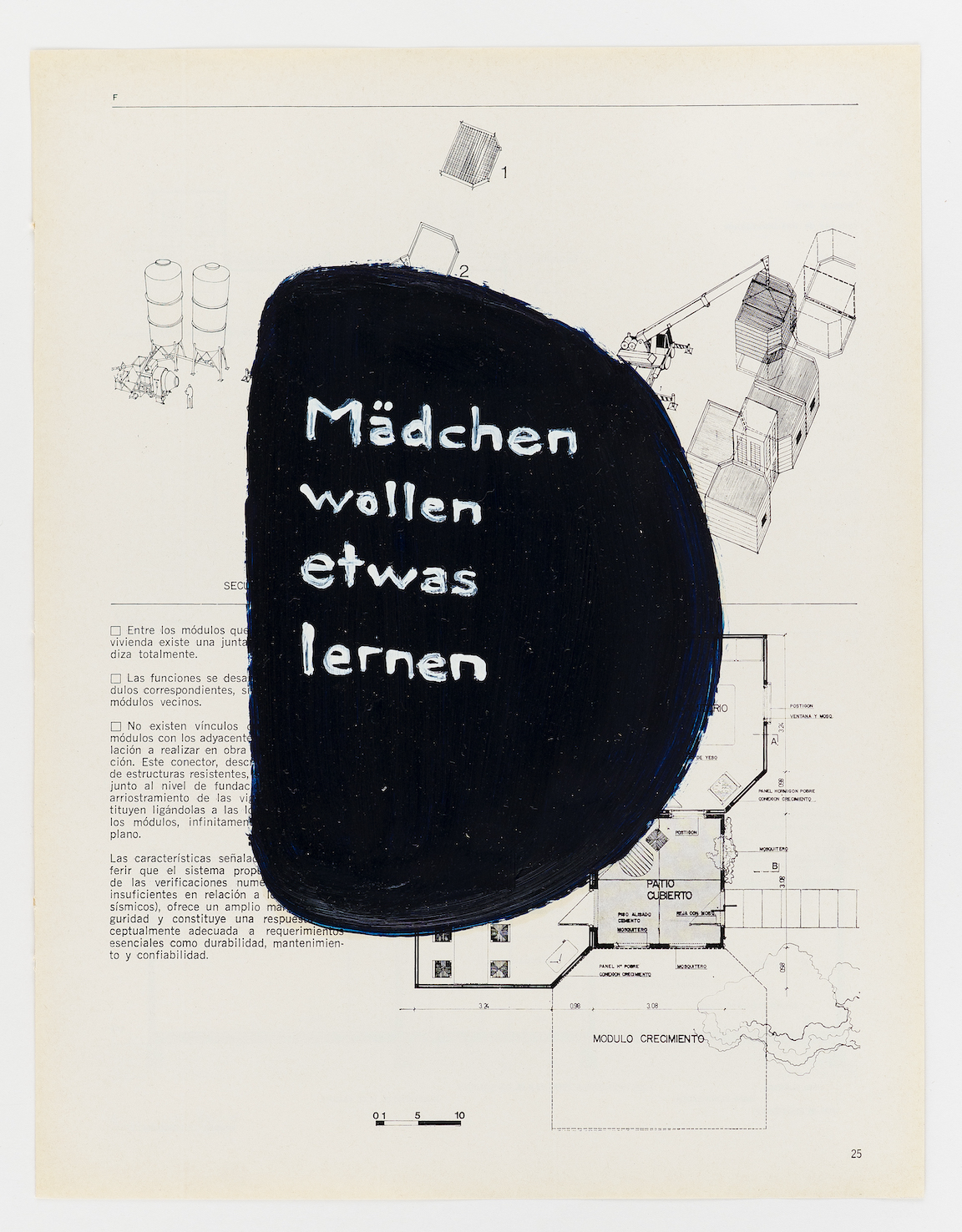
Luciana Levinton, Sin título (“Las chicas quieren aprender”, Publication by Prof. Karla Grosch, N.4, “Die Woche”, Bauhaus, 1930). Oil on vintage architecture magazine page, 30 x 23 cm. 2025.
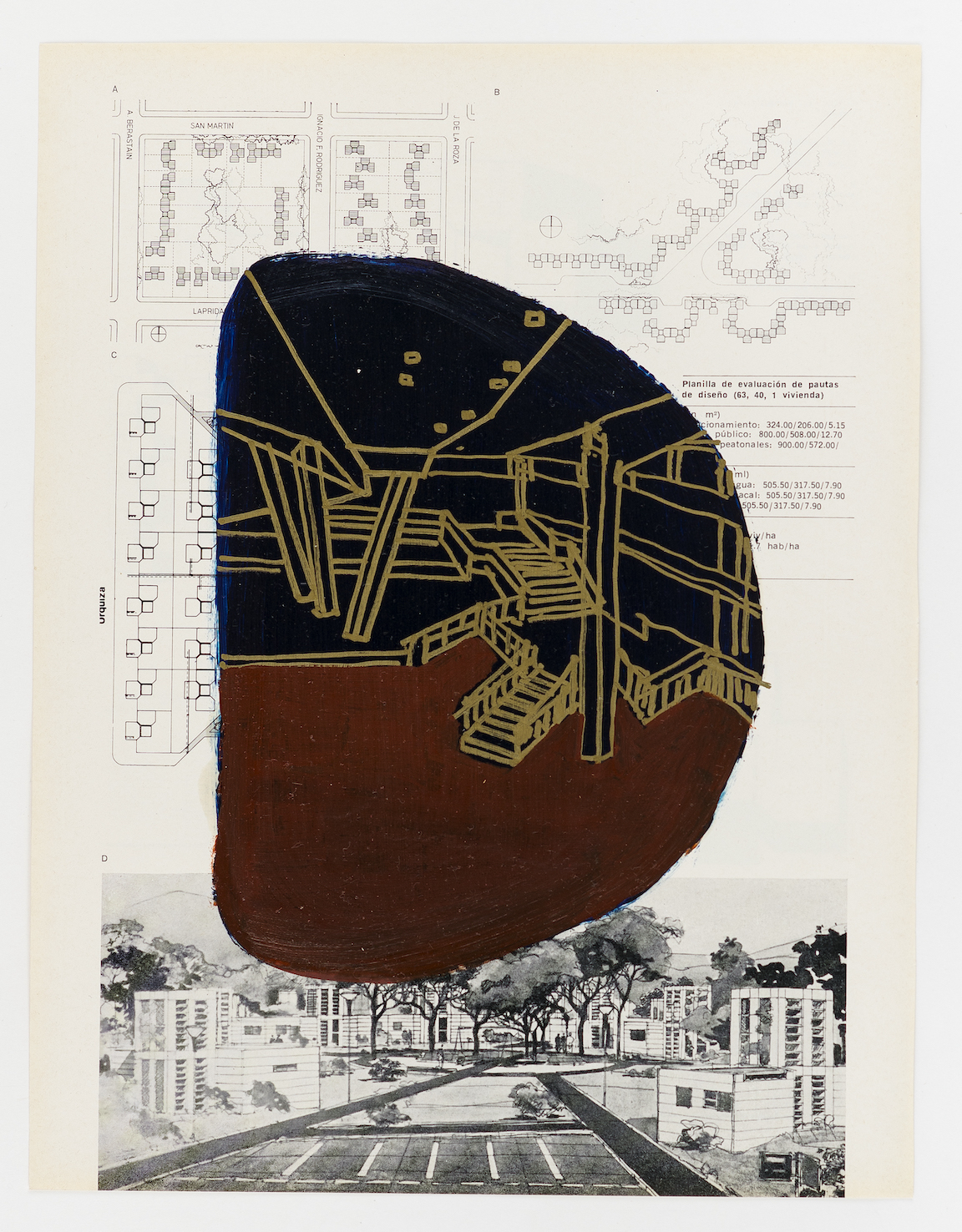
Luciana Levinton, Sin título (Filarmonica de Berlin de Hans Scharoun, Diseno del color de los interiores por Lou Berkenkamp – Scheper, 1957). Oil on vintage architecture magazine page, 30 x 23 cm. 2025.
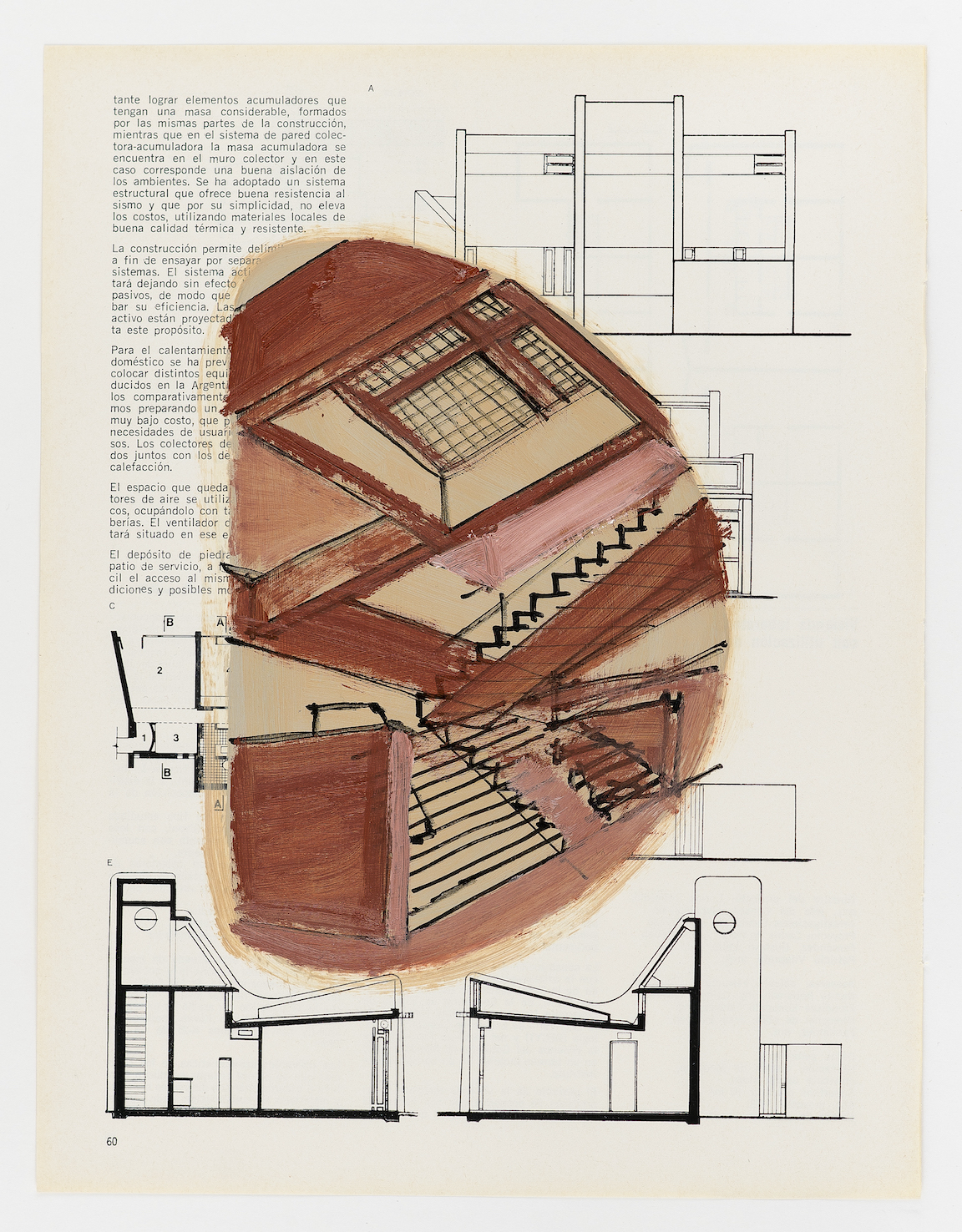
Luciana Levinton, Sin título (Casa Gerassi, Sao Paulo – Paulo Mendez da Rocha, 1988-1991). Oil on vintage architecture magazine page, 30 x 23 cm. 2025.
PAINTINGS
Levinton’s paintings retain the geometric clarity of modern architecture, while this rationality is permeated by colour, fragmentation, repetition, scale, and suspension. Her forms preserve the memory of their origins while simultaneously becoming detached from them. Within this tension emerges an affective dimension: a relationship to architecture shaped by admiration, distance, and the desire to look again.
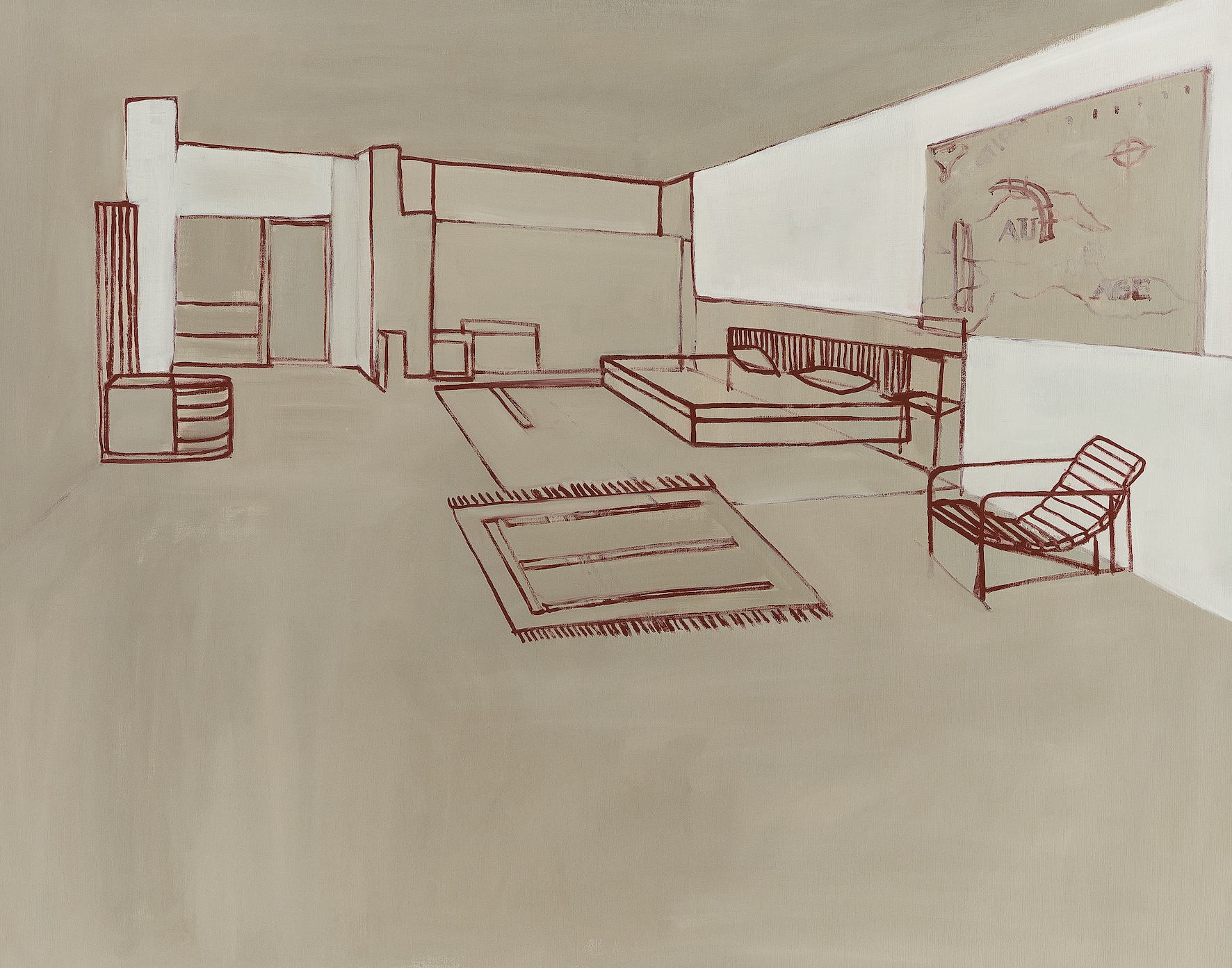
Luciana Levinton, Untitled (Villa E-1027. Eileen Gray), 2025. Oil on canvas, 92 x 115 cm.
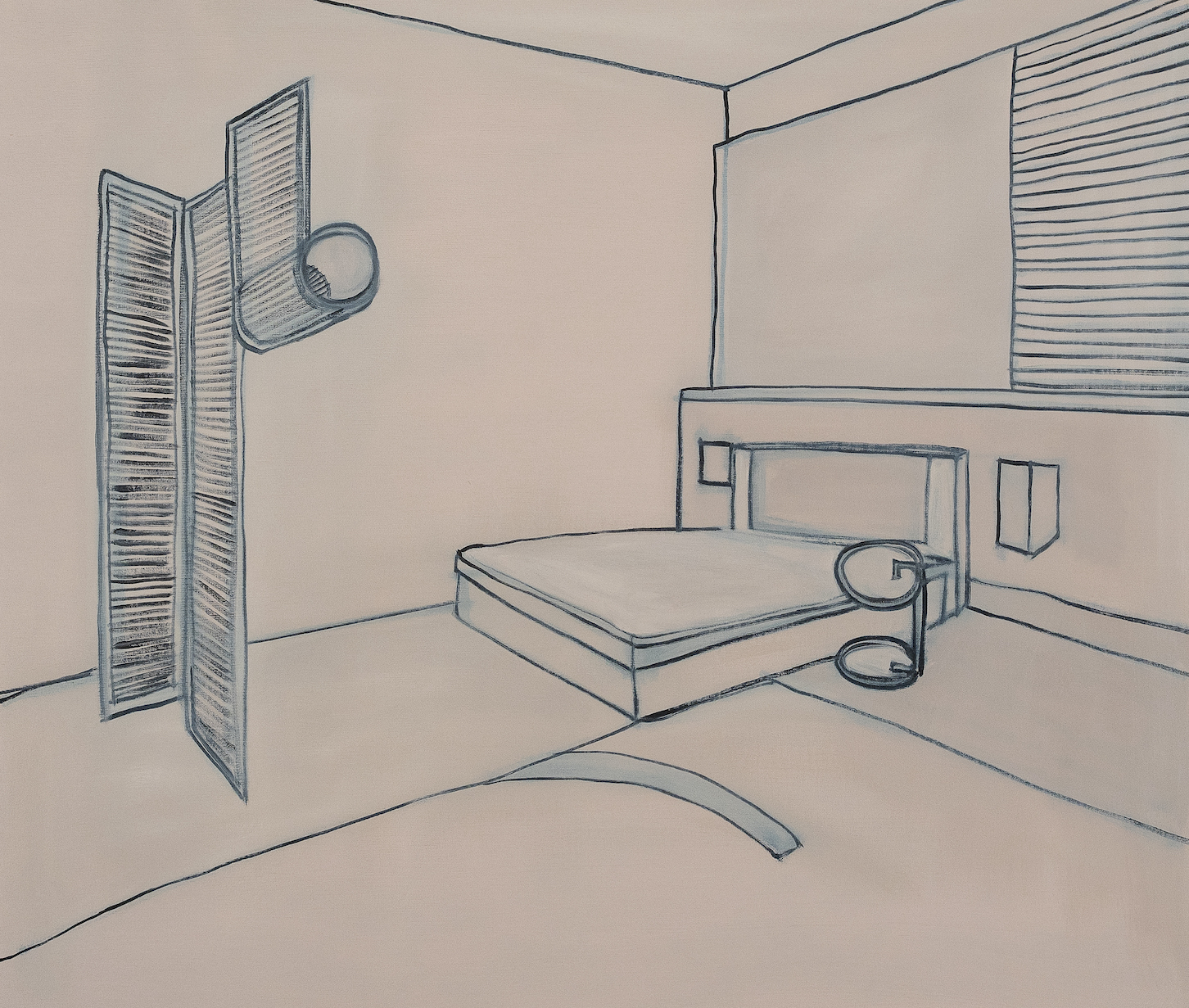
Luciana Levinton, Untitled (Le chambre d’ami, montrant un paravent repliable en tole perforee et la table “E-1027” en tubes c’acier a chrome), 2026. Oil on canvas, 78 x 92 cm.
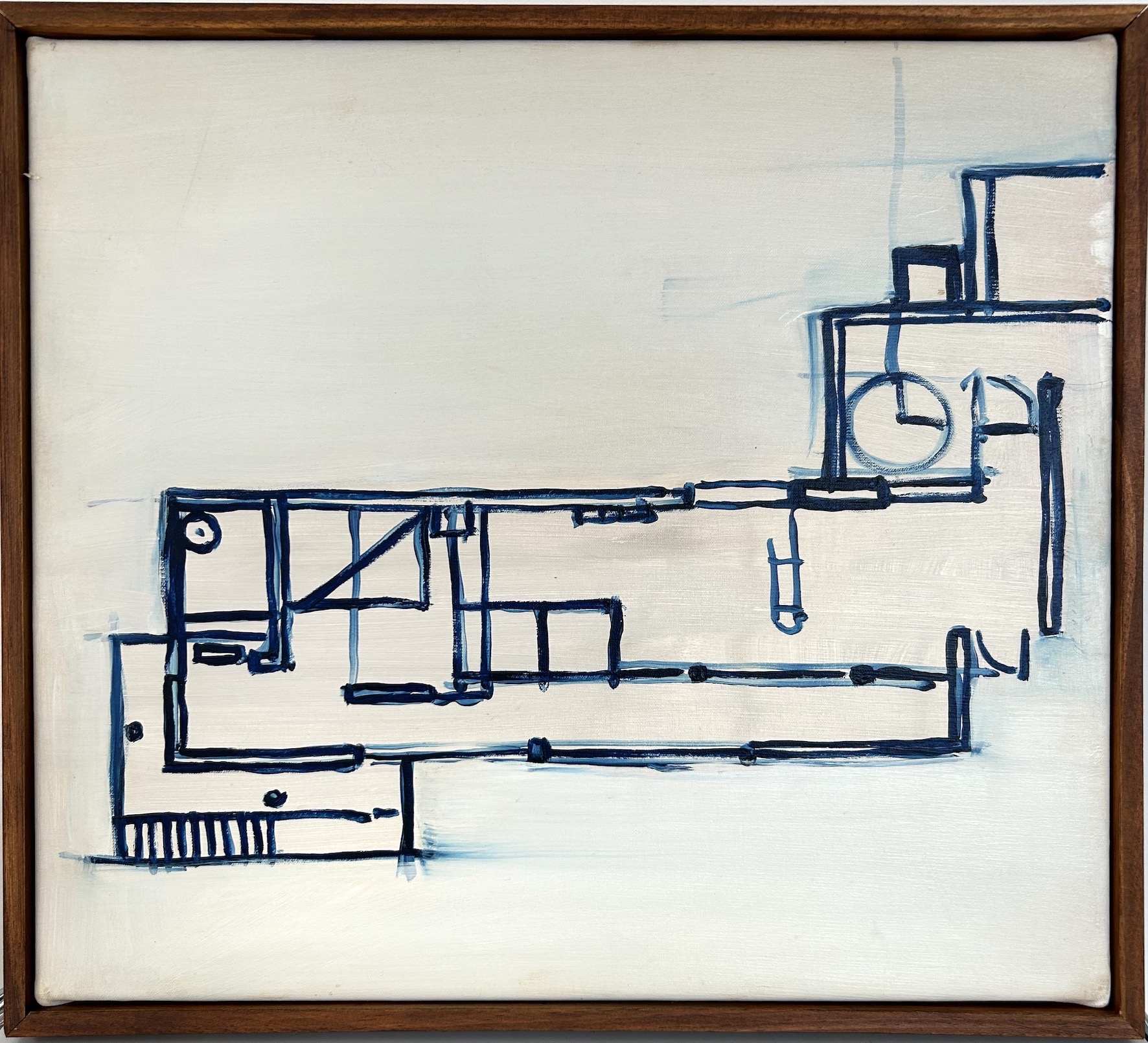
Luciana Levinton, Untitled (Villa E1027) II, 2024. Oil on canvas, 42 x 47 cm.
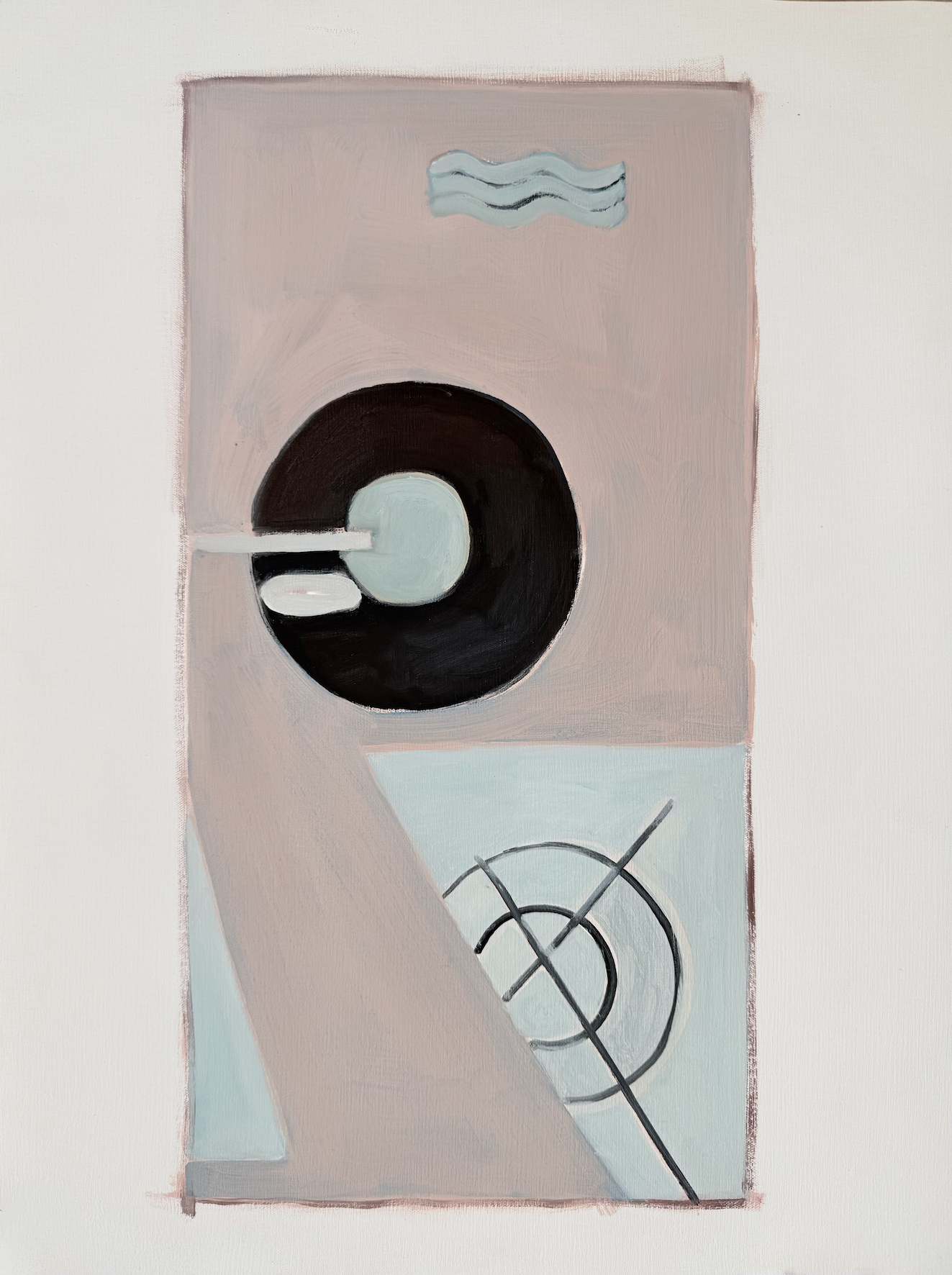
Luciana Levinton, Untitled (Diseño de alfombra) VIII, 2026. Oil on canvas, 49 x 34,5 cm.
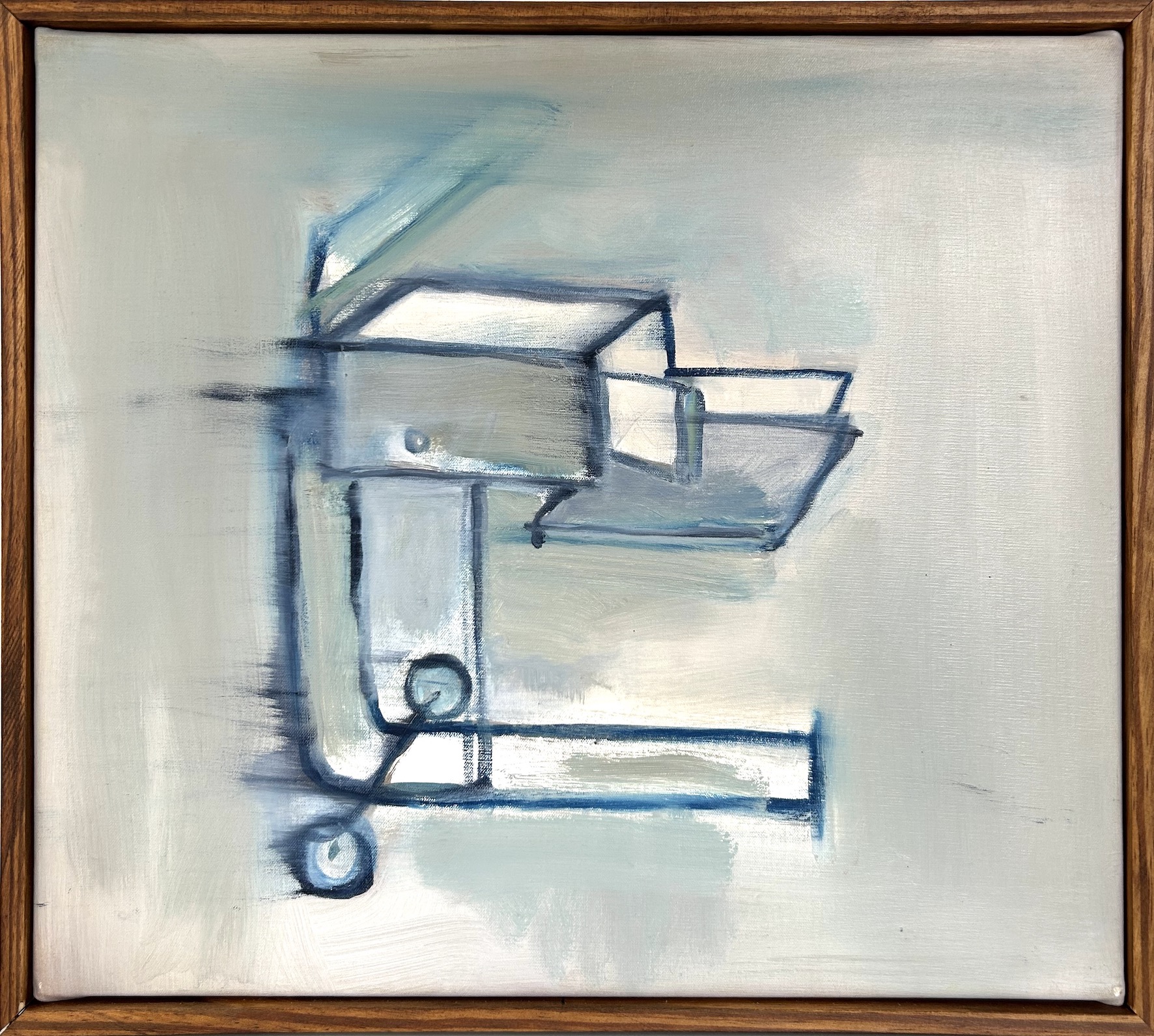
Luciana Levinton, Untitled (Mueble para la Villa E-1027), 2026. Oil on canvas, 42 x 47 cm.
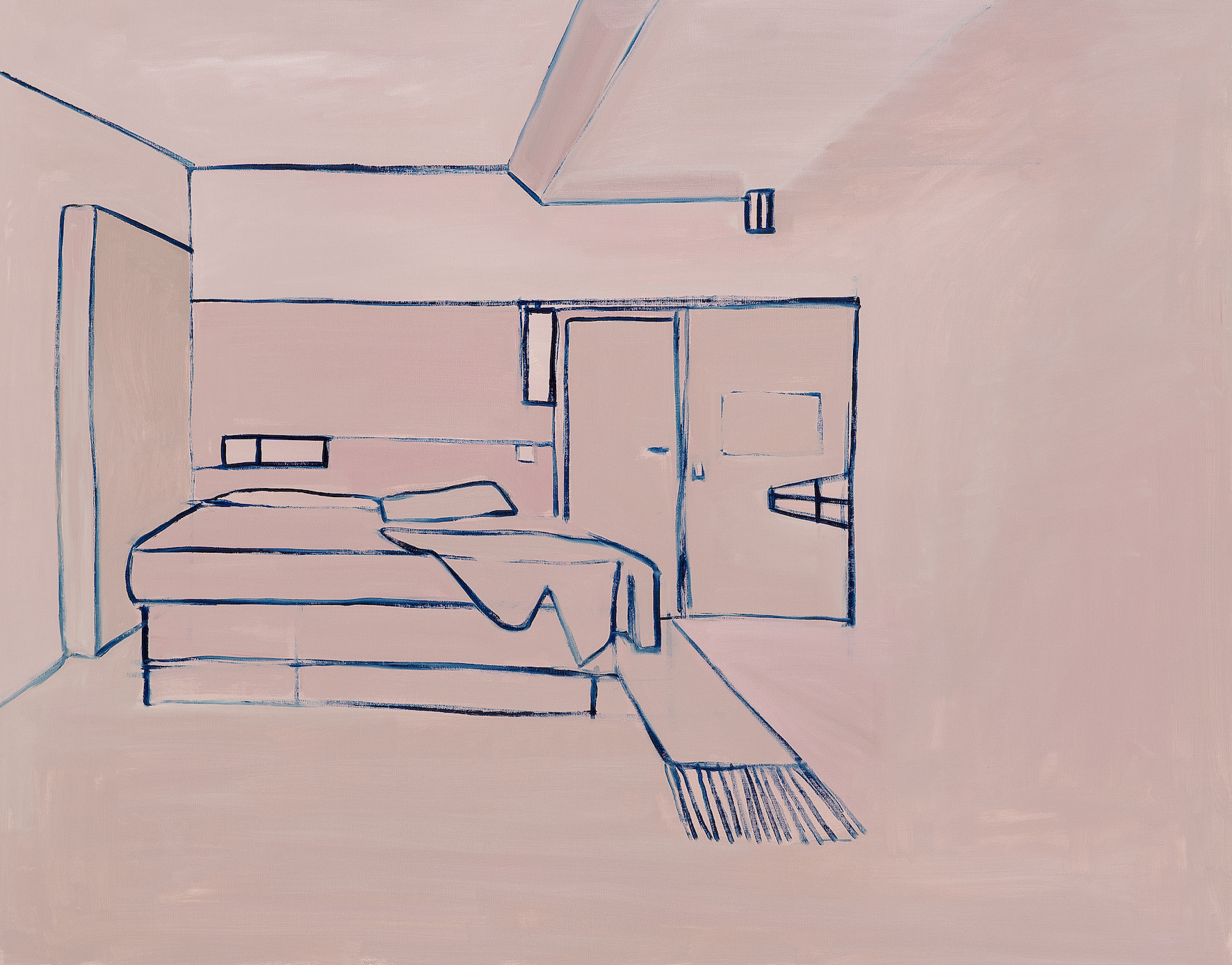
Luciana Levinton, Untitled (Villa E-1027. Eileen Gray) III , 2024. Oil on canvas, 92 x 124 cm.
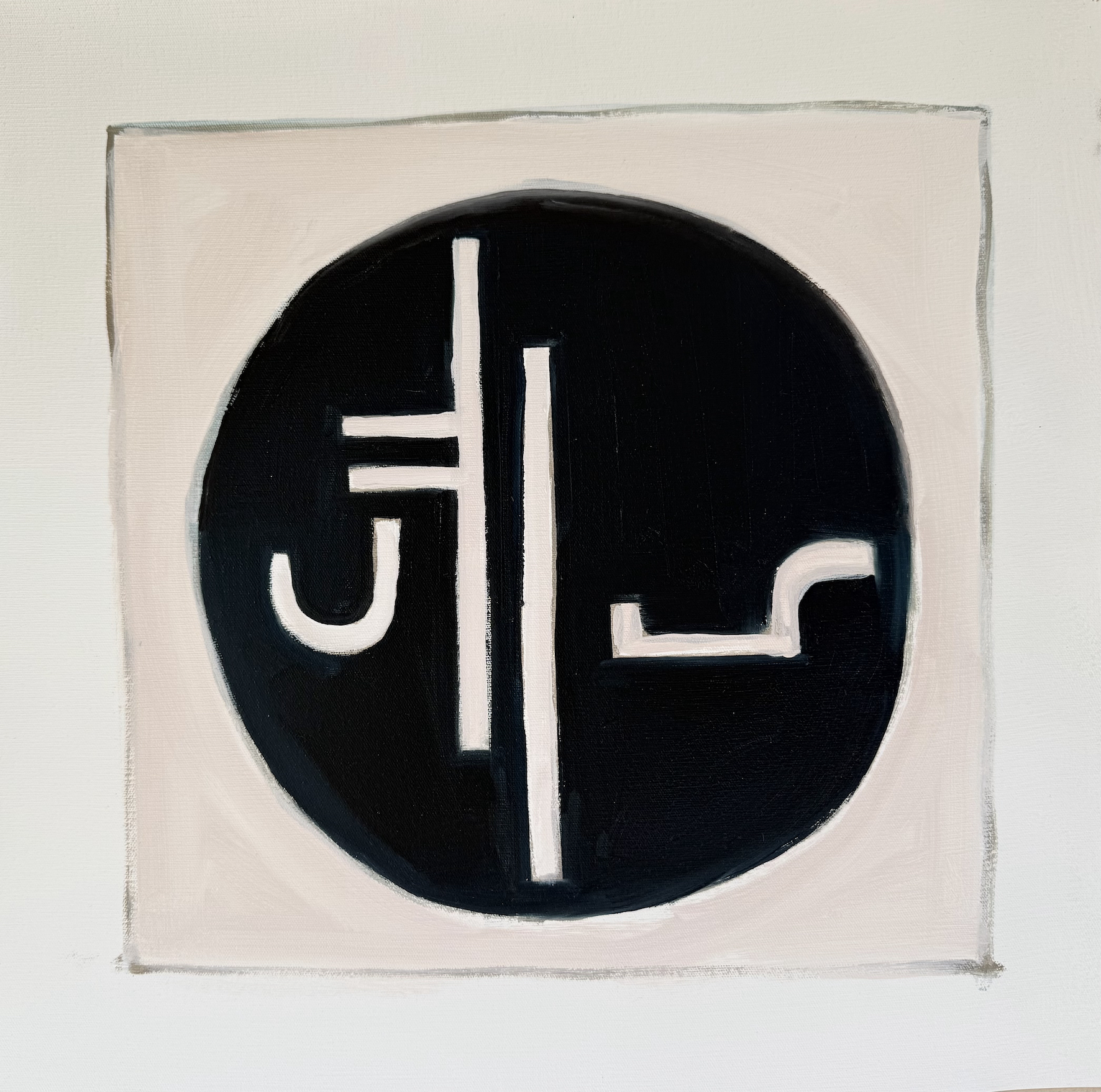
Luciana Levinton, Untitled (Diseño de alfombra) III, 2026. Oil on canvas, 36 x 36 cm.