
Dr. Brandon Ballengée is a visual artist, biologist and environmental educator based in Arnaudville, Louisiana.
Ballengée creates multidisciplinary artworks inspired from his ecological field and laboratory research. Ballengée’s artwork has been exhibited in over 20 countries and in 2013 the first career survey of his work debuted at the Château de Chamarande (Essonne, France), which travelled to the Museum Het Domein (Sittard, Netherlands) in 2014. In 2016, a mid-career retrospective of his work opened at the University of Wyoming Art Museum (Laramie, Wyoming). In 2021 a survey exhibition of his work was held at the Acadiana Center for the Arts in Lafayette, Louisiana featuring works that responded to the 2010 Deepwater Horizon oil spill.
He has received numerous awards and fellowships, including a Smithsonian Artist Research Fellowship (2017), Awards from the National Academies Keck Futures Initiative (2015, 2016), a Creative Capital Award (2019), a Guggenheim Fellowship (2021), a Special Jury Prize from the COAL 2022 Award (France), and was included in the 2020 Grist 50 Emerging Environmental Leaders.
He holds a Ph.D. in Transdisciplinary Art and Biology from Plymouth University (UK) in association with the Zurich University of the Arts, (Switzerland). Currently, he is an Adjunct Faculty of Ecology and Evolutionary Biology at Tulane University studying the impact of the 2010 oil spill on Gulf of Mexico fish species. He is the co-founder of Atelier de la Nature, a STEAM education center, nature reserve and sculpture park in Arnaudville, Louisiana.
SELECTED WORKS
The Frameworks of Absence
The planet is currently facing what scientists call the Holocene, or Sixth, Extinction—a biodiversity collapse in which species vanish at a rate estimated to be a thousand times higher than natural background levels. In the Americas alone, hundreds if not thousands of animal species have vanished over the past several centuries, a decline that began with European colonisation and continues into the present. Among the most recent losses are the Eastern Cougar, declared extinct in 2013; the Pinta Island Tortoise, in 2012; and the Florida Fairy Shrimp, in 2011.
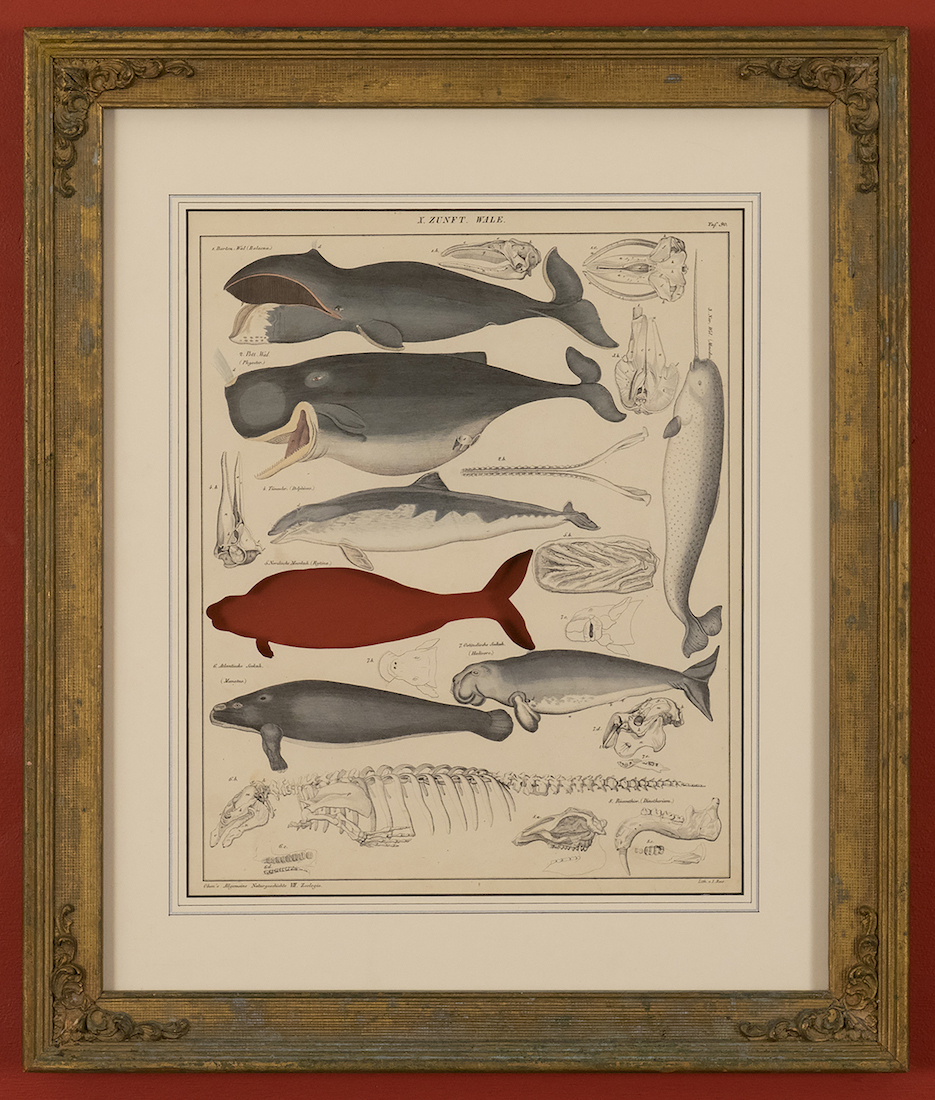
Responding to this cataclysm, Ballengée physically cuts images of missing animals from historic prints and publications printed at the time in history when the depicted species became extinct. For example, in RIP Pied or Labrador Duck: After John James Audubon (1856/2007), the image of the birds was removed from an original 1856 Royal Octavo (hand-colored by one of Audubon’s sons), printed at the same point in history as the species’ disappearance. The resulting image minus the subject is what the artist refers to as a Framework of Absence.
Acquired over several years, these prints, dating from 1592 to 2014, reflect the long-term and continued decline of biodiversity. The cut animal images are burned, and the cremation remains are gathered. The Frameworks of Absence series is accompanied by The Book of the Dead, a memory book of lost species, available as a PDF to the public.
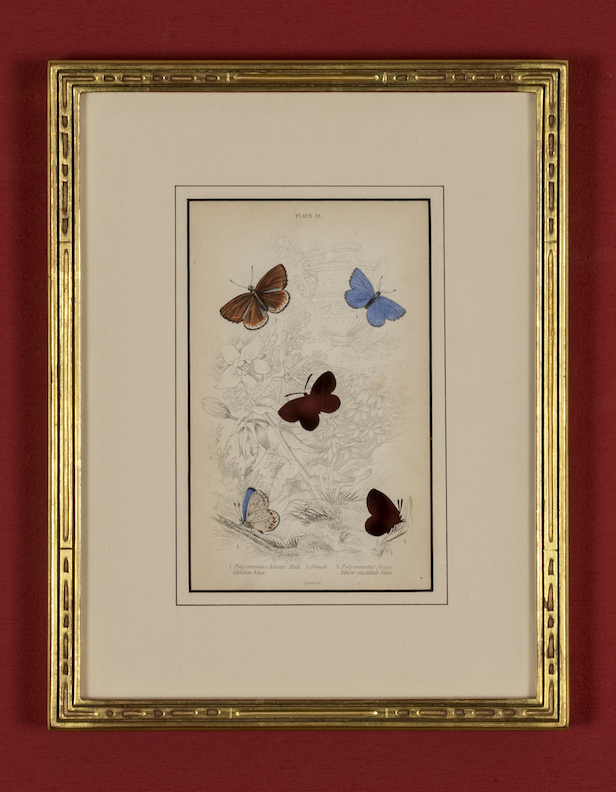
Brandon Ballengée, RIP Cumbrian Silver-Studded Blue Butterfly: After William Lizars, 1835/2017. Artist cut and burnt hand coloured copper engraving, ashes and etched, funerary urn, 28.58 x 22.23 x 2.54 cm, 11.25 bx 8.75 x 1 inches Species last observed 1942. Photo: Vince Ruvolo
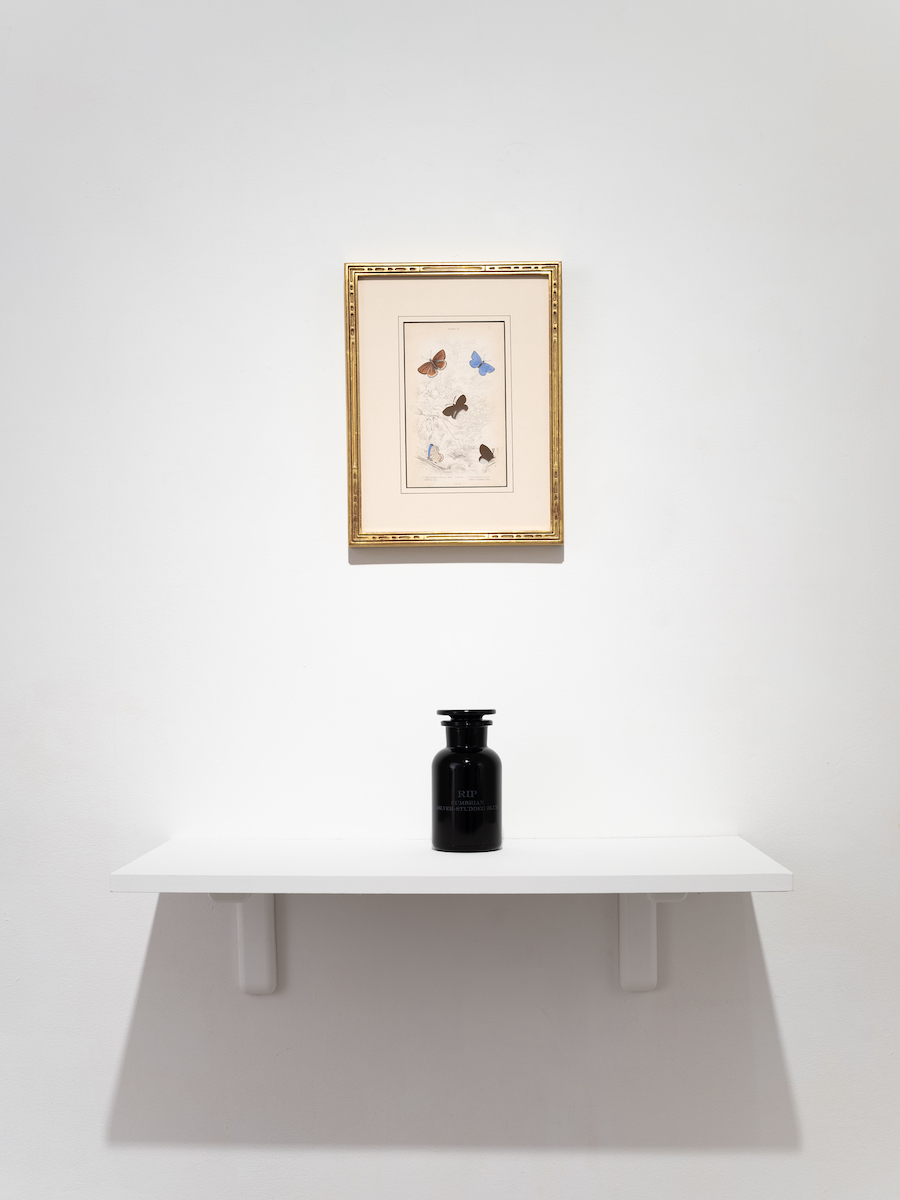
Brandon Ballengée, RIP Cumbrian Silver-Studded Blue Butterfly: After William Lizars, 1835/2017. Artist cut and burnt hand coloured copper engraving, ashes and etched, funerary urn, 28.58 x 22.23 x 2.54 cm, 11.25 bx 8.75 x 1 inches Species last observed 1942. Photo: Vince Ruvolo Installation view.
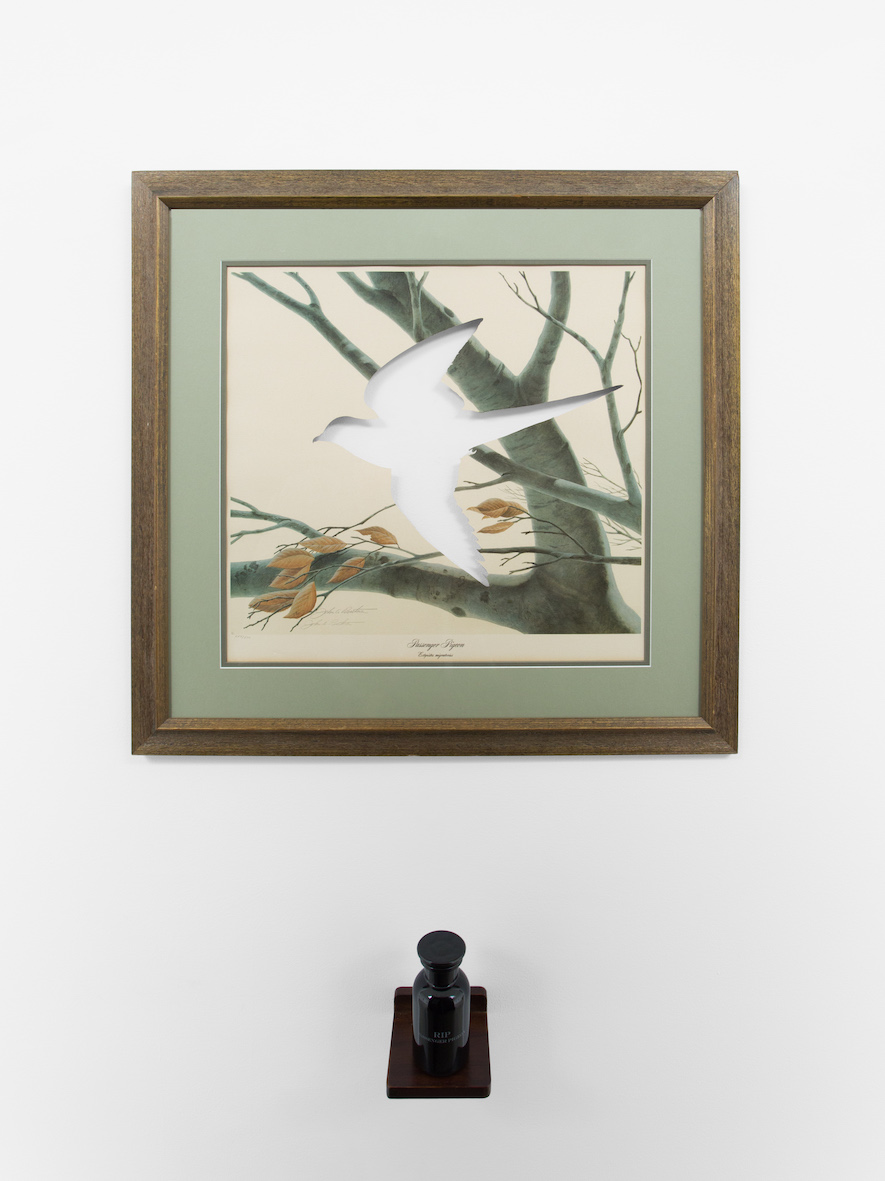
Brandon Ballengée, RIP Passenger Pigeon: After John Ruthven, 1973/2024. Artist cut and burnt offset lithograph, ashes and etched funerary urn, 29.5 x 30.5 x 1.5 inches, 74.93 x 77.47 x 3.81 cm. Species last observed in 1914. After John Ruthven. Installation view.
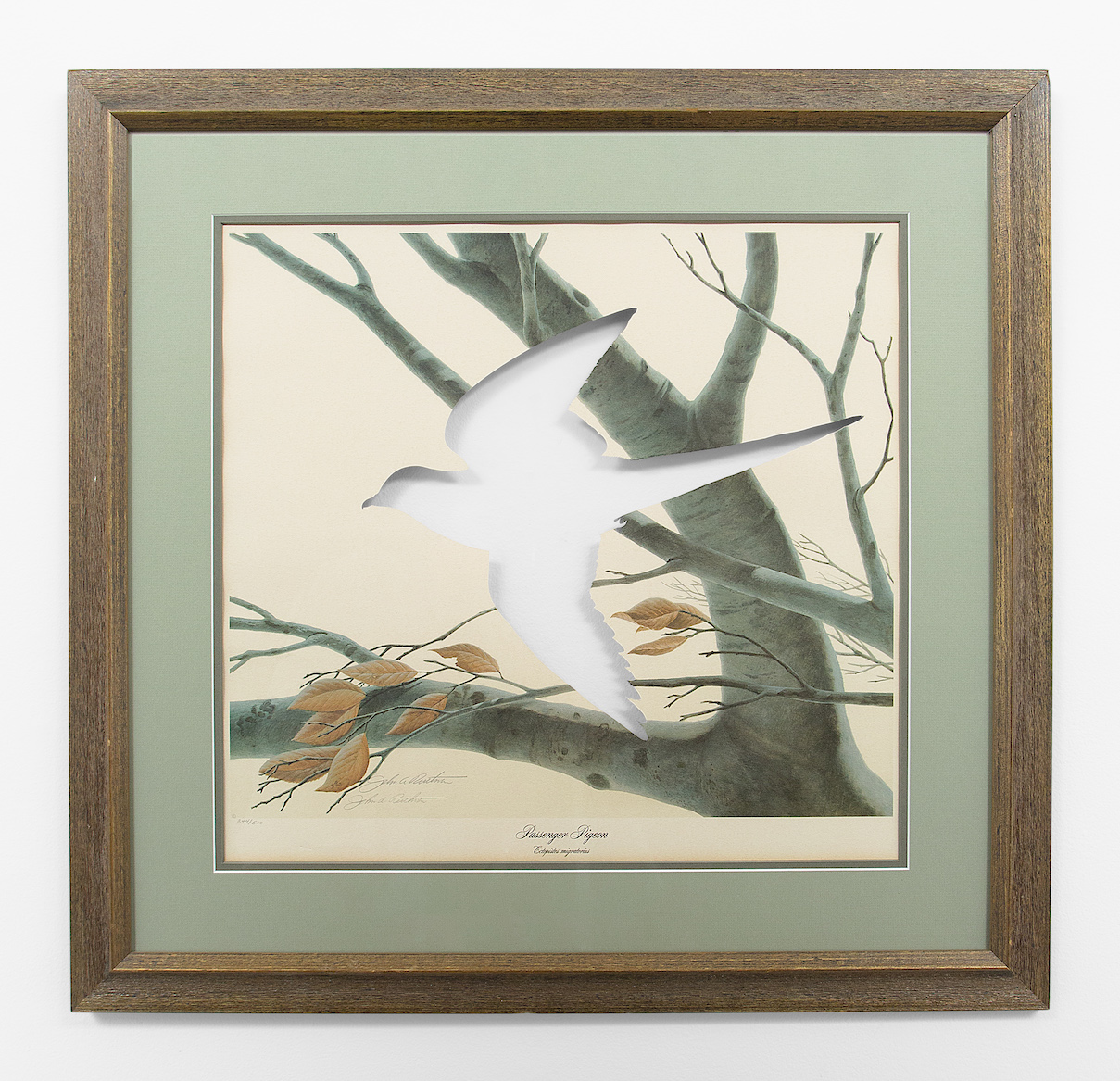
Brandon Ballengée, RIP Passenger Pigeon: After John Ruthven, 1973/2024. Artist cut and burnt offset lithograph, ashes and etched funerary urn, 29.5 x 30.5 x 1.5 inches, 74.93 x 77.47 x 3.81 cm. Species last observed in 1914. After John Ruthven.
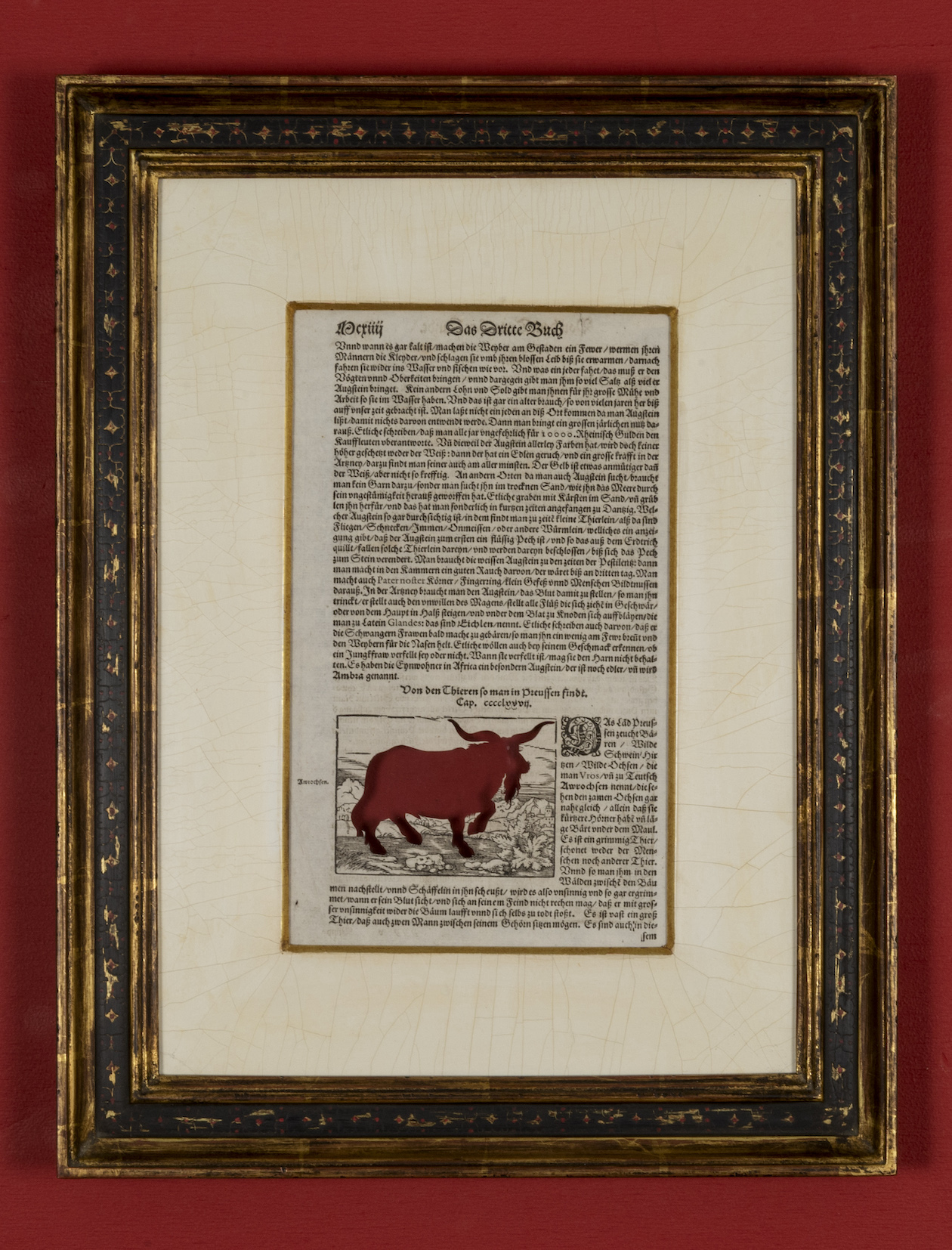
Brandon Ballengée, RIP Auroch: After David Kandel, 1592/2017. Artist cut and burnt woodcut letterpress on hand laid paper, ashes and etched funerary urn, 19.5 x 15 x 2 inches; 49.53 x 38.1 x 5.08 cm. Species last observed 1620s.
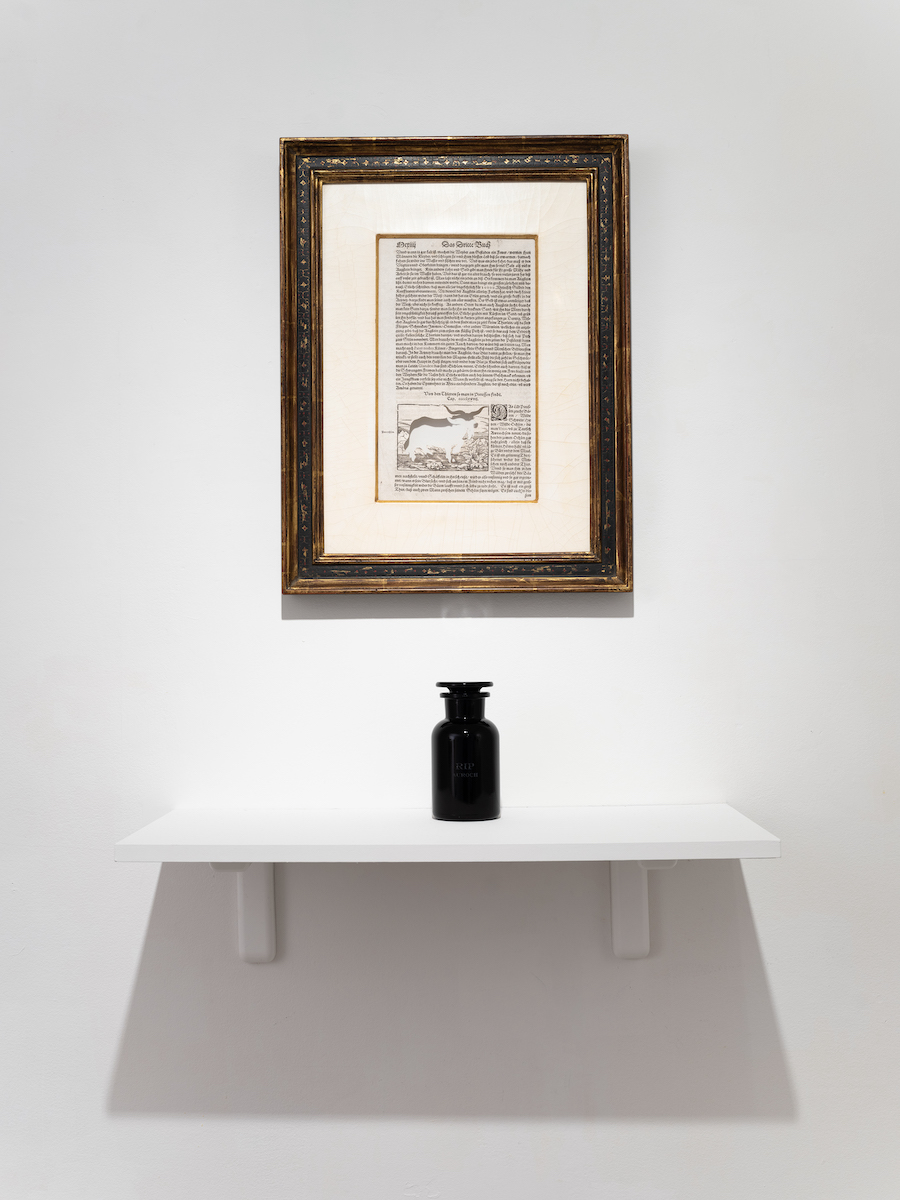
Brandon Ballengée, RIP Auroch: After David Kandel, 1592/2017. Artist cut and burnt woodcut letterpress on hand laid paper, ashes and etched funerary urn, 19.5 x 15 x 2 inches; 49.53 x 38.1 x 5.08 cm. Species last observed 1620s. Installation view.
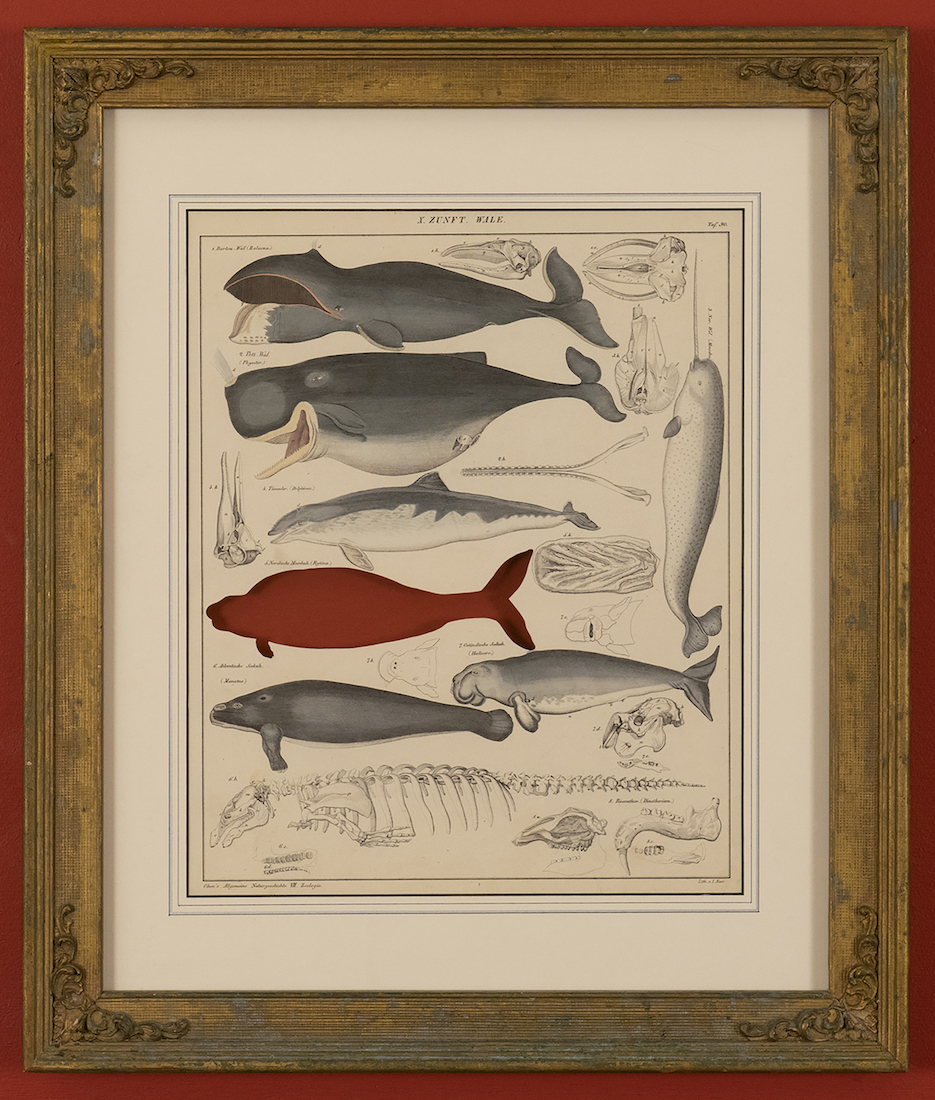
Brandon Ballengée, RIP Steller’s Sea Cow: After Lorenz Oken, 1843/2018 Artist cut and burnt hand colored lithograph, ashes, and etched funerary urn Frame: 19 1/2 x 16 5/8 x 7/8 inches Artwork: 13 3/8 x 11 1/4 inches Photo: Vince Ruvolo
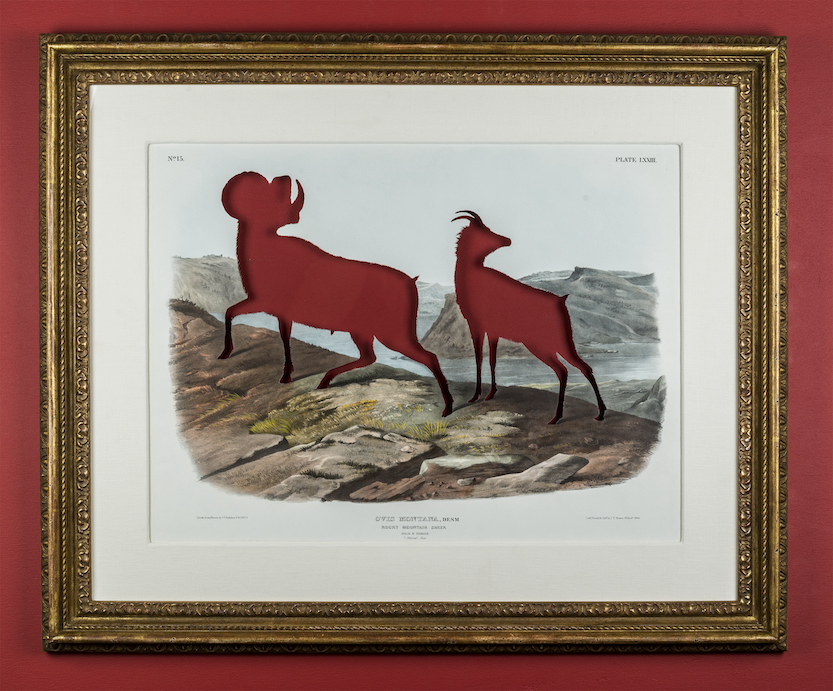
Brandon Ballengée, RIP Audubon’s Bighorn Sheep: After John James Audubon, 1845/2016 artist cut and burnt hand-colored stone lithograph, etched glass funerary urn and ashes print: 21 x 22 1/4 inches frame: 29 7/8 x 36 1/8 x 1 5/8 inches Photo: Megan Paetzhold
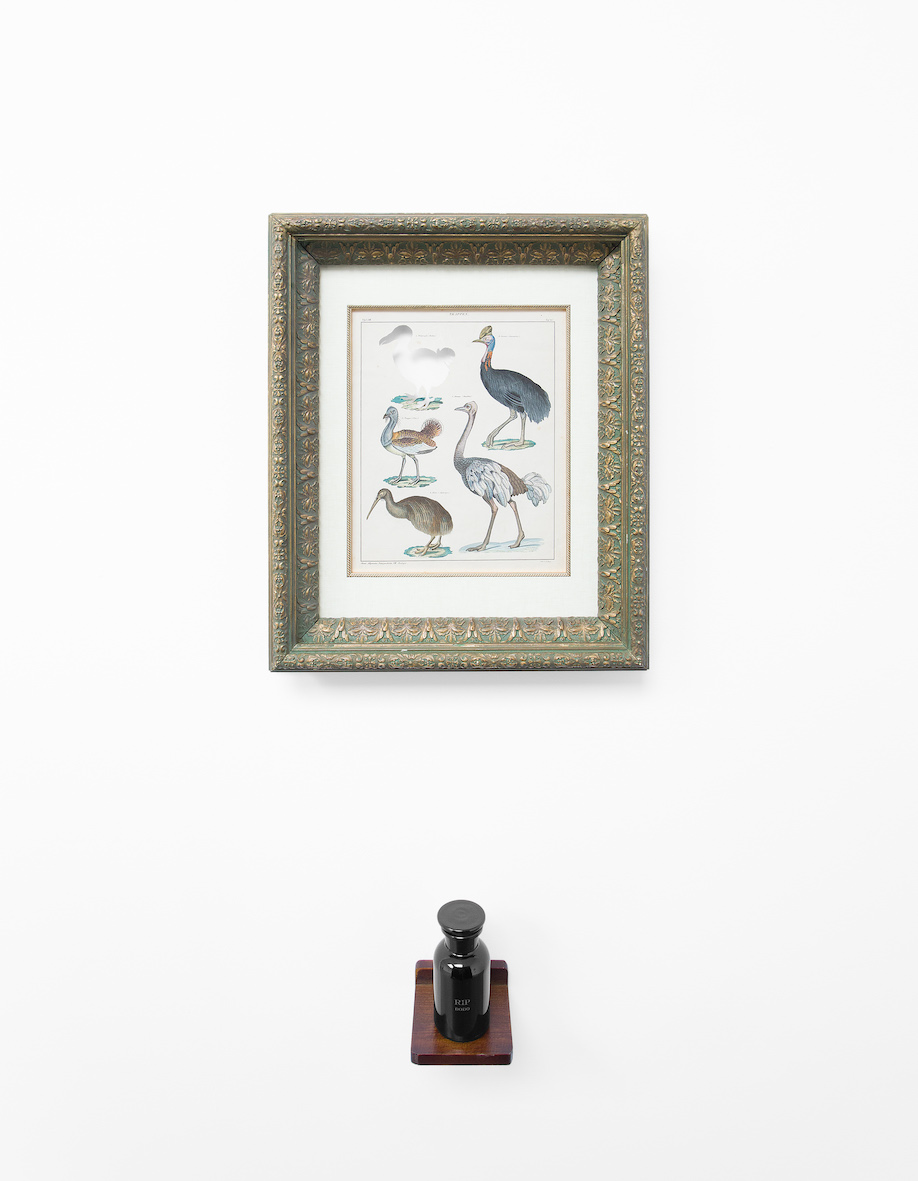
Brandon Ballengée, RIP Dodo: After Lorenz Oken, 1843/2024. Artist cut and burnt lithograph, ashes and etched funerary urn; 22 x 18.5 x 1.5 inches; 55.88 x 46.99 x 3.81 cm. Species last observed in the 1660s. Installation view.
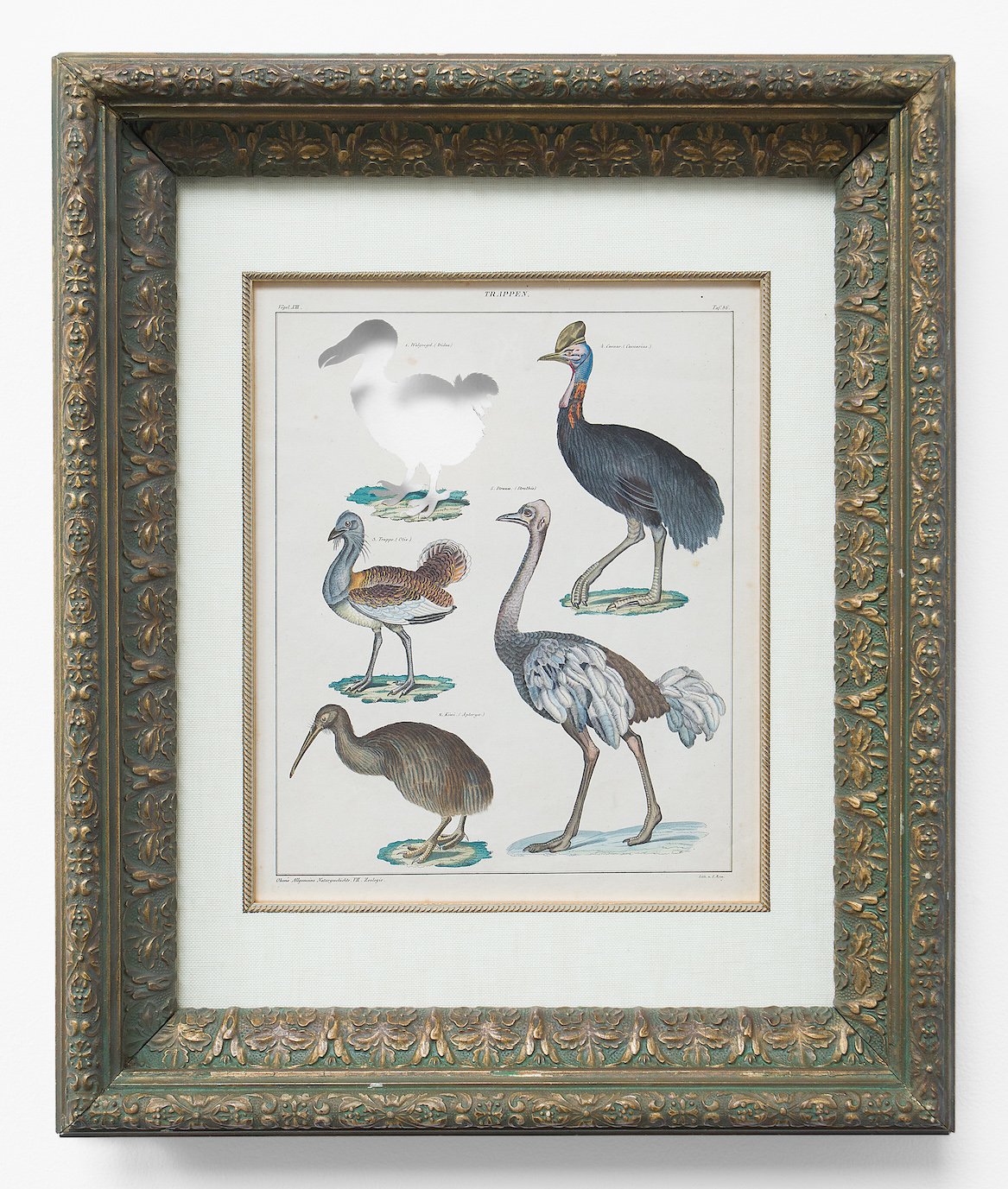
Brandon Ballengée, RIP Dodo: After Lorenz Oken, 1843/2024. Artist cut and burnt lithograph, ashes and etched funerary urn; 22 x 18.5 x 1.5 inches; 55.88 x 46.99 x 3.81 cm. Species last observed in the 1660s.
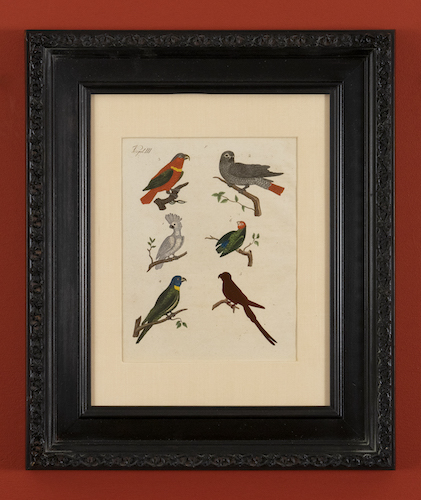
Brandon Ballengée, RIP Seychelles Parakeet: After Friedrich Justin Johann Bertuch, 1801/2016 Artist cut and burnt hand colored copper engraving, ashes, and etched funerary urn Frame: 18 3/4 x 15 3/4 x 2 3/8 inches Artwork: 9 7/8 x 8 1/8 inches Photo: Vince Ruvolo
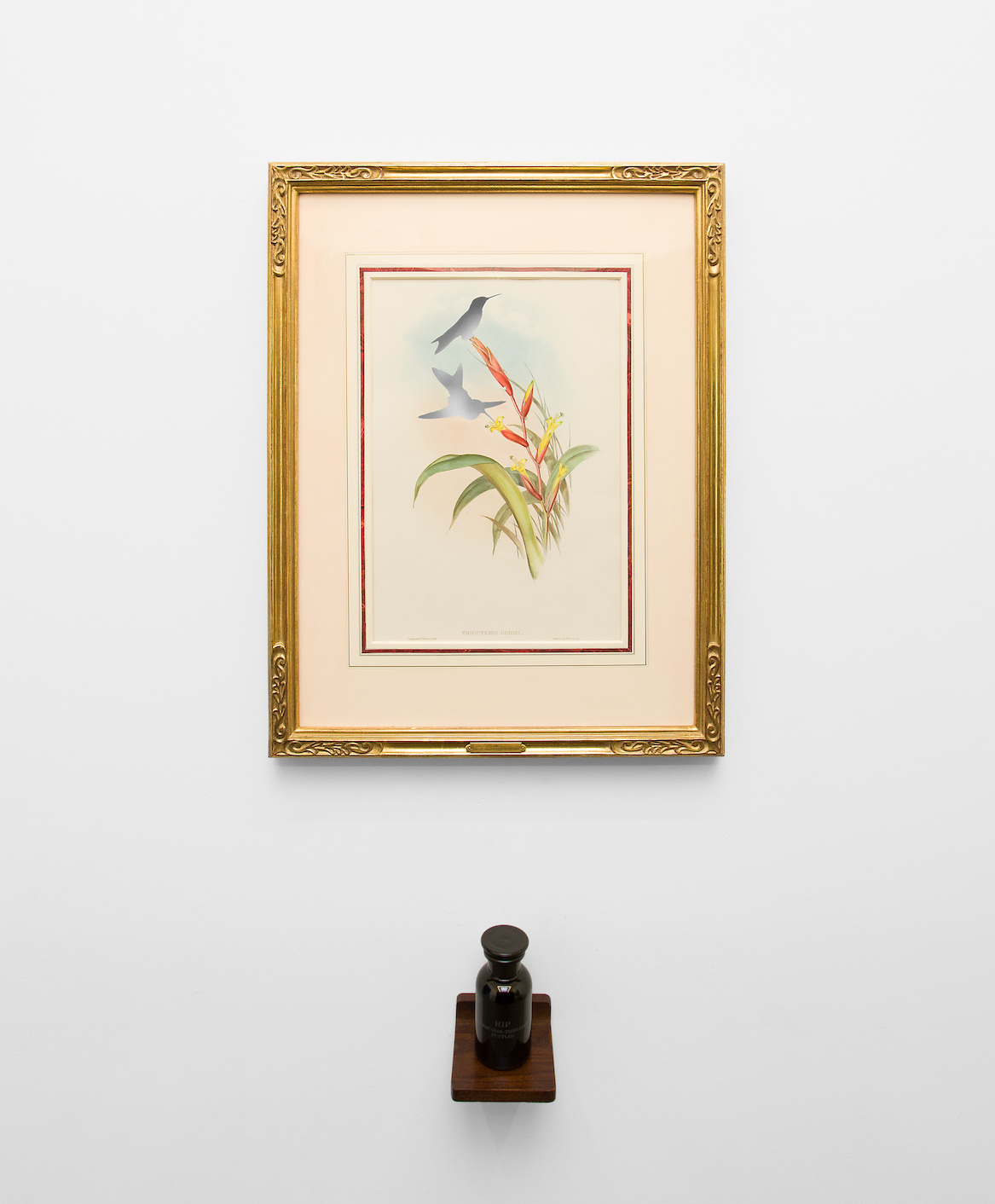
Brandon Ballengée, RIP Turquoise-throated Puffleg Hummingbird: After John Gould, 1861/2015. Artist cut and burnt hand-colored stone lithograph finished with gold leaf and gum arabic, ashes and etched funerary urn; 30 x 23.25 x 1.75 inches; 76.2 x 59.06 x 4.45 cm. Species last observed in the 19th Century. Installation view.
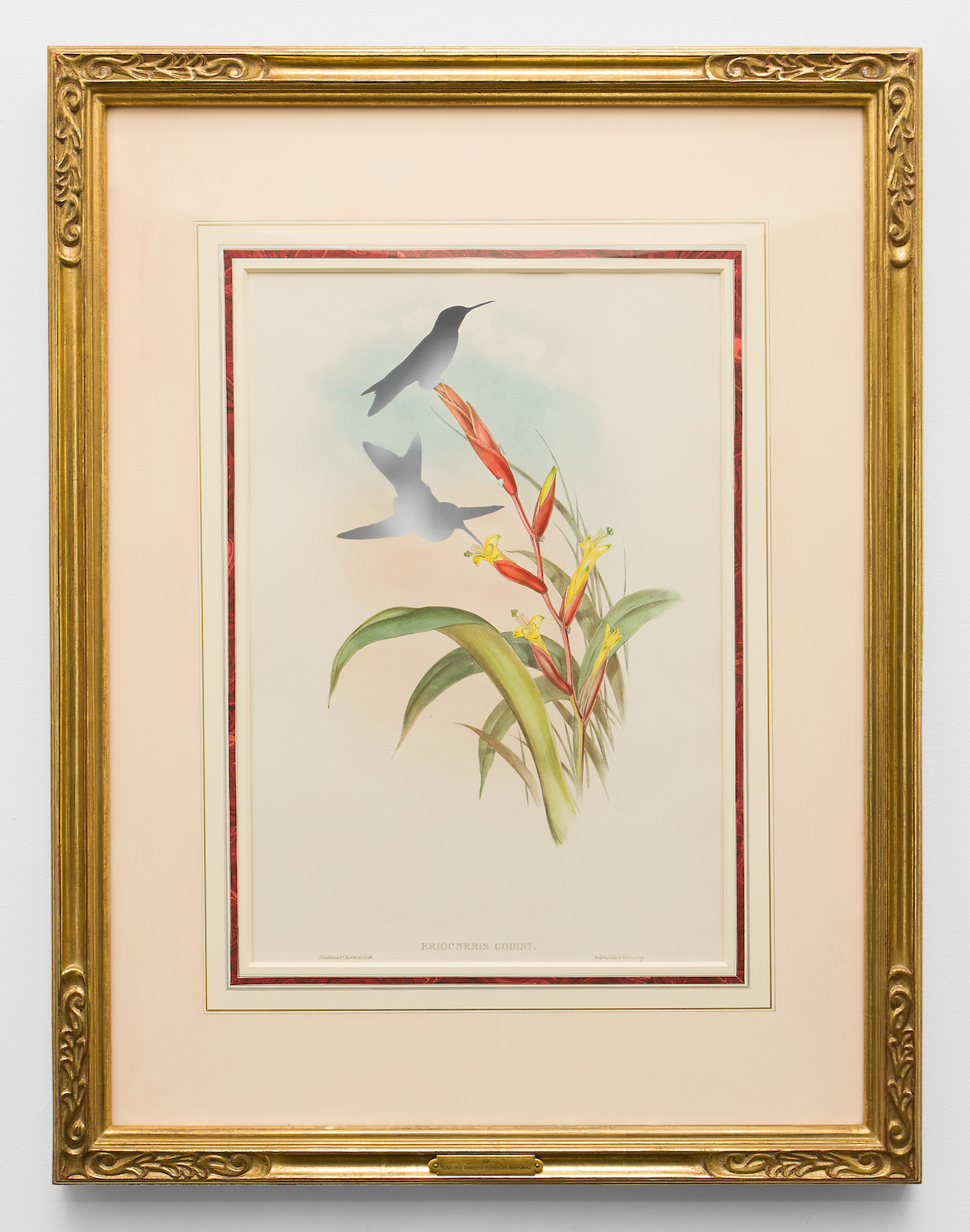
Brandon Ballengée, RIP Turquoise-throated Puffleg Hummingbird: After John Gould, 1861/2015. Artist cut and burnt hand-colored stone lithograph finished with gold leaf and gum arabic, ashes and etched funerary urn; 30 x 23.25 x 1.75 inches; 76.2 x 59.06 x 4.45 cm. Species last observed in the 19th Century.
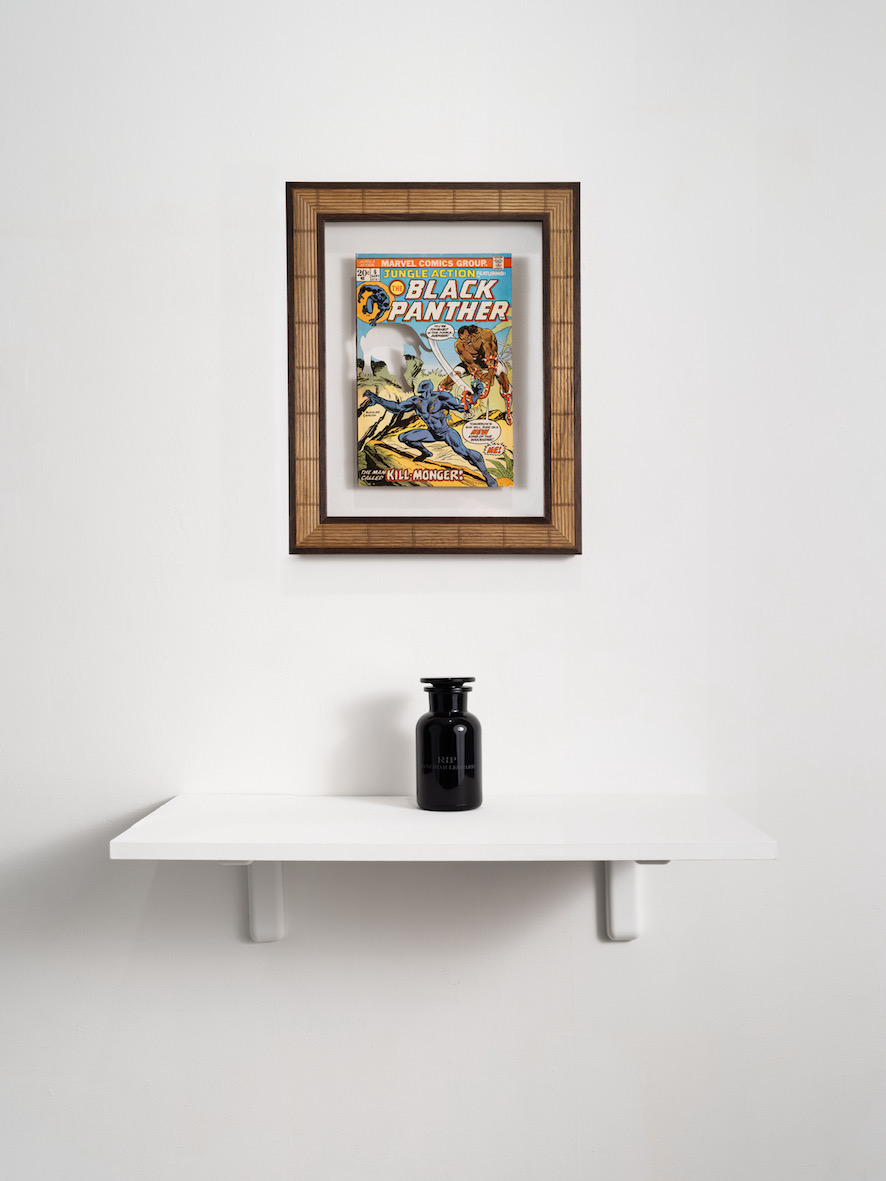
Brandon Ballengée, RIP Zanzibar Leopard: After Rich Buckler & Frank Giacoia, 1973/2023. Artist cut and burnt bronze age comic book cover, ashes and etched funerary urn; 15.25 x 11.75 inches; 38.74 x 29.85 cm. Last accepted sighting was in the 1980s. Installation view.
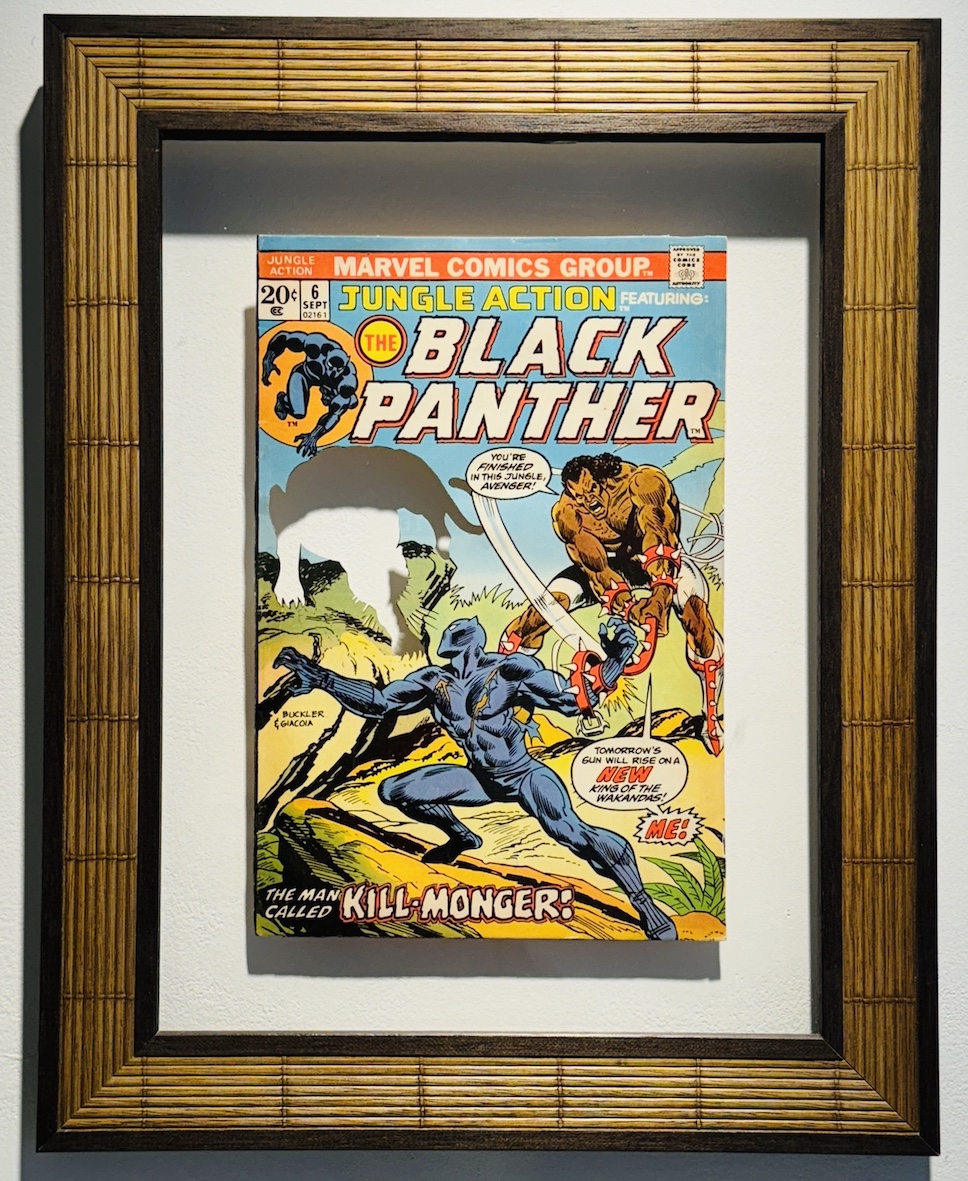
Brandon Ballengée, RIP Zanzibar Leopard: After Rich Buckler & Frank Giacoia, 1973/2023. Artist cut and burnt bronze age comic book cover, ashes and etched funerary urn; 15.25 x 11.75 inches; 38.74 x 29.85 cm. Last accepted sighting was in the 1980s.
Ghosts of the Gulf
The 2010 Gulf of Mexico oil spill was the largest petrochemical spill in U.S. waters outside of wartime. The Gulf is one of the world’s most biologically diverse environments, serving as a nursery for thousands of marine species; seventy-seven organisms found there are endemic to its waters. Seafood from the Gulf has long been a food source for millions of people in North America, and fish migrating along the Gulf Stream have supplied communities across Europe as well.
The long-term effects of the spill on wildlife and Gulf communities remain unclear. A U.S. Congressional Report estimated that, even after clean-up efforts, close to half the spilled oil (around 100 million gallons) may still be present in the Gulf. Additional scientific research will be needed to assess the Gulf’s current condition. The images making up Brandon Ballengée’s Ghosts of the Gulf were produced by chemically clearing and staining specimens of species collected in the Gulf following the 2010 spill. These species, formerly common, may now be declining in number, and the images are meant to function as “apparitions” of them.
The clearing-and-staining process begins by preserving specimens in an acid bath containing a blue stain that binds to cartilage. They are then broken down using the digestive enzyme trypsin, which removes remaining soft tissue. The specimens are next placed in an alkaline bath with a red dye that binds to bone, followed by a series of washes — from potassium hydroxide to glycerin — that render the tissue transparent. The final photographic image reveals bone and cartilage rendered in red and blue.
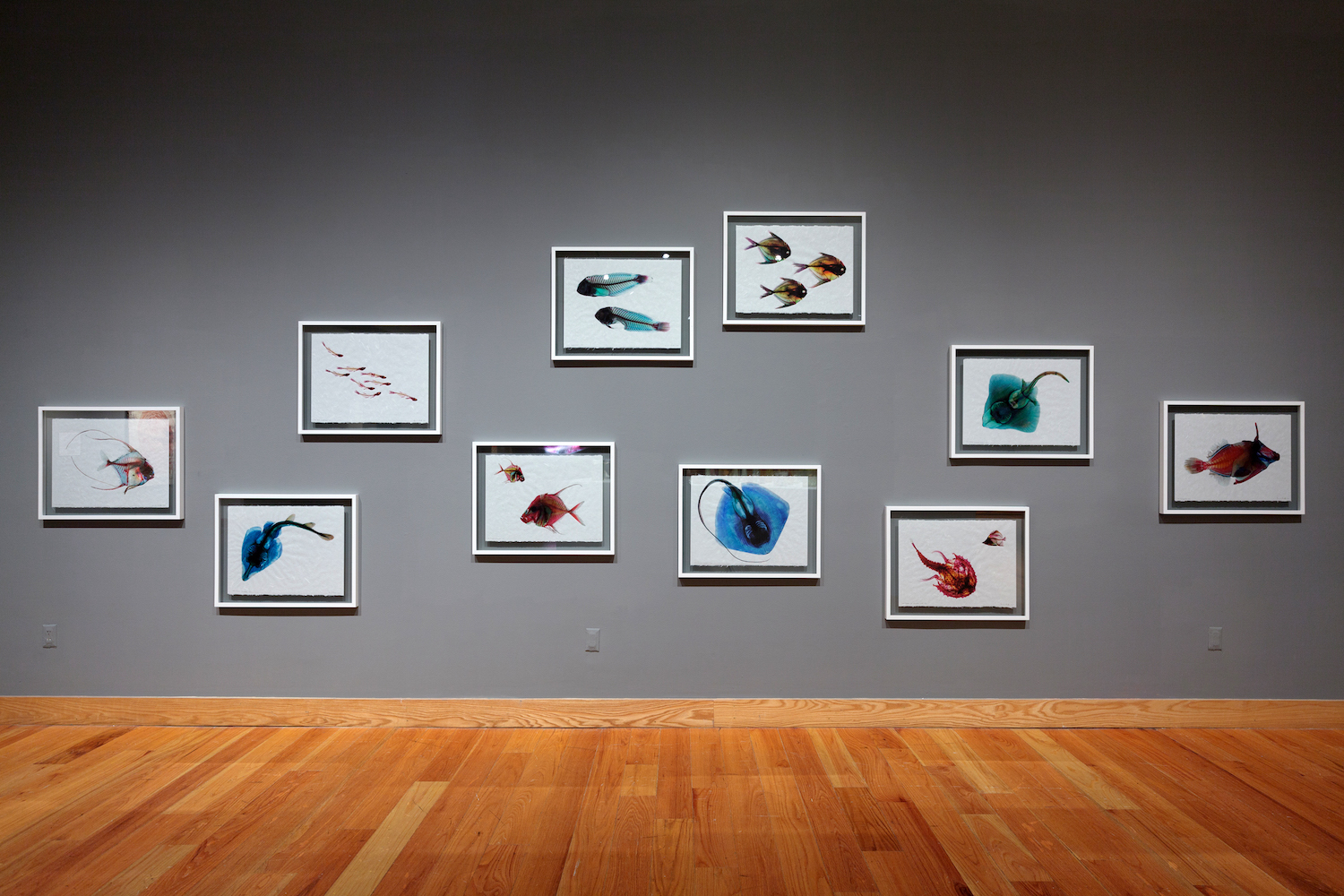
Ballengee Ghosts of the Gulf
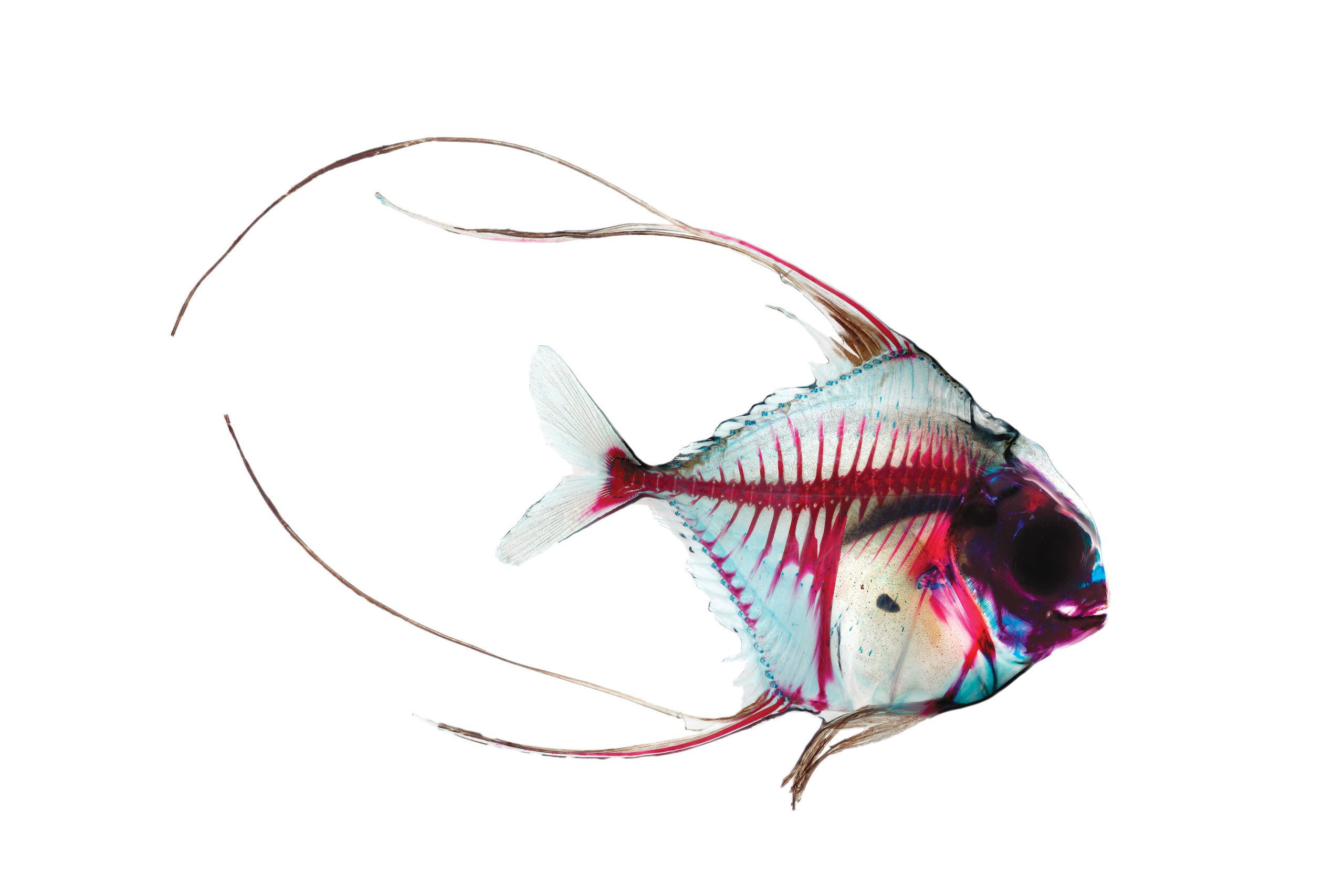
Brandon Ballengée, RIP African Pompano, 2014. Giclée print on handmade Japanese watercolour paper, unframed; 18 x 24 inches; 45.72 x 60.96 cm. Edition of 13.
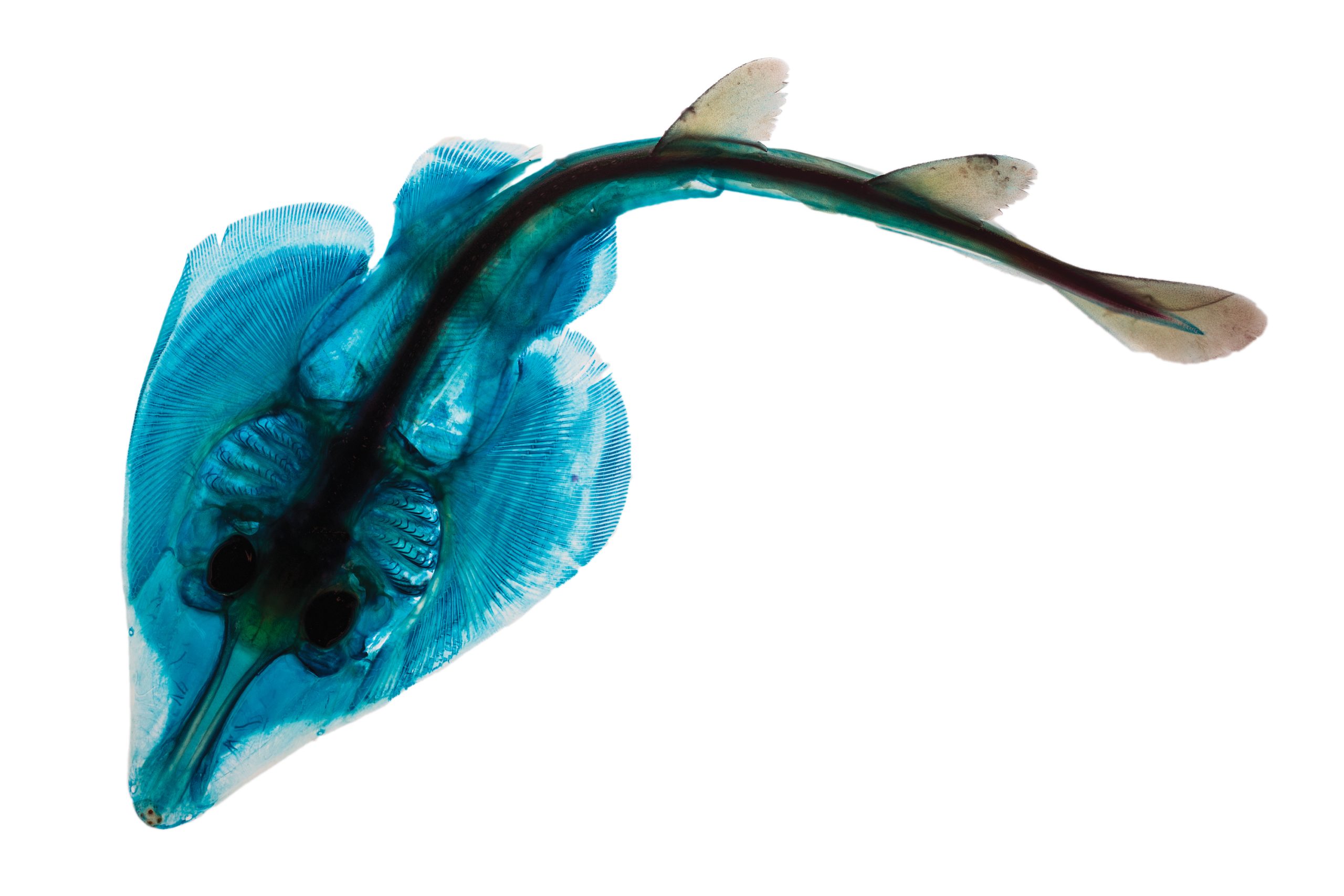
Brandon Ballengée, RIP Atlantic Guitarfish, 2014. Giclée print on handmade Japanese watercolour paper, unframed; 18 x 24 inches; 45.72 x 60.96 cm. Edition of 13.
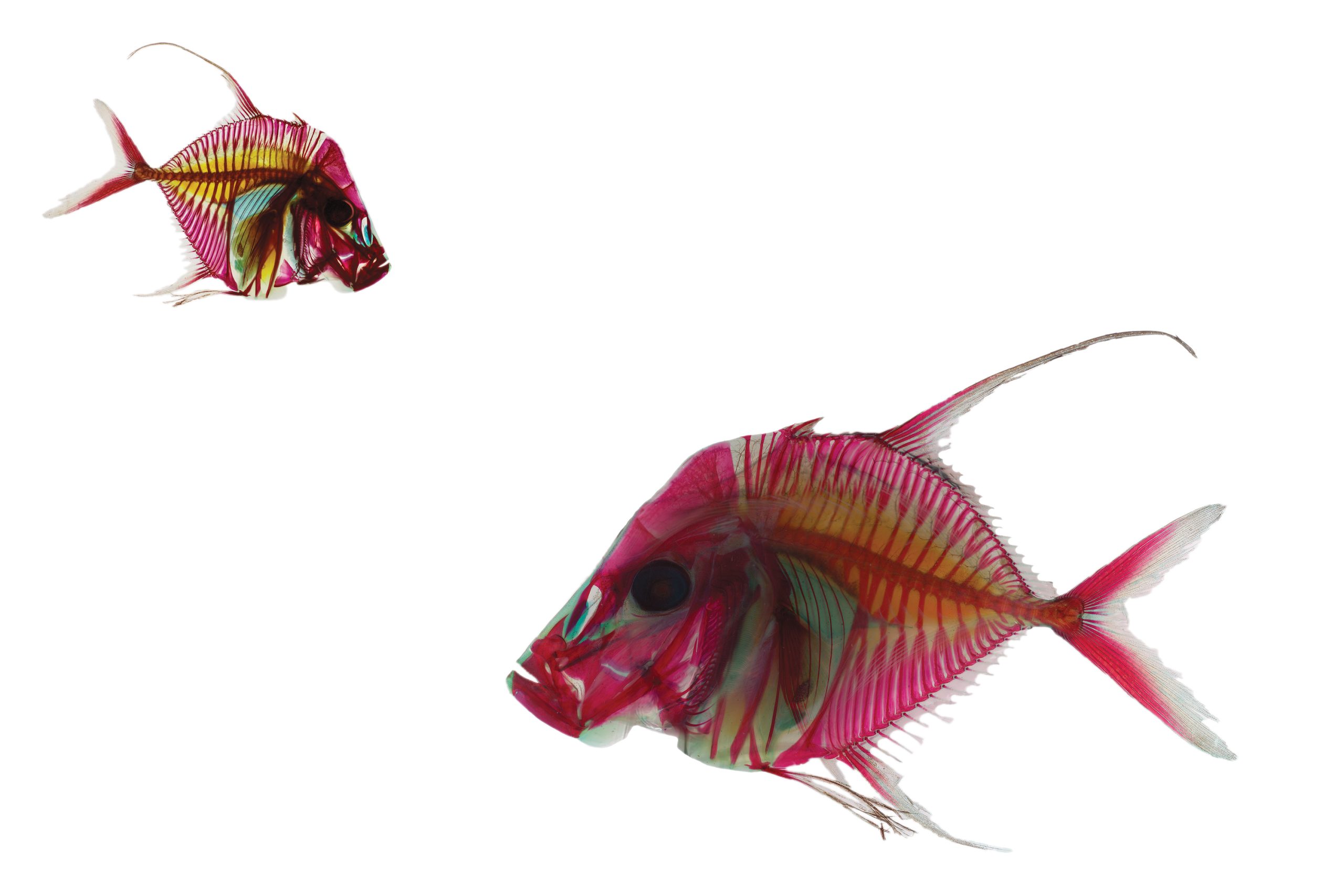
Brandon Ballengée, RIP Atlantic Lookdowns, 2014. Giclée print on handmade Japanese watercolour paper, unframed; 18 x 24 inches; 45.72 x 60.96 cm. Edition of 13.
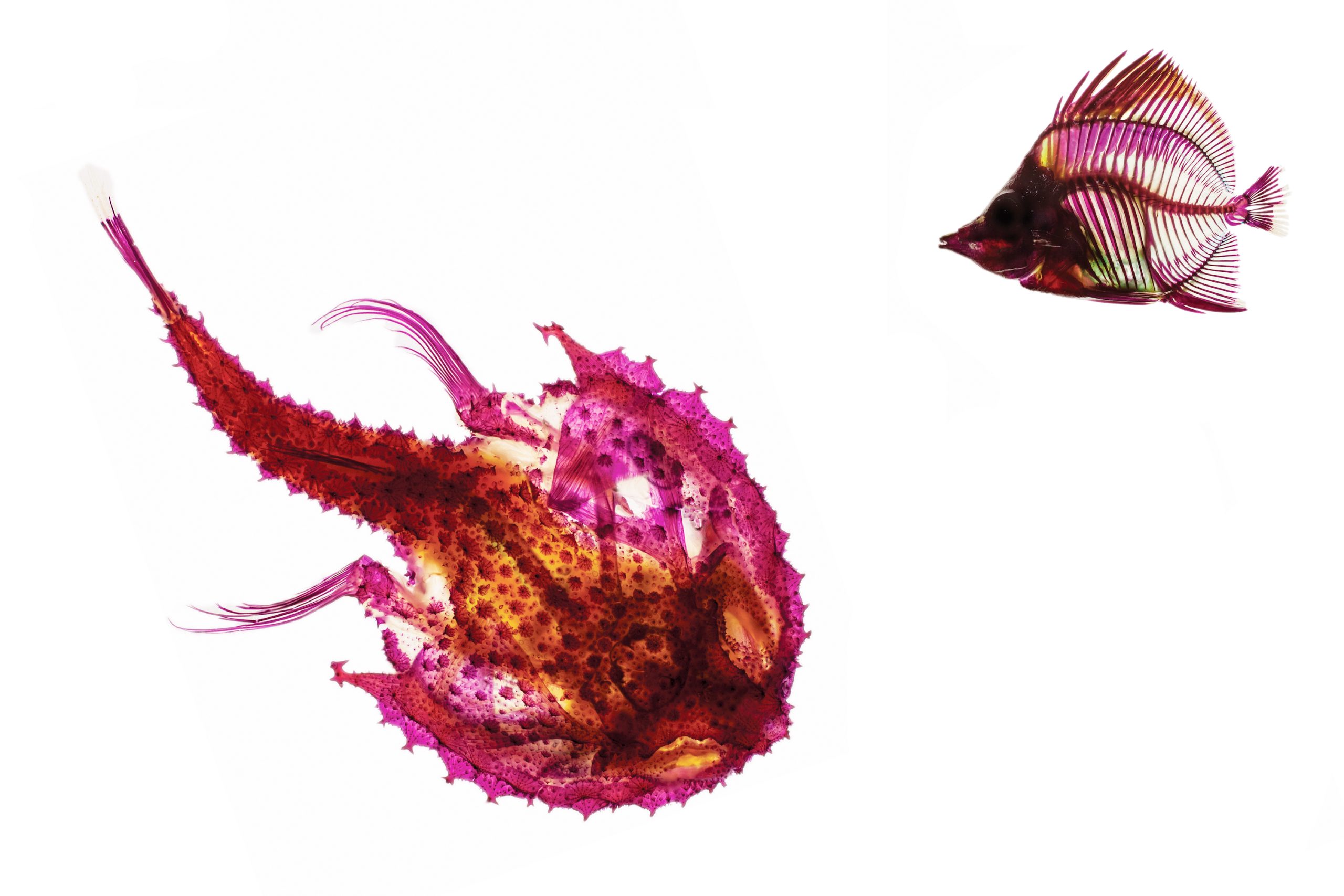
Brandon Ballengée, RIP Batfish and Butterflyfish, 2014. Giclée print on handmade Japanese watercolour paper, unframed; 18 x 24 inches; 45.72 x 60.96 cm. Edition of 13.
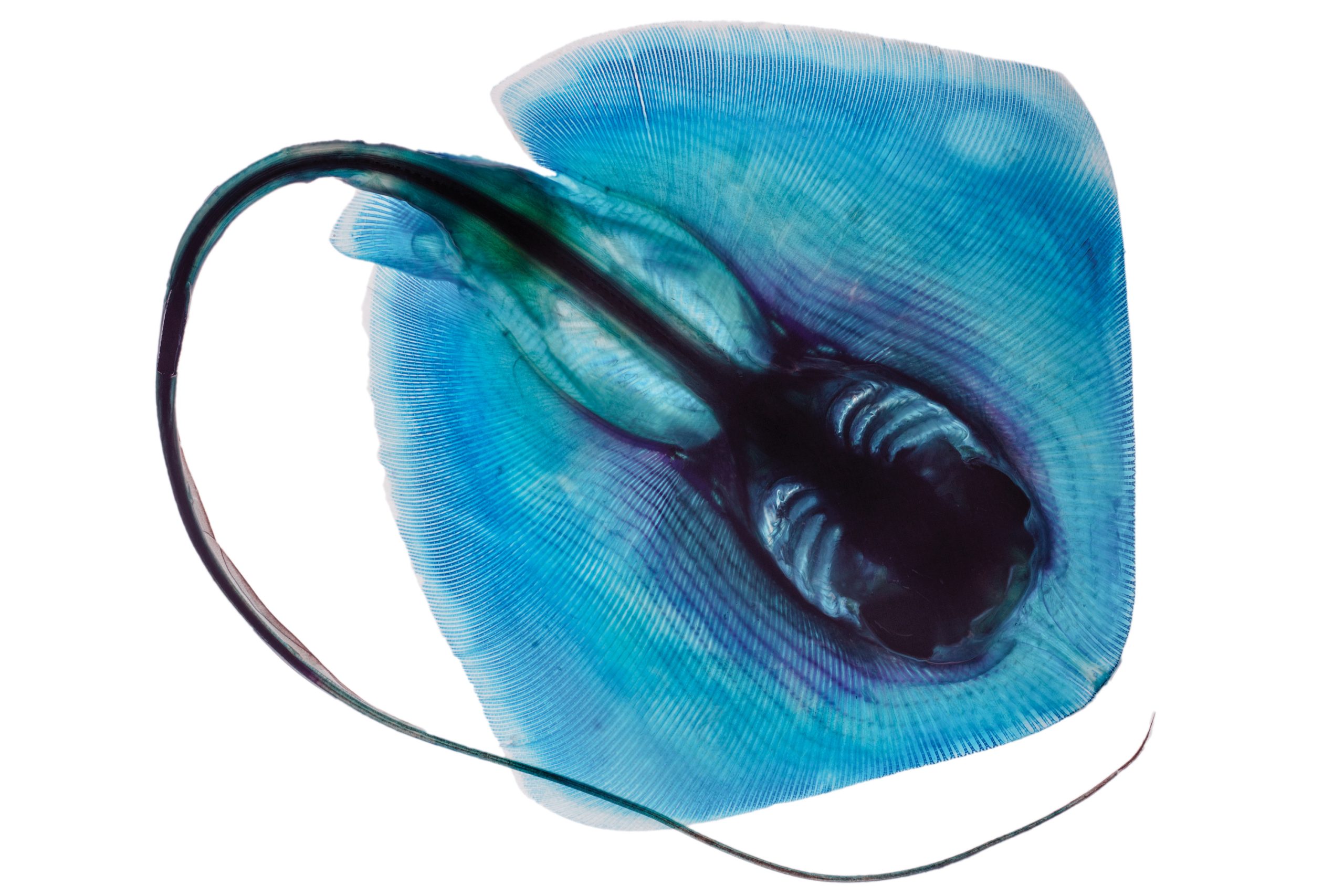
Brandon Ballengée, RIP Bluntnose Stingray, 2014. Giclée print on handmade Japanese watercolour paper, unframed; 18 x 24 inches; 45.72 x 60.96 cm. Edition of 13.
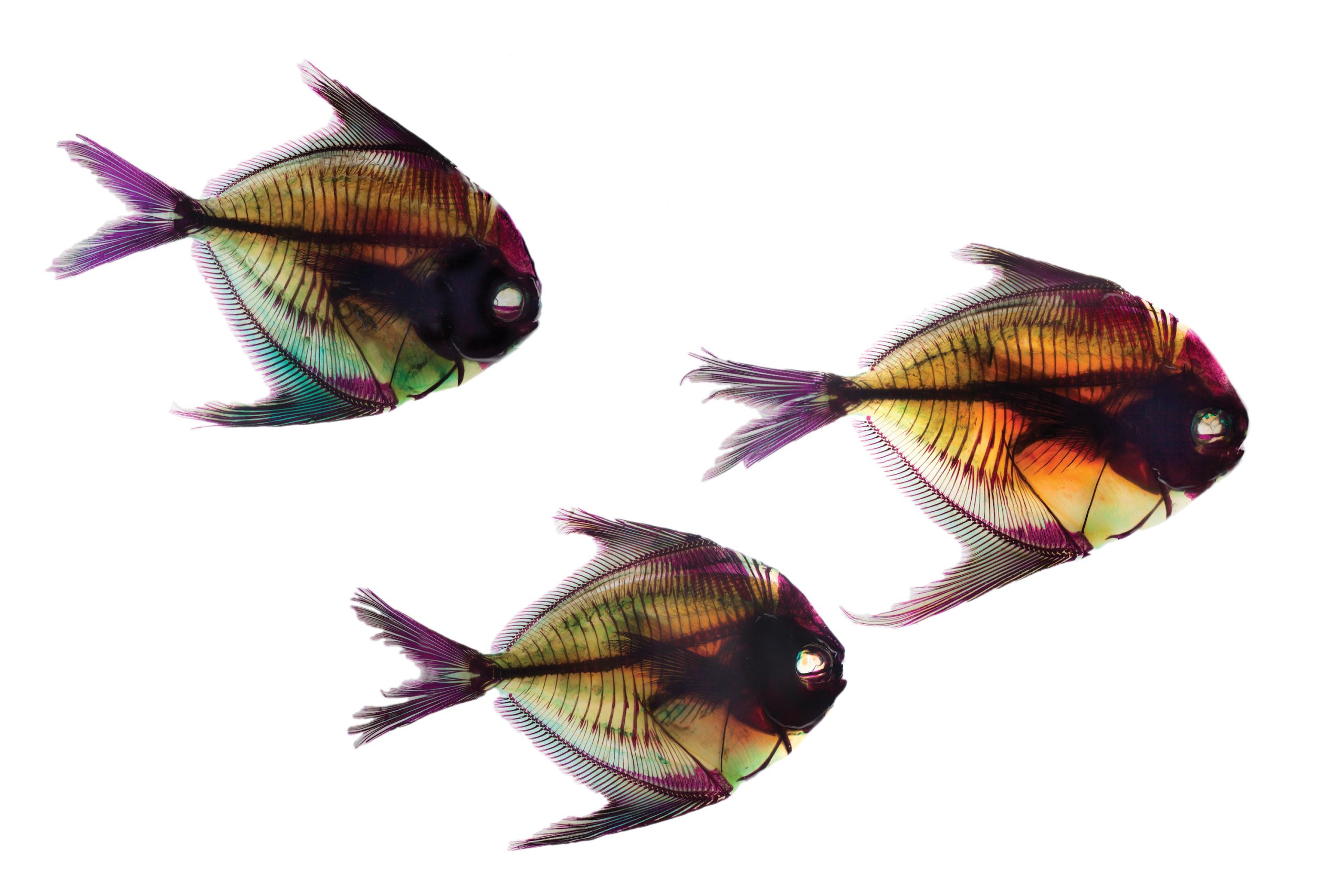
Brandon Ballengée, RIP Florida Pompano, 2014. Giclée print on handmade Japanese watercolour paper, unframed; 18 x 24 inches; 45.72 x 60.96 cm. Edition of 13.
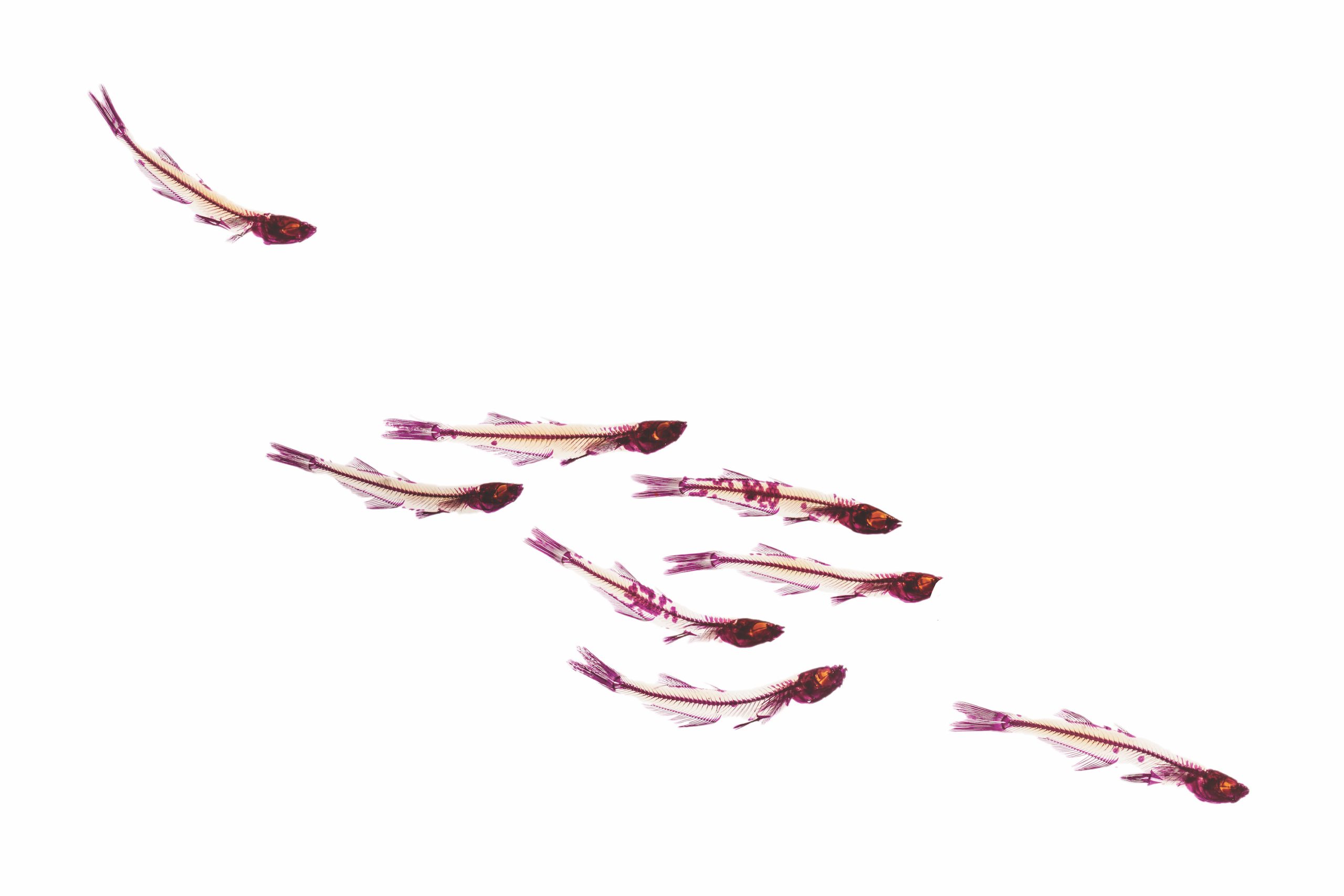
Brandon Ballengée, RIP Gulf Silversides, 2014. Giclée print on handmade Japanese watercolour paper, unframed; 18 x 24 inches; 45.72 x 60.96 cm. Edition of 13.
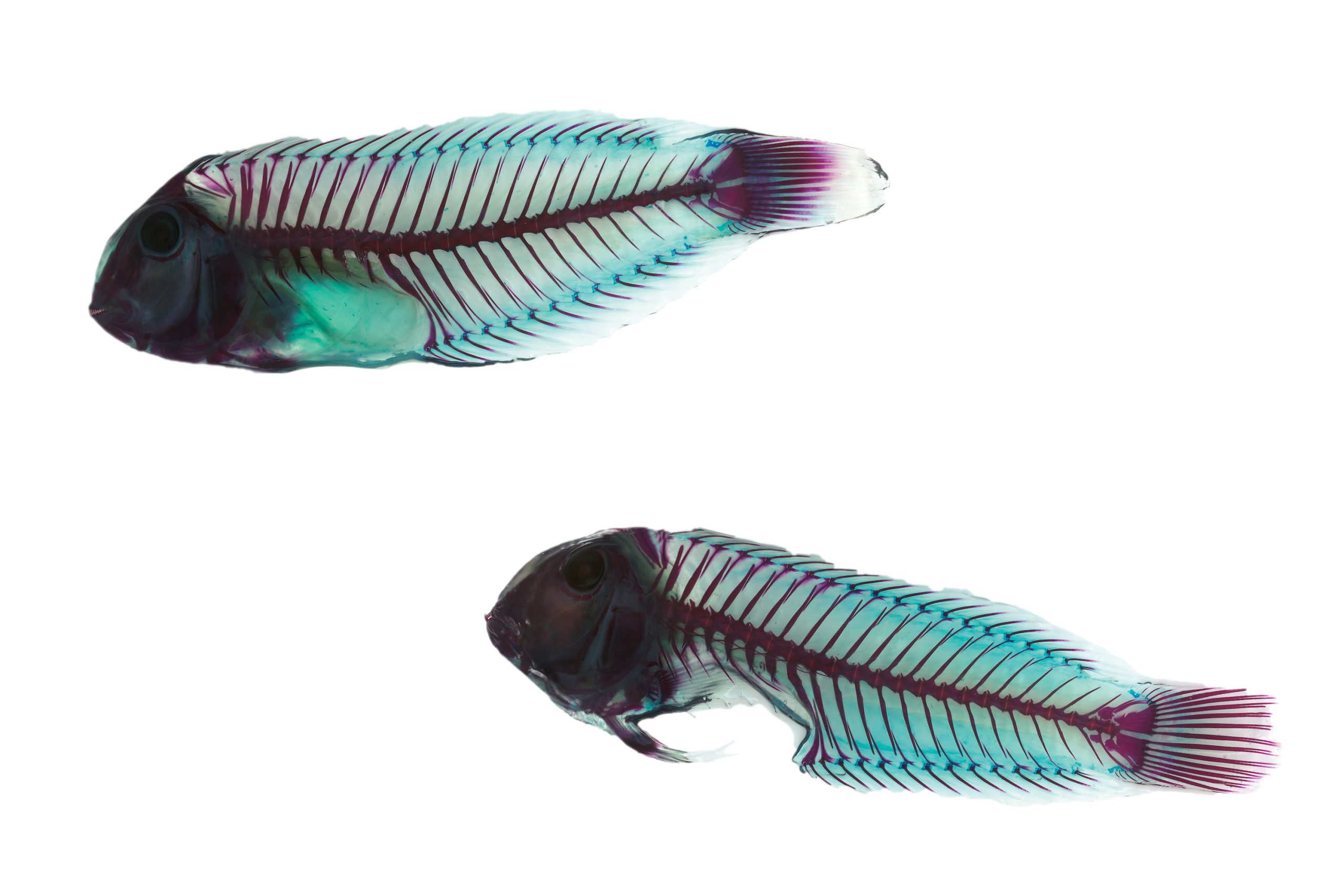
Brandon Ballengée, RIP Parrot Fish, 2014. Giclée print on handmade Japanese watercolour paper, unframed; 18 x 24 inches; 45.72 x 60.96 cm. Edition of 13.
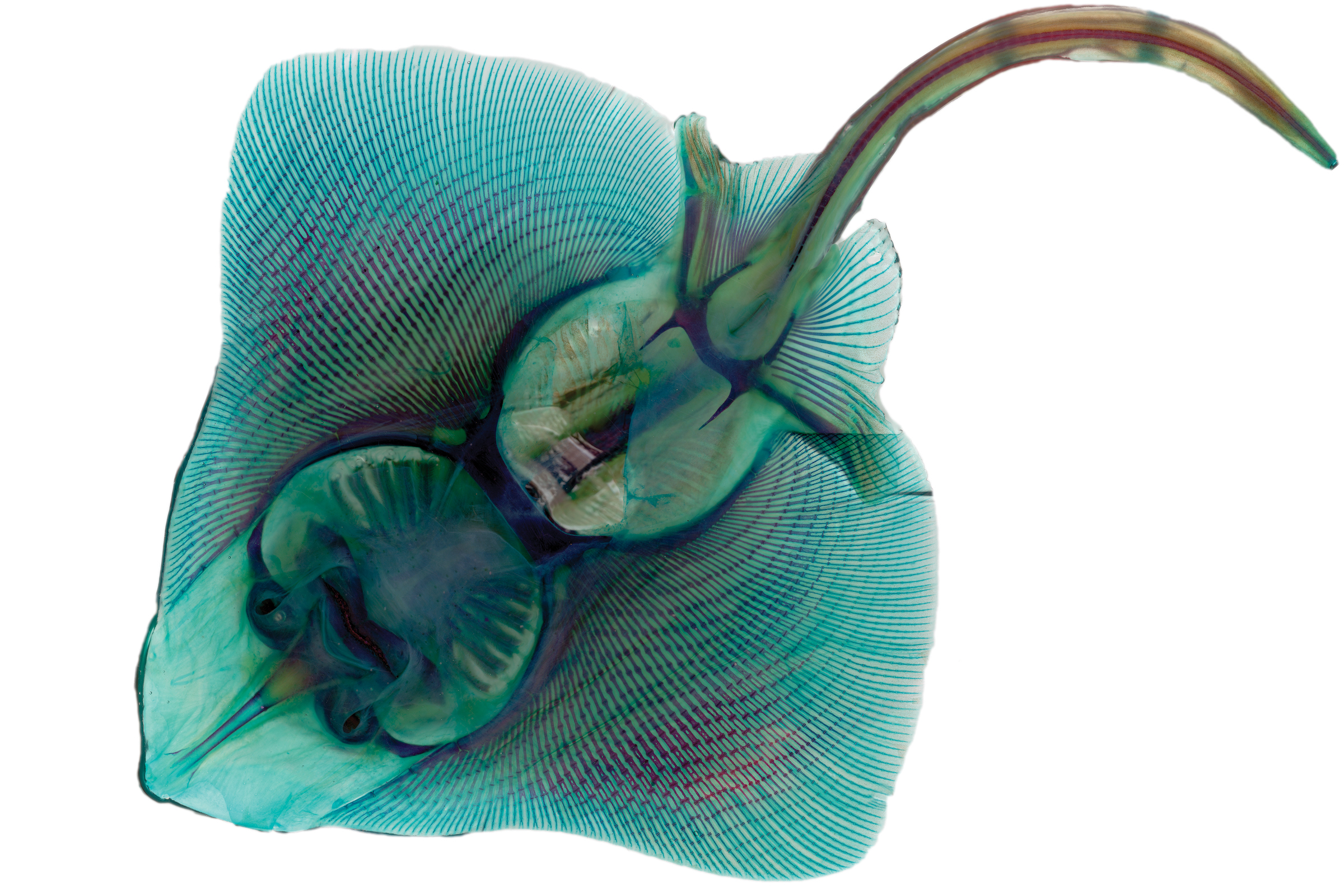
Brandon Ballengée, RIP Texan Clearnosed Skate, 2014. Giclée print on handmade Japanese watercolour paper, unframed; 18 x 24 inches; 45.72 x 60.96 cm. Edition of 13.
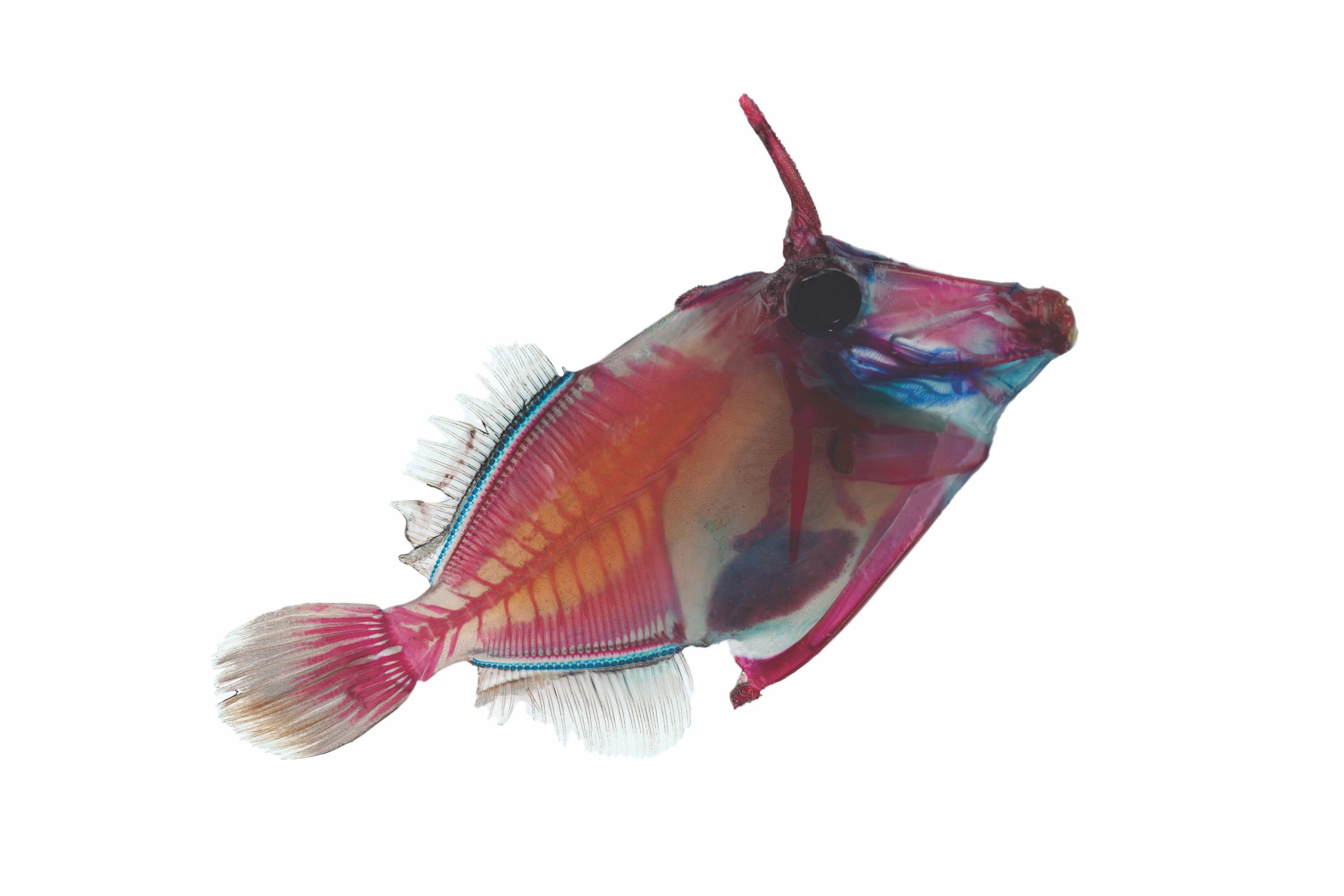
Brandon Ballengée, RIP Triggerfish, 2014. Giclée print on handmade Japanese watercolour paper, unframed; 18 x 24 inches; 45.72 x 60.96 cm. Edition of 13.
Crude Oil Painting series
Painted with Deepwater Horizon source crude oil, Taylor/ MC20 source crude, contaminated marshland sediment with oil, anaerobic bacteria and iron oxide, and COREXIT 9500A (dispersant) on Arches hot press watercolour paper.
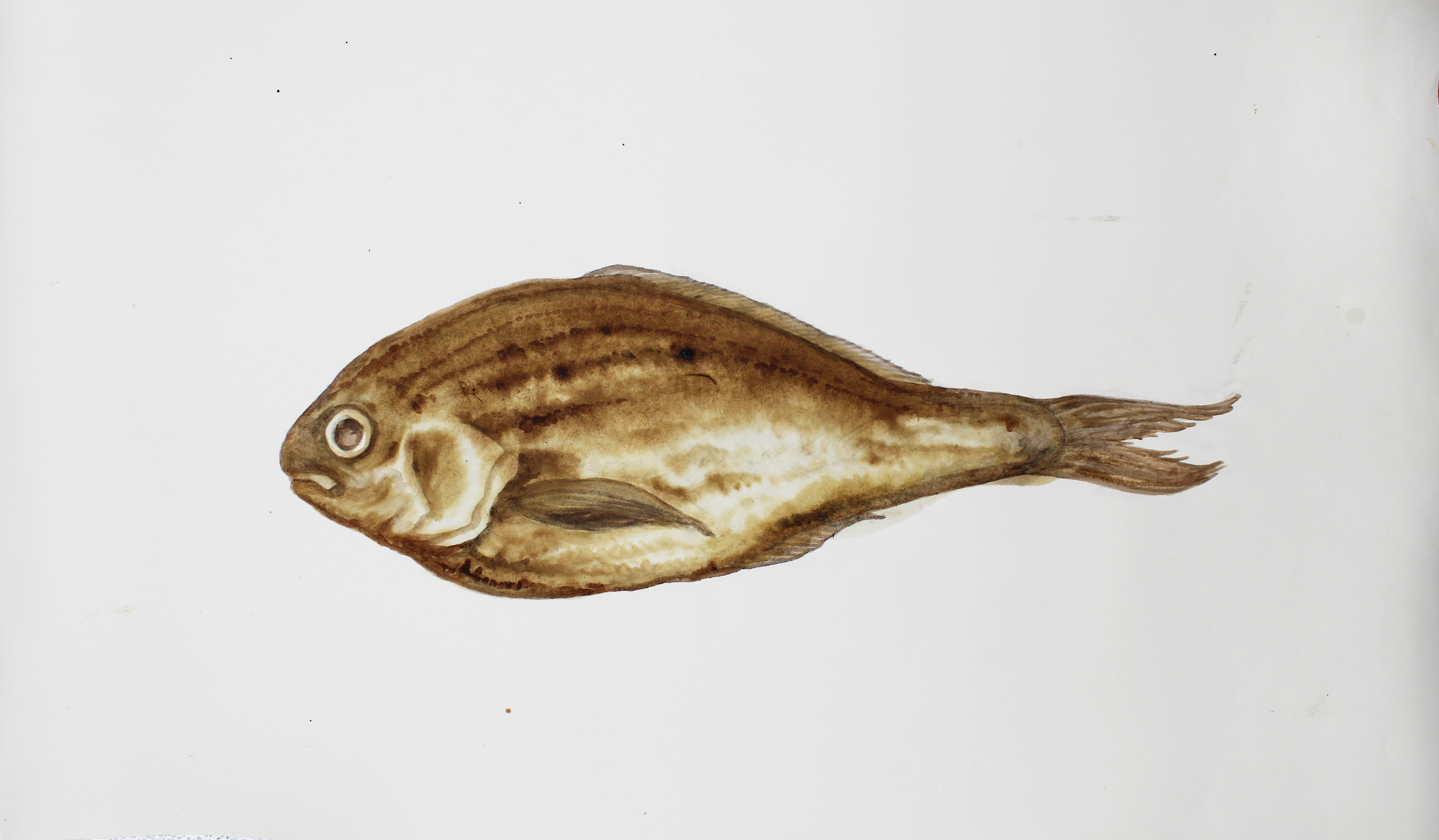
Brandon Ballengée, MIA Black Driftfish, 2020. Mixed media with Deepwater Horizon source crude oil, Taylor/ MC20 source crude, contaminated marshland sediment with oil, anaerobic bacteria and iron oxide, and COREXIT 9500A (dispersant) on Arches hot press watercolour paper.; 27 x 38.5 inches; 68.58 x 97.79 cm. Depicting United States National Museum of Natural History (NMNH) at the Smithsonian specimen USNM 221588 Black Driftfish, Hyperoglyphe bythites. Species last reported in 2008.
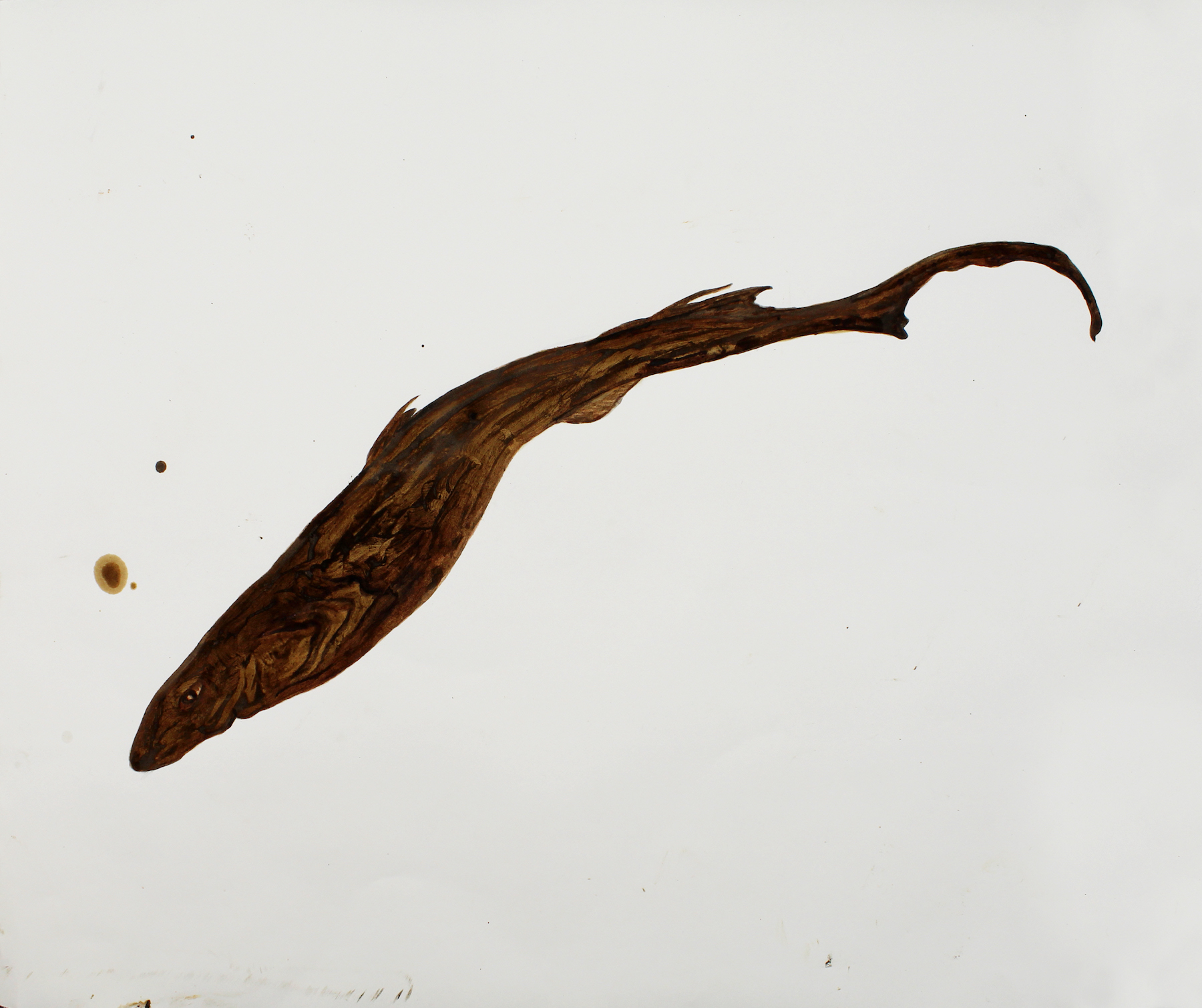
Brandon Ballengée, MIA Campeche Catshark, 2020. Mixed media with Deepwater Horizon source crude oil, Taylor/ MC20 source crude, contaminated marshland sediment with oil, anaerobic bacteria and iron oxide, and COREXIT 9500A (dispersant) on Arches hot press watercolour paper.; 27 x 38.5 inches; 68.58 x 97.79 cm. Depicting United States National Museum of Natural History (NMNH) at the Smithsonian specimenUSNM 206184 Campeche Catshark, Parmaturus campechiensis. Species last reported in 1970.
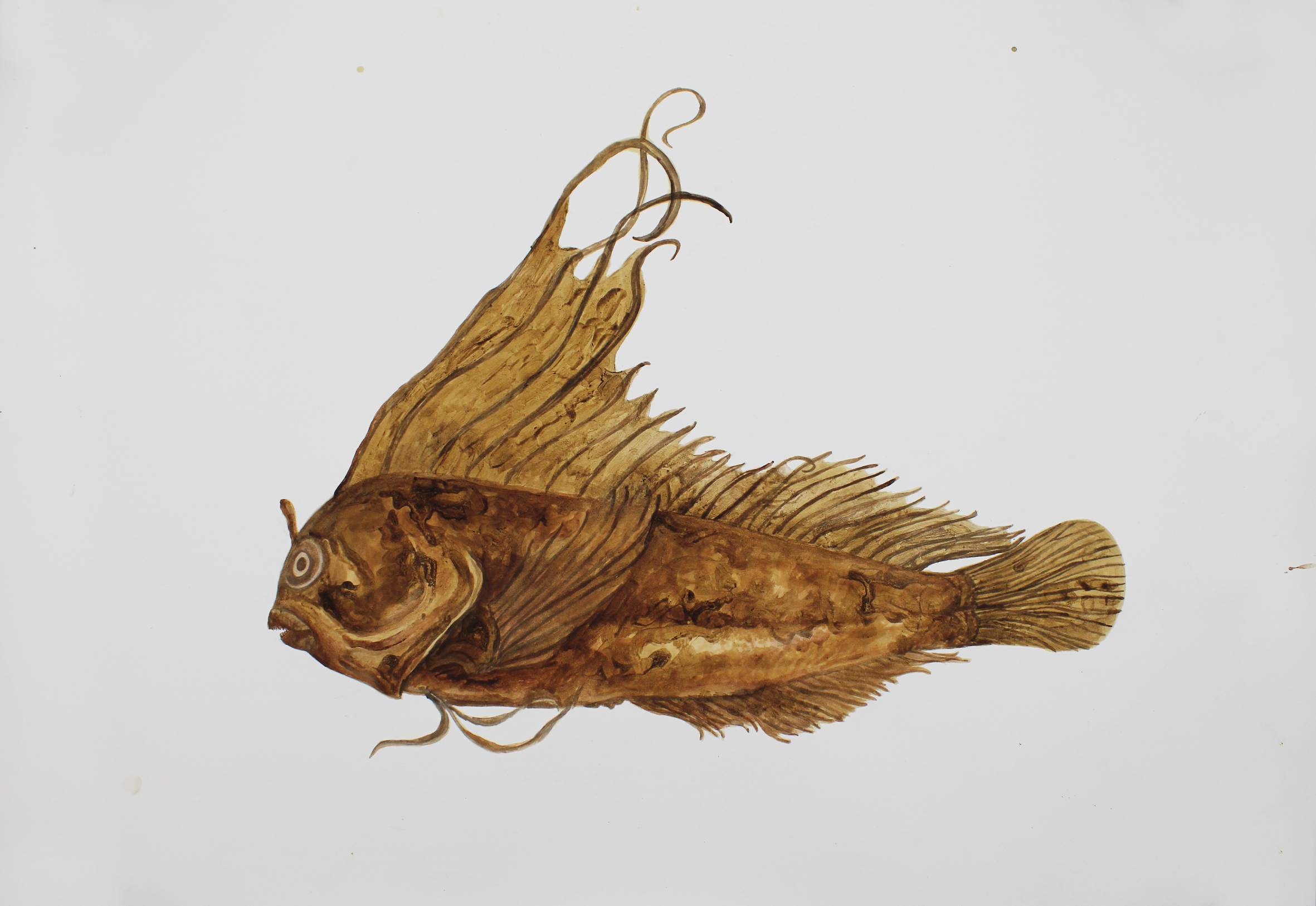
Brandon Ballengée, MIA Highfin Blenny, 2020. Mixed media with Deepwater Horizon source crude oil, Taylor/ MC20 source crude, contaminated marshland sediment with oil, anaerobic bacteria and iron oxide, and COREXIT 9500A (dispersant) on Arches hot press watercolour paper.; 27 x 38.5 inches; 68.58 x 97.79 cm. Depicting United States National Museum of Natural History (NMNH) at the Smithsonian specimenUSNM 164017 Highfin Blenny (male), Lupinoblennius nicholsi. Species last reported in 2000.
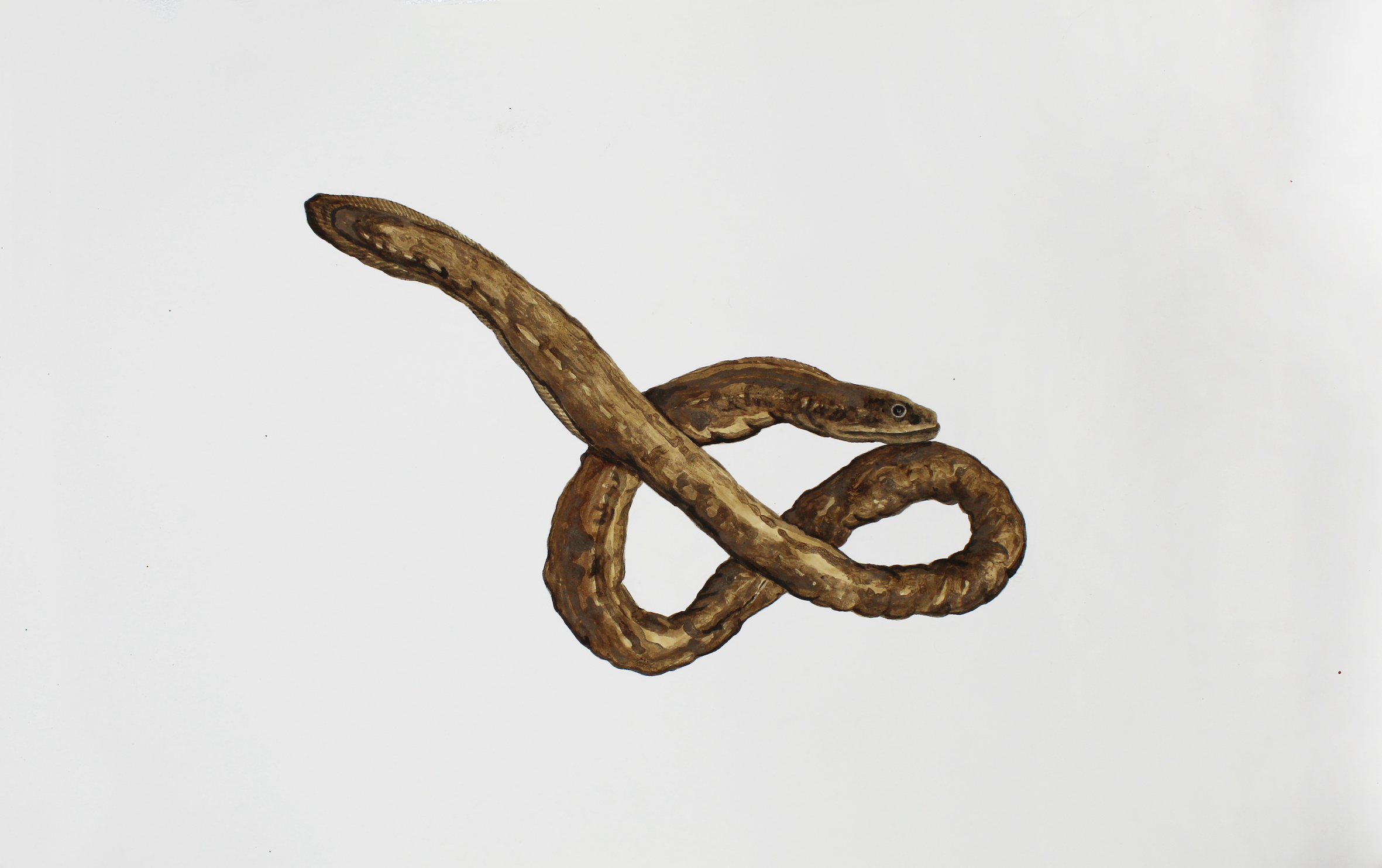
Brandon Ballengée, MIA Redface Morray Eel, 2020. Mixed media with Deepwater Horizon source crude oil, Taylor/ MC20 source crude, contaminated marshland sediment with oil, anaerobic bacteria and iron oxide, and COREXIT 9500A (dispersant) on Arches hot press watercolour paper.; 27 x 38.5 inches; 68.58 x 97.79 cm. Depicting United States National Museum of Natural History (NMNH) at the Smithsonian specimen USNM 359261 Redface Morray Eel, Monopenchelys acuta Species last reported in 2006
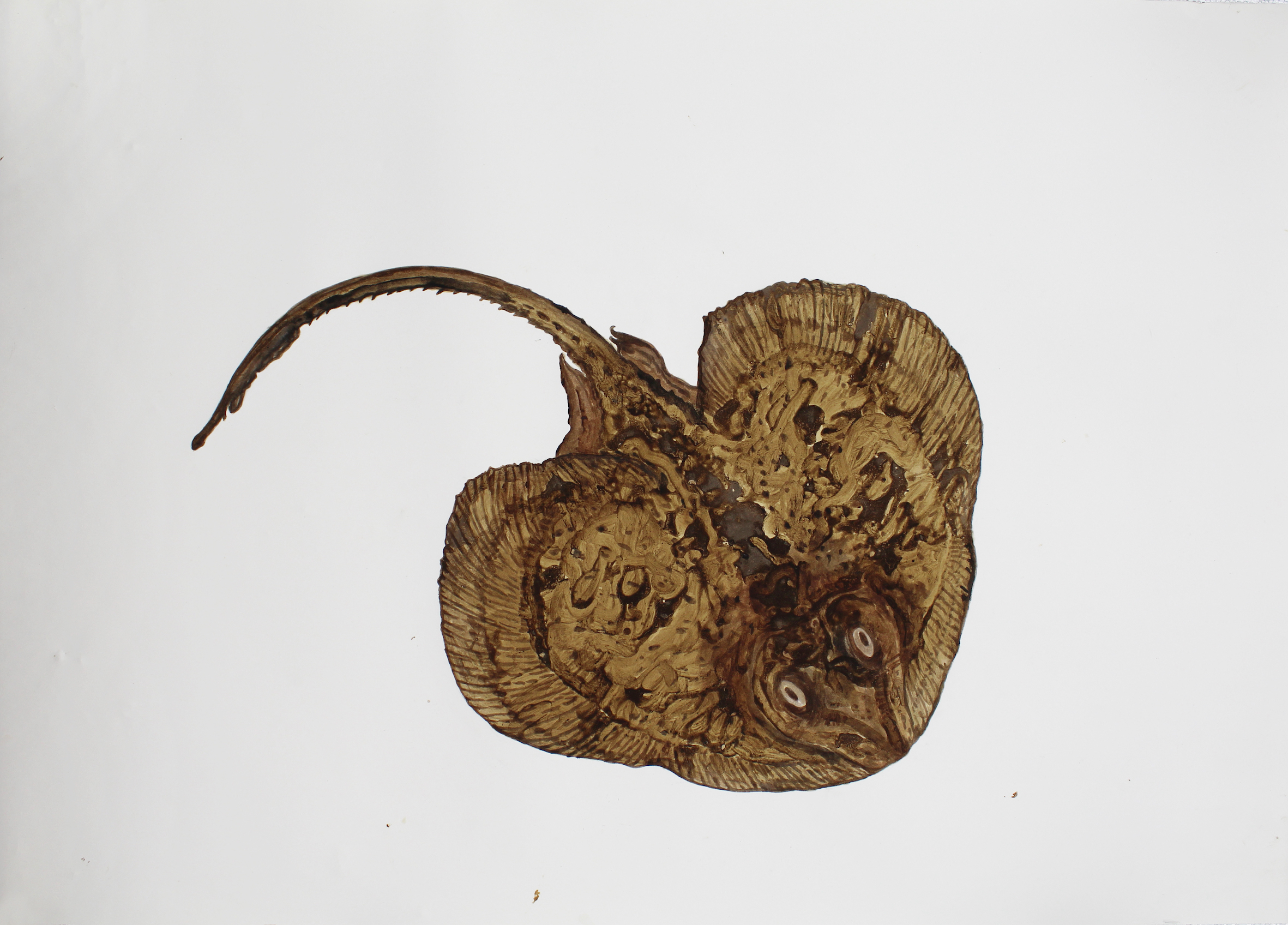
Brandon Ballengée, MIA Spreadfin Skate Eel, 2020. Mixed media with Deepwater Horizon source crude oil, Taylor/ MC20 source crude, contaminated marshland sediment with oil, anaerobic bacteria and iron oxide, and COREXIT 9500A (dispersant) on Arches hot press watercolour paper.; 27 x 38.5 inches; 68.58 x 97.79 cm. Depicting United States National Museum of Natural History (NMNH) at the Smithsonian specimen USNM 158975 Spreadfin Skate, Dipturus olseni. Species last reported in 2005.